Ancient Woodlands: The Secret History of Britain's Forests and Their People
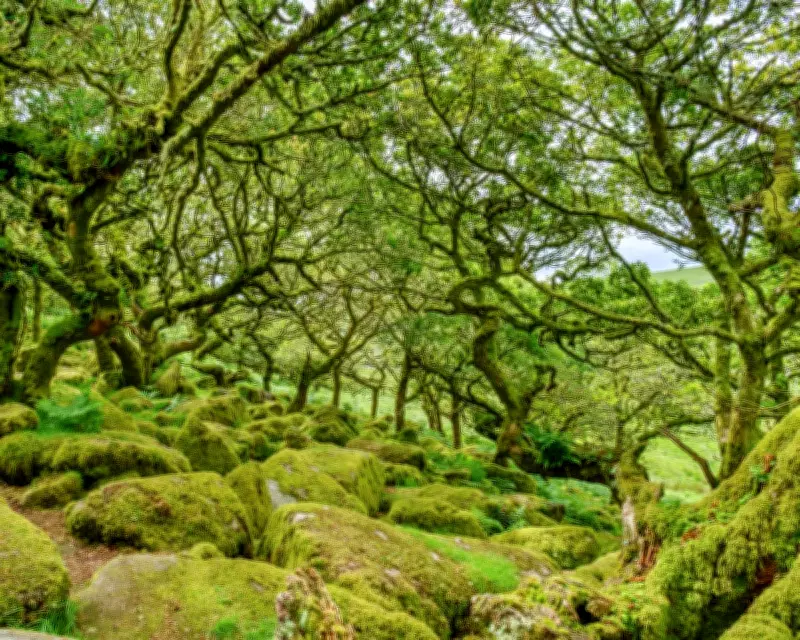
Wistman’s Wood in Dartmoor, Devon, stands as a haunting relic of Britain's primeval past, a landscape intimately shaped by both nature and human hands over thousands of years. In his compelling work, Ancient, former ranger and woodland expert Luke Barley delves into the complex and fascinating story of how the UK's forests have been deeply intertwined with its people since the retreat of the ice sheets more than 10,000 years ago.
The Origins and Evolution of Britain's Wildwood
Following the melting ice, trees such as birch, hazel, elm, oak, and alder began to recolonise this chilly north-western fringe of Europe, eventually forming a dense, luxuriant forest that covered the new British mainland. Legend suggests that in this primeval wildwood, a squirrel could travel from coast to coast without ever touching the ground. However, Barley challenges this simplistic narrative, revealing a more nuanced history where human activity has played a crucial role in shaping these ecosystems.
Under classifications established in the 1970s, a wood in the UK is deemed "ancient" if it existed by 1600, or by 1750 in Scotland, as documented on the earliest accurate maps. These ancient semi-natural woodlands are our last direct links to the wildwood, preserving undisturbed soils that support rich, intricate ecosystems impossible to replicate through human ingenuity alone.

The Deep Connection Between Trees and Human Life
Barley, a chartered forester, writes with a gruelling intimacy about trees, describing the sweat, sawdust, and skill involved in woodcraft—a familiarity that was common until the Industrial Revolution. Wood was not just a resource; it was wealth, sustaining all aspects of human life and technological advancement. From firewood for hearths and ovens to charcoal for smelting metals, and timber for tools, furniture, and building frames, wood fuelled Britain's progress. For instance, medieval cathedrals required over 1,000 mature oaks each, highlighting the scale of this dependency.
The book is rich with arcane vocabulary from woodcraft, such as treen, coupe, cant, and hagg, alongside more familiar terms like coppicing—a practice where trees are cut back to a base to regrow multiple, usable stems. Barley argues that the myth of an untouched "natural" forest is misleading; most trees evolved in environments disturbed by megafauna like super-elephants and super-rhinoceroses. Through practices like coppicing, humans have taken on the role of these ancient giants, creating the space and light necessary for diverse woodland ecosystems to thrive.
The Impact of Industrialisation and Modern Threats
From the 18th century onwards, industrialisation, enclosure, and the rise of fossil fuels severed these intimate links. Common rights to woodland, protected by the 1217 Charter of the Forest—including pannage for grazing pigs and estovers for cutting wood—were lost. This era accelerated forest destruction, with nearly half of Britain's ancient woodland cleared or replanted with commercial conifer plantations between the end of World War II and the 1980s. Today, ancient woodlands account for only 2.5% of Britain's land area.
This history of extraction, privatisation, and disenfranchisement parallels the intensification of climate and nature crises. In 2023, researchers identified the UK as one of the world's most nature-depleted countries. As part of efforts to achieve net zero, the government has set a legally binding target to reach 16.5% woodland cover in England by 2050. Barley's work underscores why these statistics are critical, arguing that protecting these carelessly treated trees is not an idealistic luxury but a necessity for survival, a truth our ancestors understood far better than we do today.
Ancient: Reviving the Woods That Made Britain by Luke Barley is published by Profile, priced at £25, offering a vital perspective on environmental stewardship and historical legacy.