
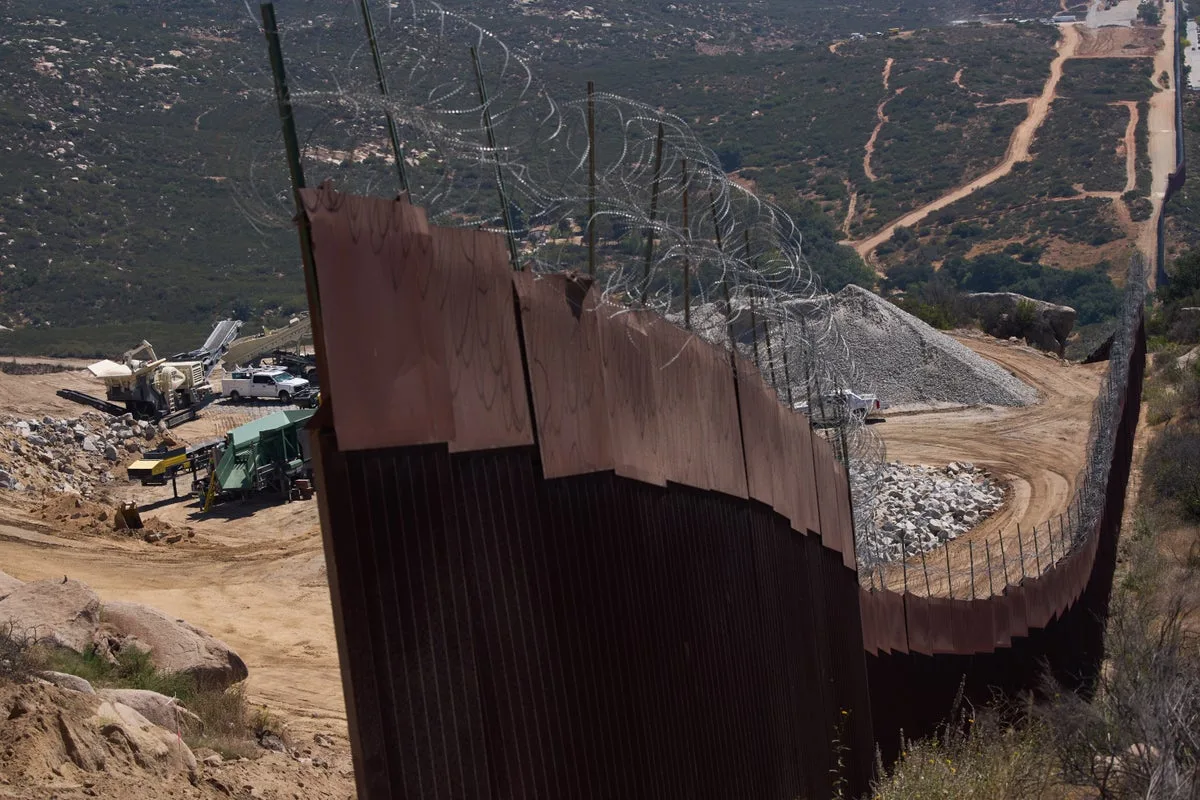
Indigenous leaders have condemned the construction of the US-Mexico border wall, accusing contractors of desecrating Native American sacred sites at an unprecedented pace. Among the affected sites is Kuuchamaa Mountain, a sacred peak straddling the border that the Kumeyaay Nation regards as a healer and spiritual church. Federal contractors have been blasting and bulldozing the mountain to make way for new wall sections.
In Arizona, contractors last month carved through a 1,000-year-old fish-shaped geoglyph called 'Las Playas Intaglio' on the Cabeza Prieta National Wildlife Refuge. The Tohono O’odham Nation said it had pointed out the site on its ancestral land for contractors to avoid. Chairman Verlon Jose called the loss 'devastating and entirely avoidable'.
Construction has ramped up despite illegal crossings hitting historic lows, after the Department of Homeland Security waived cultural and environmental laws. In New Mexico, blasts on Mount Cristo Rey, a pilgrimage site topped with a limestone crucifix, have also sparked outrage. The Trump administration has awarded contracts for over 600 miles of new border wall, with double walls planned along another 370 miles.
Tribal leaders have met with DHS officials to urge protection of sacred sites and are exploring legal action. In a 2025 lawsuit, Tohono O’odham leaders challenged DHS waivers but were unsuccessful. Kumeyaay tribal leader Emily Burgueno said: 'No one ever consented or supported the use of dynamite on the mountain.' The Inter-Tribal Association of Arizona has also lobbied in Washington against the walls, but Homeland Security Secretary Markwayne Mullin made clear his intent to build as fast as possible.




