Vital federal assistance for repairing America's crumbling sewer systems has been slashed under President Donald Trump, placing hundreds of struggling, often minority communities in immediate peril. The funding cuts target programmes specifically designed to help impoverished towns and cities fix ageing wastewater infrastructure that floods homes with raw sewage, threatening residents' health and destroying property.
A Crisis of Infrastructure and Inequality
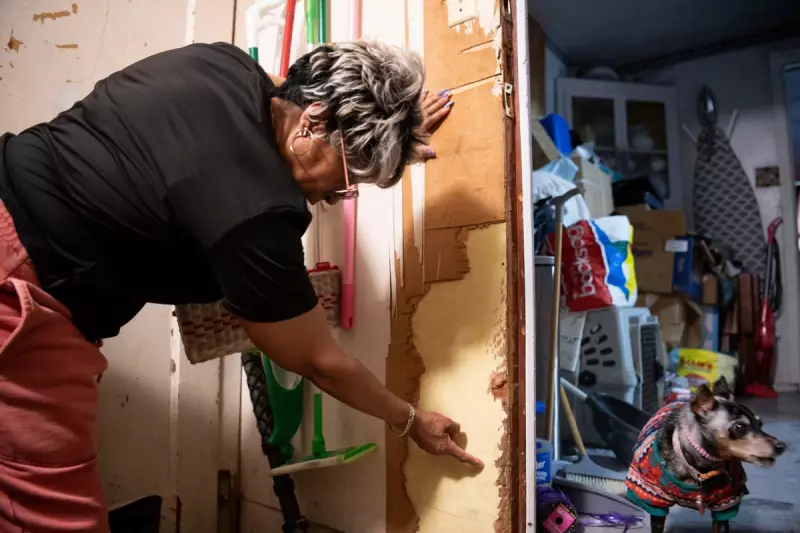
The situation in Cahokia Heights, Illinois, epitomises the national crisis. Yvette Lyles bought her family home dreaming of picnics in a nearby state park, but instead found herself trapped indoors by floods of untreated sewage. "I had to turn my back so my children wouldn’t see me cry," Lyles recounted. Her community, which is mostly Black with a poverty rate around one-third, is among scores nationwide where decrepit systems fail regularly.
Exposure to this sewage, which can back up through plumbing or flood streets, causes serious illness. These problems are concentrated in rural areas or declining cities that lack the funds and expertise to undertake costly repairs alone.

Funding Promises Canceled and Programs Gutted
Hundreds of millions in grants and loans promised by the Bipartisan Infrastructure Law and the Biden administration to address these racial and economic disparities have been canceled or targeted for elimination. The Trump administration dismantled the Environmental Protection Agency’s (EPA) Environmental Justice office and axed grants for hundreds of infrastructure and climate adaptation projects in underserved communities.
This includes $14 million for septic systems in majority-Black Alabama counties and a $20 million grant for ageing sewer lines in historically Black neighbourhoods of Thomasville, Georgia. The EPA stated these projects did not align with administration priorities.
Furthermore, the administration has proposed deep cuts to state revolving loan funds for water projects. While Congress may reject the deepest cuts, a compromise bill could allow lawmakers to direct about half the money to pet projects, rather than letting states allocate it based on need.
"Since day one, the Trump EPA has been crystal clear that the Biden-Harris Administration shouldn’t have forced their radical agenda of wasteful DEI programs and ‘environmental justice’ preferencing on the EPA’s core mission," the agency said in a statement to The Associated Press.
Health, Dignity, and a Struggle for Survival
Advocates argue that characterising this aid as divisive masks a severe public health emergency. "It’s an infrastructure issue," said Catherine Coleman Flowers of the Center for Rural Enterprise and Environmental Justice. "It’s health and dignity."
The scale of the problem is vast. Federal data indicates at least 17 million Americans are served by wastewater systems in serious violation of pollution limits. Needs for flooding and water quality infrastructure over the next two decades exceed $630 billion.
The human cost is stark. In Shaw, Mississippi, a 2023 study found 38% of a small sample of children had intestinal parasites. In Lowndes County, Alabama, residents have been sickened by hookworms linked to raw sewage. Yvette Lyles contracted H. pylori bacteria, which she believes came from sewage exposure in her home.
Some conservatives, like Jack Spencer of the Heritage Foundation, believe federal help is not the answer, arguing instead for policies that grow local economies. However, experts note the poorest communities often lack the staff and expertise to navigate complex funding applications, a hurdle compounded when technical assistance grants are also cut.
In Alabama, Sherry Bradley of the Black Belt Unincorporated Wastewater Program tried to save a crucial septic system project by removing terms like "environmental justice," "poverty," and "African American" from applications. The $14 million grant was canceled regardless. "When I look at their faces, I see that they’ve lost hope," Bradley said, holding back tears. "We are the forgotten ones."