Significant reductions in environmental funding under President Donald Trump are creating severe challenges for American communities struggling to maintain safe water and sewage systems, according to an investigation by The Associated Press. The cuts reverse hundreds of millions of dollars in promised upgrades from the Biden era and are expected to disproportionately impact poorer, often minority, neighbourhoods.
America's Crumbling Wastewater Infrastructure
The scale of the problem is vast. Federal data indicates that at least 17 million Americans are served by roughly 1,000 wastewater systems that are in serious violation of pollution limits. The most troubled systems, which consistently break clean water rules, serve around 2.7 million people, often in rural areas where average household income is nearly $12,000 below the national average.
Compounding the issue, the estimated cost to address flooding and water quality needs over the next twenty years has ballooned to a staggering $630 billion. Many communities, particularly those that have seen populations and industry decline, simply lack the financial resources for essential maintenance. In some rural regions, proper sewer systems or functioning septic tanks are entirely absent, with the Environmental Protection Agency (EPA) estimating 2.2 million Americans lack adequate indoor plumbing.

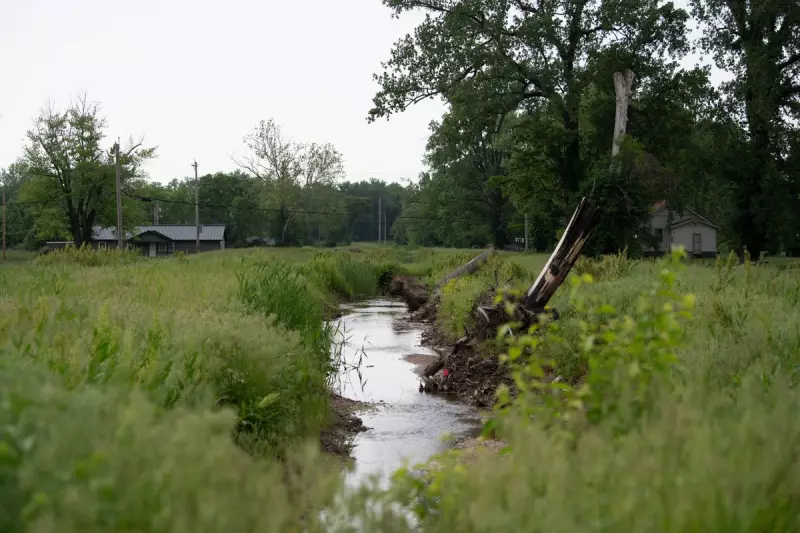
The human cost is stark. In Shaw, Mississippi, a majority-Black town that has lost 40% of its population, failing sewers can back up into homes during heavy rain. A 2023 study there found 38% of children tested were infected with intestinal parasites like hookworm, with 80% showing high levels of intestinal inflammation.
Reversing Course: The Trump Administration's Actions
Since returning to office, the Trump administration has moved to dismantle key programmes established under President Joe Biden. A central target has been the EPA's Environmental Justice office, which was created to address the disproportionate pollution burden on poor and minority communities. The administration has also terminated grants for infrastructure and climate adaptation, many specifically earmarked for underserved areas.
Examples of cancelled projects include a $14 million grant to install septic systems in majority-Black Alabama counties, where residents often have to pipe sewage onto their own land. Another was a $20 million grant intended to repair ageing sewer lines in historically Black neighbourhoods in Thomasville, Georgia. The EPA stated this grant did not align with administration priorities.
In a statement, the agency criticised the previous administration's focus on a "radical agenda" that included environmental justice, arguing it was contrary to the EPA's core mission. Advocates like Catherine Coleman Flowers, founder of the Center for Rural Enterprise and Environmental Justice, argue that dismissing grants due to Diversity, Equity, and Inclusion (DEI) labels ignores the severe public health crisis. She describes the wastewater issue as fundamental to "health and dignity."
Limited Options for Struggling Communities
While some funding avenues remain, such as a $6.5 billion EPA loan programme for water projects announced in November and a smaller USDA scheme, experts warn the poorest communities will struggle to access them. Sri Vedachalam, a water and climate expert, notes that these areas often lack the money, staff, or technical expertise to conduct required studies and complete complex applications.
Advocates point out that the administration has created an additional hurdle by cancelling tens of millions in funding for technical assistance centres that helped communities navigate these very processes. The EPA maintains it still provides technical support to rural, small, and tribal communities.
The overall effect of these policy shifts, according to the AP's reporting, is likely to widen existing inequalities, leaving the most vulnerable Americans to bear the brunt of the nation's decaying water infrastructure.