Guardian columnist Adrian Chiles has issued a spirited rebuttal to actor Paul Mescal's recent comments about understanding William Shakespeare, setting the stage for a debate about how we engage with the Bard's work.
The Spark: Mescal's 'Feel It' Philosophy
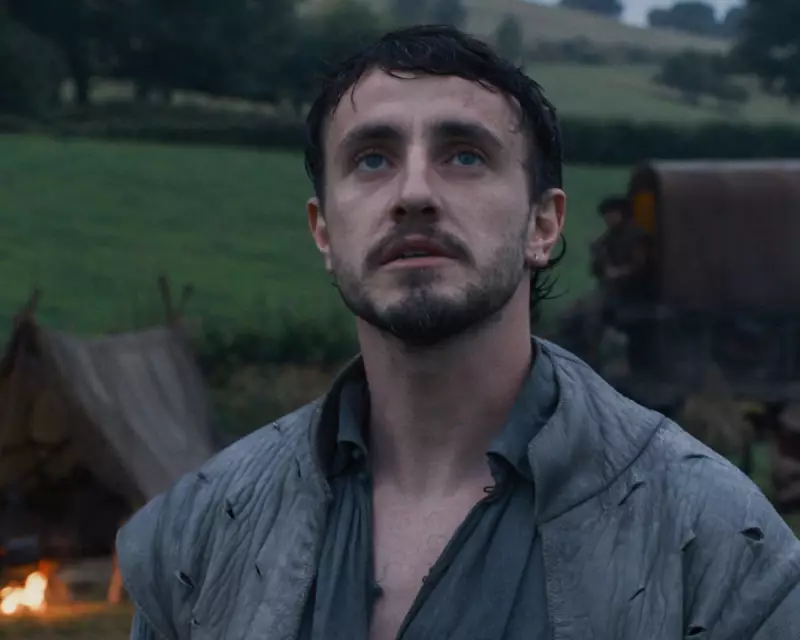
The controversy stems from remarks made by Mescal, who stars as William Shakespeare in Chloé Zhao's upcoming 2025 film 'Hamnet'. According to director Zhao, when she confessed to sometimes struggling with Shakespeare's language, Mescal offered comfort with a particular perspective. The actor suggested that if Shakespeare is performed correctly, you don't necessarily have to intellectually understand every word. Instead, "You feel it in the body, the language is written like that," Mescal is reported to have said.
For many, this embodied approach to the playwright's dense verse was a refreshing take. However, for Adrian Chiles, it represented a bridge too far.

Chiles's Counter-Argument: The Need for Understanding
In his column, Chiles pulls no punches in his disagreement. He labels Mescal's statement as "balls", arguing firmly that audiences do need to comprehend what is being said and what is happening in the plot. Chiles describes his own experience of watching complex dramas, where not grasping the narrative leads to frustration, disengagement, and ultimately, boredom.
He draws a clear distinction between visual art, where he feels free to simply experience a piece, and narrative forms like theatre, film, and television. "If I can’t understand the words I’m unlikely to understand the plot, and if I can’t understand the plot I’ll have no interest in the words anyway," he writes. He cites Somerset Maugham's idea of the plot as a "lifeline" for the audience, and without it, he feels lost at sea.
Beyond Literalism and a Humorous Speculation
Chiles anticipates the criticism that he is being too literal. He clarifies that he doesn't need to decode every single metaphor or plot twist, but he does require enough narrative coherence to stay invested. He even whimsically proposes a solution akin to a director's commentary track, delivered via a discreet earpiece, to guide confused viewers.
The columnist ends with a tongue-in-cheek theory about Mescal's motives. He wonders if the actor himself might have been baffled by the script and, in a moment of panic when questioned by director Zhao, deployed his reliable "feel-it-in-my-body" card to evade a detailed explanation. "Got to respect that. If you’ve got it mate, flaunt it," Chiles concludes with a wry nod to Mescal's undeniable charisma.
The exchange highlights a perennial tension in appreciating classic drama: is it an intellectual exercise to be decoded, or a sensory, emotional experience to be felt? As Paul Mescal prepares to bring Shakespeare to life on screen in 2025, this debate between feeling and understanding is sure to resonate with audiences long before the film's release.