The Balusters Review: A Pulitzer-Winning Playwright Returns with Mixed Results
Playwright David Lindsay-Abaire, renowned for his Pulitzer prize-winning work Rabbit Hole and Tony-winning musical Kimberly Akimbo, ventures into new territory with his latest comedy The Balusters. Staged at the Samuel J Friedman Theatre in New York, this production tackles a list of modern American conflicts through the lens of a neighborhood association, resulting in a fun yet ultimately underdeveloped comedy drama.
Plot and Characters: A Neighborhood Association in Focus
The Balusters centers on the nine-member Vernon Point Neighborhood Association, a group that falls somewhere between an officious homeowners' association and a benevolent friendly gathering. They convene to discuss issues affecting the safety, sanctity, and aesthetic qualities of their unnamed suburban area, likely near Washington DC based on stray references. The characters are remarkably polite, even friendly, despite underlying tensions and not-so-secret dislikes among them.
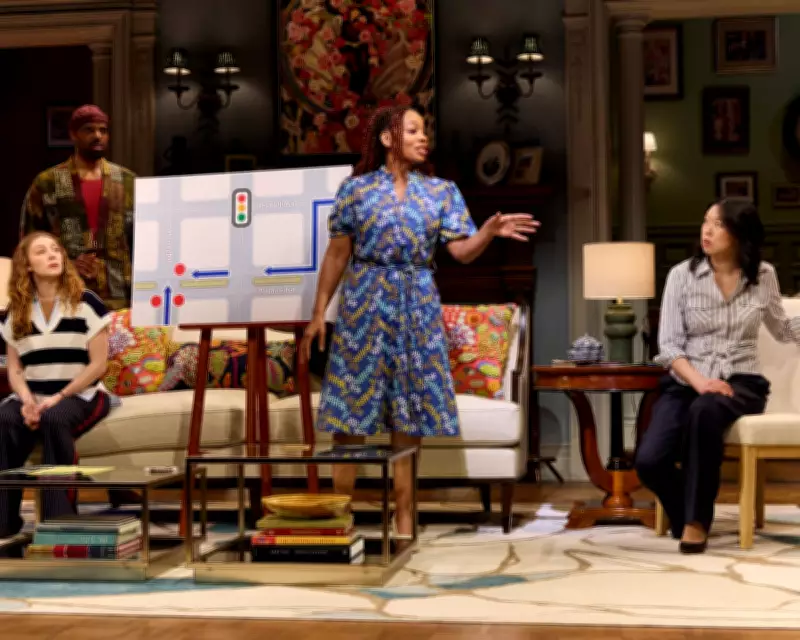
The newest member, Kyra, portrayed by Anika Noni Rose, is a well-to-do Black woman who has recently moved from Baltimore. Her first order of business is addressing a dangerous corner outside her house, where speeding drivers pose a risk. She advocates for a new traffic light or stop signs, but association president Elliot, played by Richard Thomas, resists, fearing it will blight what he calls the "esplanade." This conflict sets the stage for broader discussions on neighborhood issues, including the titular problem of historically incorrect balusters on a porch railing, rebuilt to accommodate a wheelchair ramp.

Themes and Social Commentary
Lindsay-Abaire cleverly refracts myriad minor problems through the group, such as stolen Amazon packages and misplaced dog excrement, alongside interpersonal annoyances and broader social concerns. The play pits Kyra, a high-achieving Black mom, against Elliot, a patrician white grandfather who may prioritize historical preservation over child safety. This schematic setup leads to a fray of criticisms, sassy jokes, and piled-up conflicts, though the playwright seems overly sold on the idea that these neighbors are essentially all friends.
For instance, it's hard to imagine Ruth wearing a rabbit-fur coat to annoy vegan Willow as a cute prank in reality, making the dramatic escalation of conflicts feel more obligatory than inevitable. The dialogue riffs on genuine biases and verbal sensitivities, but the jokes are often predictable, relying on the cast's impeccable timing for laughs. Stage veteran Marylouise Burke shines as Penny, a slightly addled octogenarian who provides moments of reason and grace.
Strengths and Weaknesses in Execution
The Balusters is smart in its depiction of a softer conservatism, through characters like Elliot, who avoid direct Trumpism but uphold social order. It also explores the complexities faced by characters like Brooks, a gay Black man played by Carl Clemons-Hopkins, in evaluating prejudices. However, the play often milks multiple sympathies for easy applause, allowing audiences to feel righteously correct from various angles rather than challenging different points of view.
Emotional turns depend on offstage action that feels like cheap gotchas when unveiled, raising questions about whether this is a multifaceted discussion or a series of writers' tricks. Ultimately, The Balusters is more fun than resonant, offering entertainment in spite of its underdeveloped elements. The cast, including Kayli Carter, Jeena Yi, and others, delivers strong performances, but the play lacks the depth needed for lasting impact.
In summary, David Lindsay-Abaire's return to the stage with The Balusters provides an entertaining yet mixed experience, blending comedy with social satire but falling short of full development.