Emerald Fennell's Wuthering Heights Sparks Debate as Modern Retelling
Every generation receives the Wuthering Heights adaptation it deserves, and director Emerald Fennell has delivered a version tailored for the perpetually online era. Starring Australian actors Margot Robbie and Jacob Elordi as Cathy and Heathcliff, this controversial film has become one of the year's most hotly debated cinematic releases, drawing both criticism and commercial success.
A Personal Interpretation Divides Purists
Emily Brontë's 1847 novel about forbidden love and ruthless revenge has maintained an almost cult-like devotion among readers for nearly two centuries. Any reinterpretation inevitably faces scrutiny from protective admirers who view adaptations as personal affronts. Fennell has plunged directly into this sea of sensitivities with what she describes as a highly personal interpretation, shaped by her intense teenage response to the book at age fourteen.
The director has spoken openly about being "obsessed" and "driven mad" by the novel, wanting to honour what she perceives as its "primal, sexual" undercurrents. This approach has outraged purists who argue that a complex story rooted in class and racial tensions has been simplified to "the greatest love story ever told." Yet in today's attention economy, where only the simplest and most shocking narratives cut through, Fennell's adaptation reflects contemporary cultural priorities.

Designed for Viral Consumption
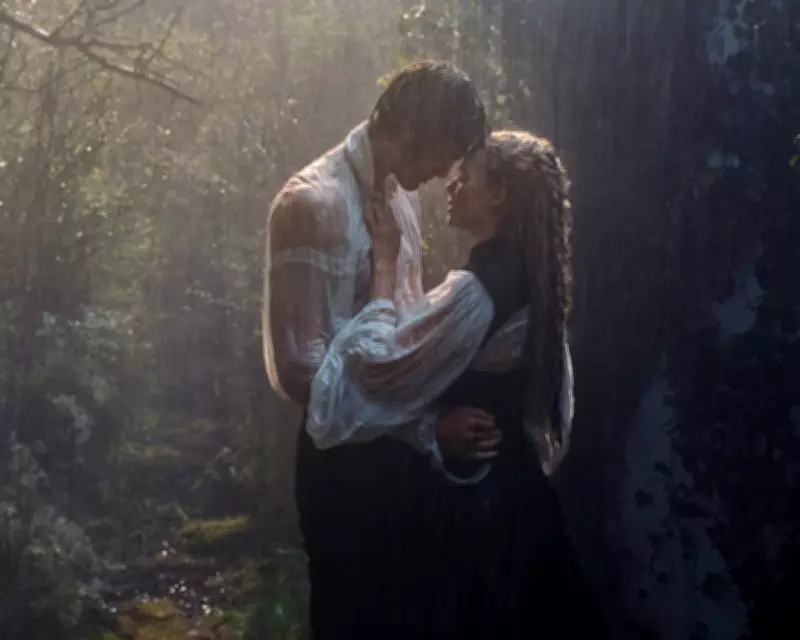
Fennell's film, deliberately titled with quotation marks as "Wuthering Heights", opens with provocative imagery including an aroused nun observing a hanged man with an erection. Subsequent scenes feature Cathy masturbating under a heathland rock while her surrogate brother watches, Isabella wearing a dog collar on all fours as Heathcliff feeds her, and suggestive food imagery involving jellied fish and egg yolks. This is Brontë reimagined for social media consumption, engineered to be clipped, shared, and debated across digital platforms.
The casting choices follow similar viral logic. While critics have questioned the decision to cast older actors and overlook Brontë's description of Heathcliff as a "dark-skinned gipsy," Fennell selected stars who already exist as online darlings. Margot Robbie brings her Barbie persona, while Jacob Elordi serves as everyone's favourite internet boyfriend. The ethereal soundtrack by gen Z-adored artist Charli xcx completes the methodical approach to contemporary appeal.
Cinematic Success Despite Controversy
Despite the backlash, Fennell's adaptation has proven commercially successful, recouping its substantial $80 million production budget during its opening weekend. Packed cinemas testify to the enduring allure of Brontë's tale, even when presented through a radically different lens. Audience reactions during screenings have included squeals, gasps, and tears, with many appreciating the beautiful cinematography and devastating final sequence.
Fennell thrives in today's cultural landscape where her films prioritize provocation over subtlety, much like her previous work Saltburn gained attention for shocking sexual scenes rather than delicate tensions. In an era where book publishing has become enmeshed with social media platforms like BookTok, which drives sales by isolating easily digestible tropes, Fennell's approach aligns with contemporary consumption patterns.
Historical Context and Alternatives
Adaptations of literary classics always present challenges, but there is nothing inherently wrong with each generation wanting period drama refracted through new perspectives. Historical precedents exist, from Clueless transplanting Jane Austen to 1990s California to Bridgerton transforming Regency romance into glossy, sex-positive fantasy. Netflix's forthcoming Pride and Prejudice adaptation, penned by millennial chronicler Dolly Alderton, continues this tradition.

For Brontë traditionalists who cannot abide Fennell's interpretation, numerous alternatives remain available that cleave more faithfully to the novel's spirit. These include the acclaimed 1939 version starring Merle Oberon and Laurence Olivier, the 1992 adaptation featuring Juliette Binoche and Ralph Fiennes, and Andrea Arnold's 2011 film. Interestingly, the controversy surrounding Fennell's film has driven renewed interest in Brontë's original text, with UK book sales increasing by 469% over the past year—a positive outcome that both lovers and haters of the adaptation can appreciate.
While some critics claim Brontë must be spinning in her grave, Fennell's Wuthering Heights ultimately reveals more about contemporary culture than about the nineteenth-century novel itself. In an age of infinite scrolling and instant gratification, where thoughtful engagement diminishes while viral content thrives, this adaptation serves as a cultural mirror reflecting current sensibilities back at audiences.