Emerald Fennell's Wuthering Heights Adaptation Faces Scathing Review for Lack of Depth
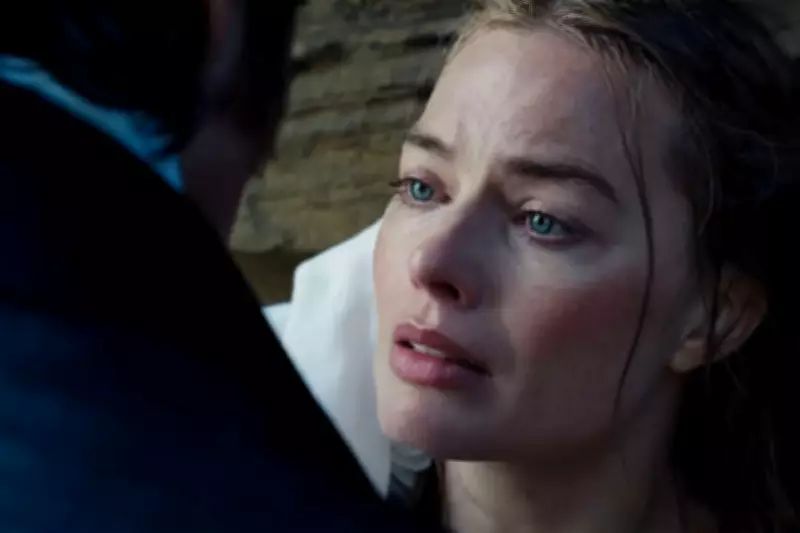
Emerald Fennell's latest cinematic venture, an adaptation of Emily Brontë's classic novel Wuthering Heights, has been met with harsh criticism for its perceived emptiness and misguided approach. The film, starring Margot Robbie and Jacob Elordi, is described as a limp and hollow work that fails to capture the novel's intense emotional violence and complexity.
Narrative Flattening and Character Simplification
Fennell's adaptation focuses solely on the first half of the 1847 novel, a common practice in film versions, but critics argue the issue lies not in accuracy but in tone. The film is accused of gutting Brontë's impassioned story, tossing its essence aside in favour of marketable romance tropes. Heathcliff, portrayed by Elordi, is transformed from a complicated, vengeful figure into a wet-eyed, Mills & Boon-style dreamboat, devoid of the monstrous depth that defines him in the book. Similarly, Cathy, played by Robbie, is reduced to a wilful and spiky character, with the narrative tensions around race, colonialism, and social ostracisation entirely obliterated.
The script conflates characters like Hindley and Mr Earnshaw, flattening the story into a simplistic tale of a poor maiden escaping dire circumstances through marriage, while yearning for a penniless soulmate. This approach strips away the Gothic masterwork's emotional drive, replacing it with a fairytale aesthetic that feels garish and disconnected from Brontë's thorny language.

Provocative Elements Fall Flat
As a sadomasochistic provocation, the film is equally criticised for its limp execution. Scenes intended to shock, such as a hanged man with an erection inciting a village frenzy or a woman in a dog collar, are played as jokes, lacking genuine impact. The film's fetishistic view of class categorises poor people as sexual deviants and rich people as clueless prudes, further undermining its provocative intent. Heathcliff's actions towards Cathy are tame, comparable to an average Bridgerton episode, with performances from Robbie and Elordi pushed almost to pantomime levels due to thinned-out characterisation.
Visual and Musical Contrasts
While the cinematography by Linus Sandgren is soft and buttery, and the costumes and sets quote cinephile classics like Jacques Demy's Peau d'âne and Jean Cocteau's La Belle et la Bête, these elements clash with Brontë's vivid language, appearing garish akin to a live-action Disney film. An exception is noted in the musical contributions by Charli xcx and Anthony Willis, which inject a sense of dread missing elsewhere in the production.
Broader Cultural Critique
The review positions Fennell's adaptation as a symbol of a modern literacy crisis, where literature is denigrated to mere distraction rather than mind expansion. By stylising the title in quotation marks and framing it as a personal interpretation from age 14, the film uses the guise of adaptation to create an astonishingly hollow work. It concludes that while Fennell's loss is evident, Brontë's novel remains singular and disturbing, a quality the film fails to replicate, making it more suited for brand tie-ins and Valentine's Day screenings than genuine artistic impact.
Directed by Emerald Fennell and featuring a cast including Hong Chau, Shazad Latif, Alison Oliver, Martin Clunes, and Ewan Mitchell, Wuthering Heights is rated Cert 15 with a runtime of 136 minutes, released in cinemas from 13 February.