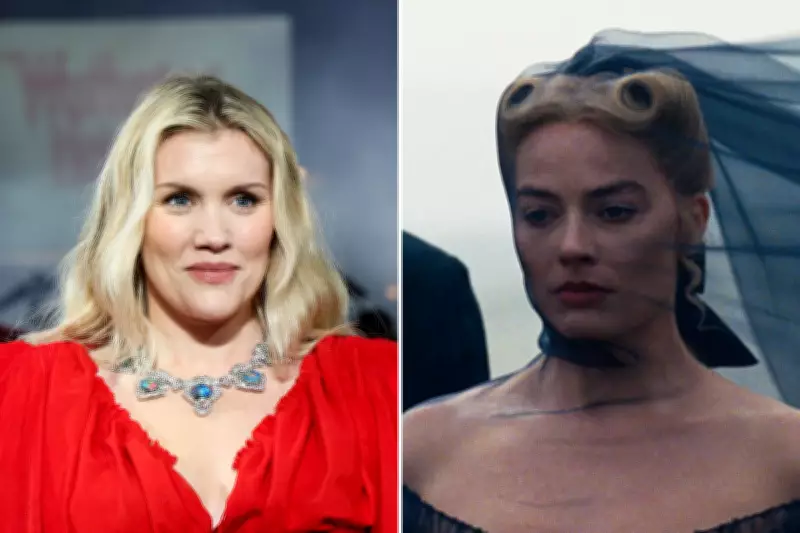
Emerald Fennell Addresses Significant Alterations in Wuthering Heights Adaptation
Acclaimed director Emerald Fennell has openly defended the substantial changes made in her new film adaptation of Wuthering Heights, Emily Brontë's beloved 1847 gothic romance novel. The Oscar-winning filmmaker, known for Promising Young Woman and Saltburn, cites practical time constraints as the primary reason for departing from the original narrative structure in her period drama featuring Jacob Elordi and Margot Robbie as the iconic lovers Heathcliff and Catherine.
Focusing on Core Relationships
Fennell's adaptation, similar to numerous previous film versions, concentrates primarily on the first part of Brontë's novel, exploring the tumultuous, decades-long love affair between the adoptive siblings that damages two generations. "Because I think that's really the moment that draws to an end in the book," Fennell explained in a recent interview with Entertainment Weekly. The director expressed her desire to create a mini-series spanning ten hours to fully encompass the complete narrative, but acknowledged the realities of feature filmmaking.
"If you're making a movie, and you've got to be fairly tight, you've got to make those kinds of hard decisions," Fennell stated regarding the necessary editorial choices. To maintain narrative coherence within cinematic constraints, she eliminated several characters including Mr. Lockwood, Heathcliff's inquisitive neighbor who learns about the turbulent romance through the housekeeper, and Hindley, Catherine and Heathcliff's rageful, jealous brother.

Character Consolidation and Transformation
Fennell believes a version of Hindley's essence persists in her adaptation through the transformed character of Earnshaw, portrayed by Martin Clunes. "I tried to, wherever I could, gather people together in the same way that we don't have Lockwood, either," she noted. The novel's complicated structure presented significant challenges for cinematic translation, requiring consolidation for coherence.
In Fennell's interpretation, Earnshaw assumes a far more substantial and antagonistic role than in Brontë's original work. Transformed into a drunken, abusive figure rather than the kind father of the novel, this character embodies complex familial dynamics. "It was [about] taking, 'What is it about Hindley? What is it about his relationship with his sister and his half-brother, I suppose, in Heathcliff? And how does it shape their lives? How did the love of their father shape their lives?'" Fennell elaborated.
The director described this reconceived Earnshaw as representing the duality found in many relationships with alcoholics: "extremely, deeply loving and charismatic, and on the other hand, extremely abusive and cruel." This character transformation allows the film to explore similar thematic territory while streamlining the narrative for cinematic presentation.
Critical Reception and Performance Style
Now showing in theaters, Fennell's Wuthering Heights has generated sharply divided critical responses. Some reviewers have praised the film as "oozy and wild," while others have dismissed it as "pseudo-romantic." The Independent's Clarisse Loughrey belongs to the latter camp, delivering a scathing one-star review that declared the film an "astonishingly bad adaptation."
Loughrey criticized the lead performances, arguing that "Margot Robbie and Jacob Elordi's performances are almost pushed to the border of pantomime." She further contended that "Fennell's provocations seem to define the poor as sexual deviants and the rich as clueless prudes," highlighting the interpretive risks inherent in adapting such a revered literary classic for contemporary audiences.

Despite the polarized reception, Fennell's adaptation represents another bold interpretation of Brontë's enduring masterpiece, joining a long tradition of cinematic reimaginings that necessarily compress and reshape complex literary narratives for the visual medium. The director's explicit defense of her creative choices provides insight into the challenging decisions filmmakers face when translating beloved classics to the screen within practical production constraints.