Dirty Business: Channel 4 Drama Exposes UK's Raw Sewage Crisis
For corporate villains and utility company shysters with something to hide, there is only one thing more bothersome than a retired gentleman on a mission. And that is two retired gentlemen working together. Channel 4's new drama Dirty Business, based on a true story, follows this very scenario as it unravels a national environmental scandal.
Two Unlikely Crusaders Take on Water Giants
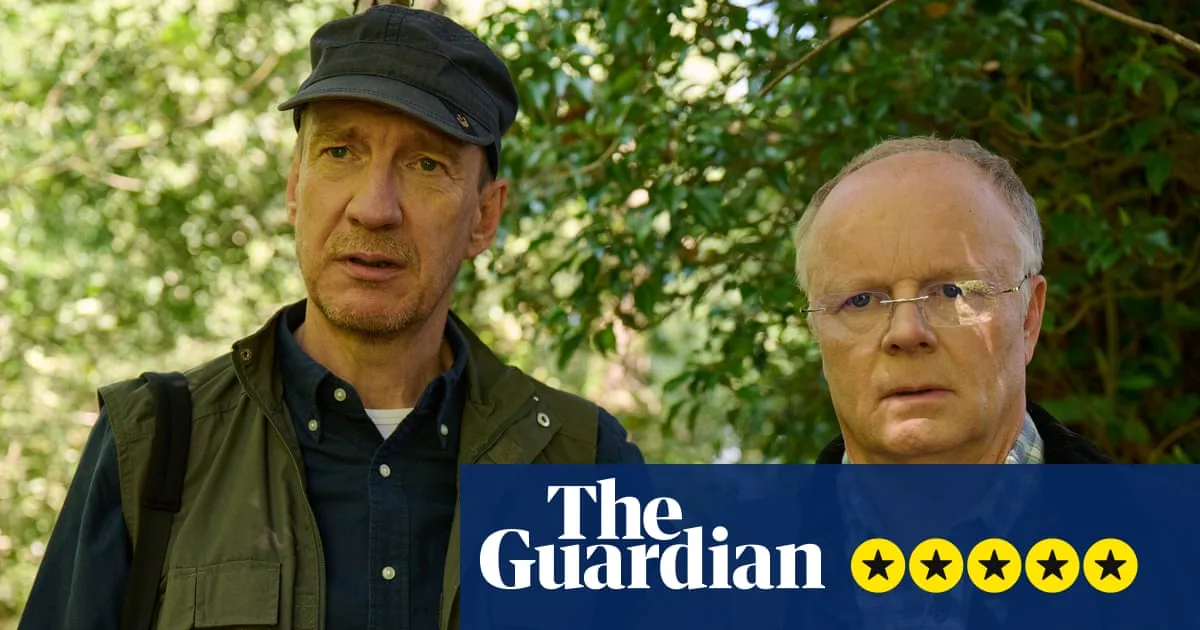
David Thewlis and Jason Watkins star as a pair of crusading friends in an Oxfordshire village. What begins as a casual moan in the local pub swiftly escalates into a full-blown national campaign. Their goal is to expose how raw sewage is being pumped into Britain's rivers and coastal waters on a massive scale, with water companies often turning a blind eye.
The duo possess precisely the skills needed to uncover this travesty. Ashley Smith, played by Thewlis, is an ex-detective who previously investigated police corruption, akin to a real-life version of Line Of Duty's AC-12 unit. He is dogged, unflappable, and deeply sceptical of everything he is told, especially by smiling executives with lengthy job titles.
Professor Peter Hammond, portrayed by Watkins, is a former Oxford academic with a genius for spotting patterns in vast reams of numerical data. This proves invaluable when requests for information are met with a murky deluge of complex data and corporate jargon.
Decoding Corporate Jargon and Uncovering the Truth
Writer and director Joseph Bullman helpfully glosses the industry terminology with on-screen captions. For instance, 'untreated effluent discharges' is revealed as industry code for human waste being dumped directly into waterways. Similarly, 'operator self-monitoring' effectively means letting firms get away with minimal oversight.
Initially, water company public relations representatives claim these incidents are unfortunate but rare occurrences, typically blamed on heavy rainfall. However, as the crusaders proceed cautiously and politely with their investigation, they realise this narrative is not even slightly true.
'These aren't accidents, it's a policy,' the professor asserts at one critical juncture. His friend retorts, 'This is starting to look like organised crime.' The drama underscores their mounting evidence against systemic failures.
Corporate Pushback and a Harrowing Subplot
Programme-makers usually reserve right-of-reply statements until the end, but in Dirty Business, denials and justifications from water companies appear regularly on screen. This reflects the determined efforts by these firms to minimise reputational damage.
Even the preview copy provided to journalists came accompanied by indignant statements from Thames Water. They emphasised working 'proactively and constructively with community groups' and touted 'the biggest upgrade of our network for 150 years.' Given the show depicts their pumping stations as decaying Victorian relics, such claims are presented with heavy irony.
This three-part story carries strong overtones of Mr Bates vs The Post Office, the ITV drama that raised mass awareness of the Horizon scandal. Like that series, this one celebrates the decency and determination of ordinary English citizens stirred to action.
However, a bitterly sad narrative thread is woven throughout. In poignant flashbacks, viewers meet a family on holiday in Devon, where their eight-year-old daughter contracts a lethal E. coli virus from sewage gushing onto the beach. Her lingering death and her parents' disbelieving grief are portrayed as far more upsetting than even the most graphic footage of polluted rivers.
It is impossible to watch this drama without feeling profound anger and sickness at the systemic failures it exposes. The series not only highlights environmental negligence but also questions the accountability of powerful corporations, making it a compelling and urgent watch.