The Indian government has urged households to shift their electricity use to daytime hours as a way of reducing the country’s dependence on energy imports, which have been affected by the US-Israeli war on Iran.
Minister calls for solar shift
Speaking at the Economist Resilient Futures Summit in New Delhi on Wednesday, renewable energy minister Pralhad Joshi claimed that India’s exposure to the conflict was largely limited to commercial LPG, with petrol and diesel supplies unaffected. The greater opportunity, he said, lay in getting people to harness cheap solar power during the day for cooking, charging vehicles and running appliances instead of drawing on fossil-fuel generation at night.
"If that can be shifted before 5pm, then shifting of the use of energy before the sunset will add maximum to our import reduction," he said. "Install rooftop solar, charge your EV and entirely, in real sense, it is net zero."
Strait of Hormuz closure
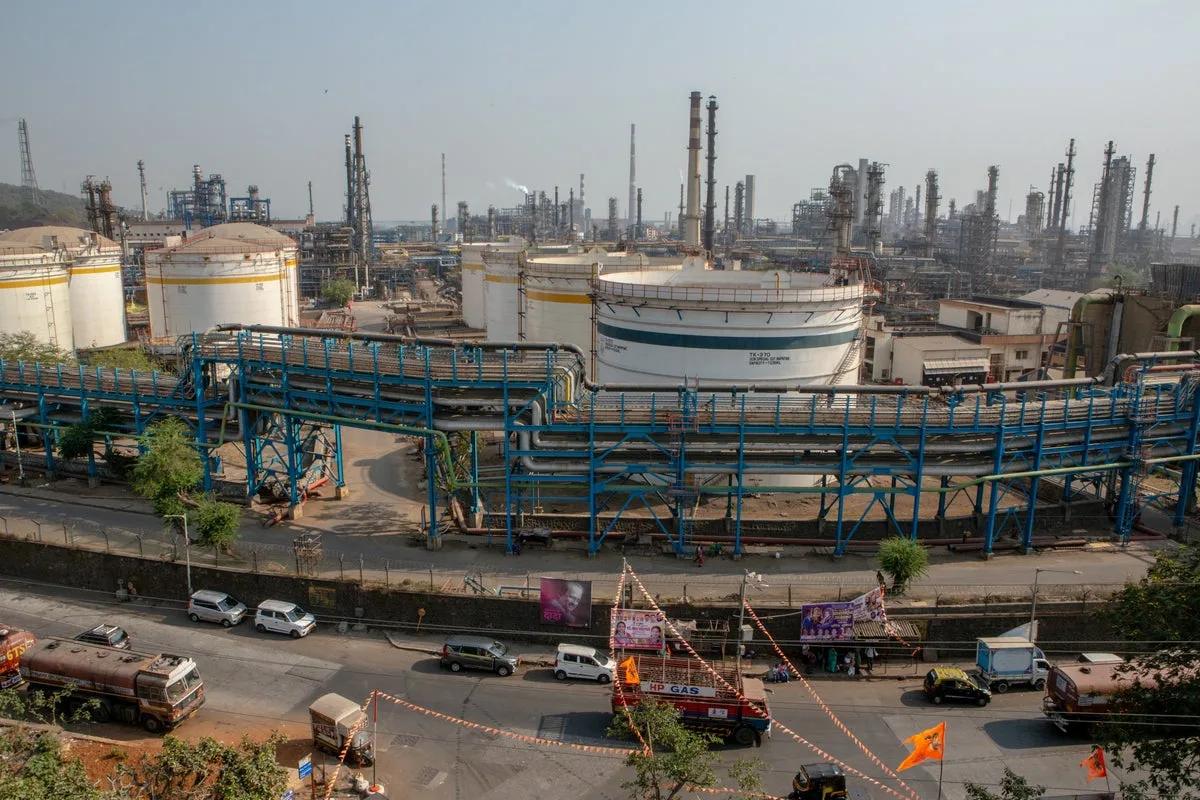
Iran’s retaliatory closure of the Strait of Hormuz, which normally carries about a quarter of the world's oil, has sparked what the International Energy Agency has described as the largest supply disruption in the history of the global oil market. Brent crude has surged over 55 per cent since the war began on 28 February, hitting nearly $120 per barrel at its peak. India, which imports about 89 per cent of its crude oil requirement, has so far insulated its petrol and diesel supplies from the closure of the strait by buying from Russia. But LPG, which accounts for the bulk of cooking fuel in the South Asian country and 60 per cent of which passes through the strait, is running short, causing long queues at distribution centres.
Electrification as a path forward
Experts gathered at the summit stressed the need for electrifying key sectors. Sagar Adani, executive director of Adani Green Energy, one of the country’s biggest energy companies, made the case for electrification as India's most credible path out of import dependence.
"We have all seen how a conflict in one region can disrupt supply chains across continents," he told the summit. "We have all seen how shocks in energy markets can ripple through economies overnight. In that world, the question for every economy today is not how fast you can grow but how well can you withstand disruptions."
Renewable energy milestones
India reported its highest-ever single-year renewable energy addition of 55 gigawatts – 44 gigawatts solar and six wind – in 2025-26. Renewable sources now contribute over 50 per cent of the installed electricity capacity, a milestone Mr Joshi noted no other G20 nation had reached, although he acknowledged that installed capacity did not reflect actual generation.
Earlier in the day, Mr Adani used his keynote address to argue that energy security had moved from theory to urgent reality. "Today, resilience is no longer a concept that is confined to classrooms or simulated in war rooms," he said. He argued that for India to reach developed economy status by 2047, the scale of ambition required went far beyond renewable energy targets.
"We are not talking about incremental growth. We are talking about a structural leap. We are talking about adding nearly 2,000 gigawatts of new capacity over the next two decades," he said. The path forward, he added, was unambiguous. "We must electrify everything. We must reduce structural dependence on imported energy. And we must build an energy backbone anchored in resources that are available within the country."
Constraints and solutions
He cautioned, however, that renewables alone could not close the gap. "Renewables will, and must, scale rapidly. Storage technologies will continue to evolve. But there are real constraints, particularly around land and intermittency." India would need to draw on every source available, he argues. "Renewables. Hydro. Efficient thermal and nuclear. Because without firm, scalable baseload power, the math simply does not work. This is not optional for India. It is inevitable," he said.
Mr Joshi echoed that technology-neutral approach, pointing to India's firm and dispatchable renewable energy auctions, which require developers to guarantee round-the-clock supply rather than generate only when the sun shines or wind blows, as evidence that the government was no longer simply adding capacity but building a reliable grid.