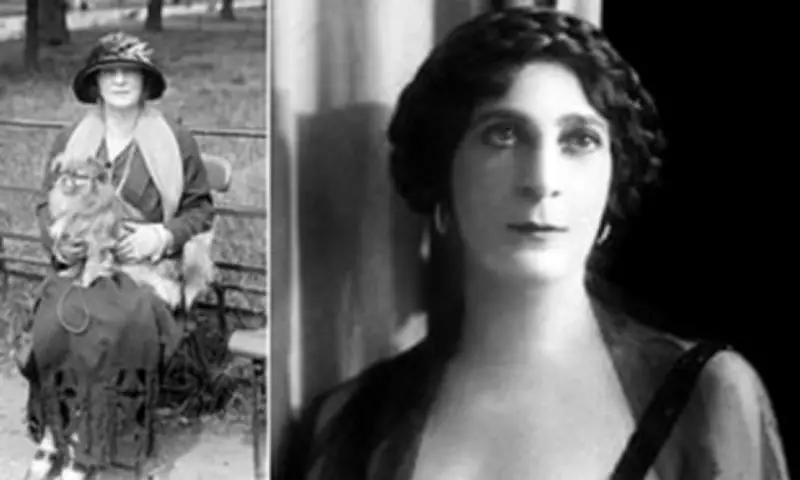
From Imperial Palace to Humble Shack: The Extraordinary Downfall of a Russian Princess
Born into unimaginable imperial splendor as the daughter of a Russian Tsar, Princess Catherine Yourievsky ended her days in what contemporaries described as a 'horrible shack' in Hampshire, having lost everything through revolution, betrayal, and misfortune. Her dramatic life story represents one of the most spectacular falls from grace in modern royal history.
Imperial Beginnings and Revolutionary Escape
Princess Catherine entered the world in the vast marble halls of Tsarskoye Selo, the imperial palace complex that dwarfed Buckingham Palace by five times in scale. As the daughter of the assassinated Tsar Alexander II, she enjoyed privileges beyond ordinary comprehension during her youth. Her connection to British royalty came through her relation to the Duchess of Kent, establishing ties that would later prove both helpful and heartbreaking.
Her first marriage to Prince Baryatinsky transformed her overnight into the wealthiest woman in Russia, with contemporaries describing her as 'staggeringly beautiful' during this period of opulence. However, the marriage proved troubled from the outset, with her husband maintaining a passionate affair with celebrated opera singer Lina Cavalieri.

In a desperate attempt to win back her husband's affections, the young princess—just twenty-three and remarkably unworldly despite her exalted birth—forced herself to imitate her rival's clothing, jewelry, and even deportment. This unusual strategy brought unexpected success when Prince Baryatinsky died unexpectedly at thirty-nine, leaving Catherine the bulk of his colossal fortune.
Revolution, Exile, and Second Heartbreak
Before she could properly enjoy her inherited wealth, the Russian Revolution erupted, forcing Catherine to flee her homeland. She escaped with only a handful of jewels, walking unrecognized for days through her war-torn country before reaching safety. As her friend, MP Henry Channon, later recorded: 'She lost everything. She managed to escape to London with just a few odd jewels.'
In London's Knightsbridge, she established a household behind Harrods, sharing accommodation with exiled royalty including King Manuel of Portugal, Prince Paul of Yugoslavia, and Russian Prince Serge Obolensky. She had met Obolensky previously in Yalta, where he recuperated in a field hospital she operated while fighting against Bolshevik forces.
Their subsequent marriage proved another tragic miscalculation. The swashbuckling Obolensky, twelve years her junior, soon abandoned Catherine for Australian-born socialite Sheila, Countess of Loughborough, cruelly declaring his wife 'too old, too ill, and too querulous' to live with. This second betrayal left Catherine penniless and increasingly isolated, with no further suitors appearing to rescue her from her predicament.
Desperate Measures and Growing Poverty
Facing financial ruin, Catherine attempted to establish herself as an opera singer, performing at prestigious venues including the Queen's Hall, London Coliseum, Royal Albert Hall, and various charity matinees. She worked diligently at her new profession, learning and rehearsing over two hundred songs in Russian, French, and English. However, audiences attended primarily to witness a Russian princess on stage rather than appreciate her vocal talents.
When a concert at Claridge's Hotel attracted barely a handful of paying customers, she was forced to downgrade to music-hall appearances—a humiliating development for a Serene Highness accustomed to imperial courts. As work opportunities dwindled, she lent her name to newspaper advertisements for patent medicine Phosferine, which promised relief from neuralgia to exhaustion but derived much commercial success from its substantial alcohol content.

By her fifties, Catherine found herself completely broke, living on Hayling Island near Portsmouth. Queen Mary, nursing guilt over King George V's refusal to grant asylum to Catherine's nephew Tsar Nicholas II and his family—a decision that led directly to their execution in Yekaterinburg—provided a small pension. Yet this proved insufficient, forcing Catherine to accept monthly payments from her ex-husband Obolensky, money that actually originated from his new wife, American heiress Alice Astor.
Final Years and Lonely End
Henry Channon visited Catherine at Northney on Hayling Island, describing her residence as 'a ghastly villa called The Haven with a midget garden – peace, poverty, and Pekinese.' He recorded in his diary: 'Ever since Serge left her she has been increasingly poorer and poorer, more and more abandoned and forgotten, until now she lives in this forgotten villa where she lies in the sun and dreams of Tsarkoye Selo, where she was born.'
The contrast between her origins and final circumstances could hardly have been more extreme. From incalculable wealth and imperial privilege to loneliness and penury on a modest island, Catherine reportedly hadn't tasted wine for years during her impoverished exile. She eventually moved to an even smaller property on Havant Road as her life's journey approached its conclusion.
Princess Catherine Alexandrovna Yurievskaya died in December 1959 at eighty-four, leaving just £1,000 in her will. Once part of a family that ruled over one hundred million subjects across the sprawling Russian Empire, only six mourners attended her funeral—a stark testament to how completely revolution, misfortune, and changing times had erased her from the world she was born to dominate.