Savannah Guthrie's Life-Altering Loss at Sixteen
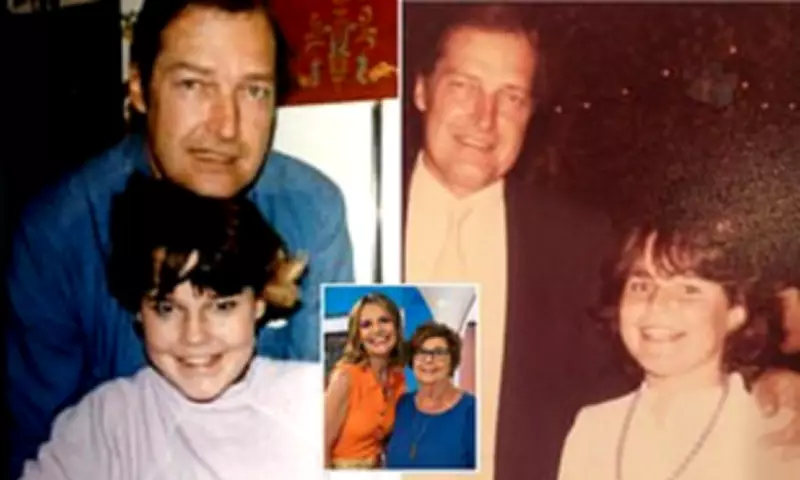
The first profound upheaval in Savannah Guthrie's life occurred during her teenage years. The Today show anchor was just sixteen years old, a junior at a high school in Tucson, when her father Charles Guthrie died unexpectedly from a heart attack while working in Mexico. She has frequently described his passing in 1988 at age forty-nine as a transformative event that fundamentally reshaped her family dynamics, personal character, and life trajectory.
A Father's Sudden Passing and Lasting Impact
'My father died when I was sixteen. I think about him all the time,' Guthrie has stated in previous interviews. Charles Guthrie, a mining engineer and executive with the Phoenix-based copper corporation Phelps Dodge, experienced his initial heart attack when Savannah was approximately thirteen years old. 'I think I was a freshman in high school, and I don't believe we fully comprehended the seriousness of that situation,' she recalled during a 2023 conversation with Brooke Shields.
Tragically, a second heart attack three years later proved fatal. 'It was so unexpected,' Guthrie expressed. 'It cracked open our family and crushed us.' She often credited her mother, Nancy Guthrie, with maintaining family cohesion after this devastating loss. However, the Guthrie family now confronts renewed distress with the recent disappearance of eighty-four-year-old Nancy.

Charles Guthrie had been, in Savannah's words, the family's center of gravity. 'We just idolized him and adored him. He was larger than life – funny, charming. His loss was so sudden and so shocking.' In the immediate aftermath, the Guthries clung tightly together, abruptly adjusting from a family of five to a family of four. 'We hung on to each other for dear life,' she recounted.
Family Background and Current Crisis
Savannah, the youngest of three siblings, was born in Melbourne, Australia, in 1971 shortly after her father relocated there for work with Phelps Dodge. Her brother Camron, sixty-one, is a retired fighter pilot, while her sister Annie, fifty-six, works as a poet and writer. All three have reunited in Tucson as the search for their mother and her abductors continues.
The family returned to Tucson when Savannah was two years old, purchasing the home where Nancy Guthrie resided until her disappearance. Guthrie has portrayed her father, originally from Harlan County, Kentucky, as an unlikely combination of characteristics – 'always strong, sometimes terrifying… disarmingly gentle and tender when it counted' – with a presence that illuminated any room.
'He was deep and complicated, and he didn't speak to us like little children,' she explained. 'He shared insights that I didn't fully grasp at the time but would later recall, long after his death.' She believes these memories contained a form of foresight. 'I feel almost like he knew – or God knew – he needed to impart this wisdom,' she reflected. 'She cannot comprehend it now, but years later it will resemble a gift I unwrap. 'Oh, that's what he intended.''
Personal Reminders and Professional Context
Among the qualities she most admired was his integrity, what she termed an unbending notion of right and wrong, coupled with unexpected kindness and mercy. She has preserved tangible mementos of him, including transforming a love note he wrote to her mother, signed 'all my love,' into a tattoo.
Guthrie frequently characterizes her father's death as a stark demarcation line. 'I always consider it like our calendars with B.C. and A.D.,' she said. 'There exists before my dad died and there exists after. It's profound.' She believes this division altered everything – her residence, worldview, and even career choice. 'I often speculate I would have been entirely different if my father had lived,' she admitted. 'I don't know that I would have selected this career. I might have remained in my hometown.'

Simultaneously, she acknowledges that grief softened her. 'I know that my heart is more tender because of it,' she stated. 'I wasn't hesitant to converse with people who are sad or grieving, because I understand what it resembles. There's virtually nothing you can articulate that will make them feel any worse.' This openness extends to strangers who approach her with recollections. 'If somebody approaches me and has something to share about my dad,' she said, 'I cannot hear enough of it.'
Corporate History and Personal Legacy
The public history of Phelps Dodge, the company that defined much of her father's professional life, presents a quiet contrast to the private memories she cherishes. Phelps Dodge was a dominant – and controversial – force in Arizona's copper industry. In 1983, five years before Charles Guthrie's death, the company was central to a bitter three-year strike that transformed labor relations in the state and garnered national headlines.
The confrontation ultimately dismantled the union and created deep divisions within the predominantly Mexican-American mining communities in Arizona. At least two books, including one by Barbara Kingsolver, have documented the strike – which featured violent clashes and riots. A three-year-old girl was shot in the head by a bullet intended for her family's residence.
Conservative commentator Ann Coulter's former FBI father, John Vincent Coulter, was dispatched from New York by Phelps Dodge management as an enforcer to assist in breaking the union. 'It was ruthless,' labor historian Jonathan Rosenblum, author of the 1995 book Copper Crucible about the strike, informed the Daily Mail. 'The towns were devastated. Families turned on each other. Brothers turned against brothers.'
The company's history also includes the 1917 Bisbee Deportation, when over one thousand striking miners were rounded up at gunpoint, loaded onto cattle cars, and abandoned in the New Mexico desert. For Guthrie, this broader historical context coexists with something far more personal: the memory of a father she describes as principled, magnetic, and morally certain – the man who defined her earliest comprehension of right and wrong.
'I know it changed me,' she concluded regarding losing him. 'Fundamentally, it changed everything.' As Savannah and her siblings endure another devastating blow with their mother's ongoing disappearance after being kidnapped from her Tucson home on February 1, that adolescent tragedy assumes renewed significance, framing their current anguish within a lifetime shaped by profound loss.