Syrian Rapper Al Darwish Makes Emotional Return Home After 13-Year Absence
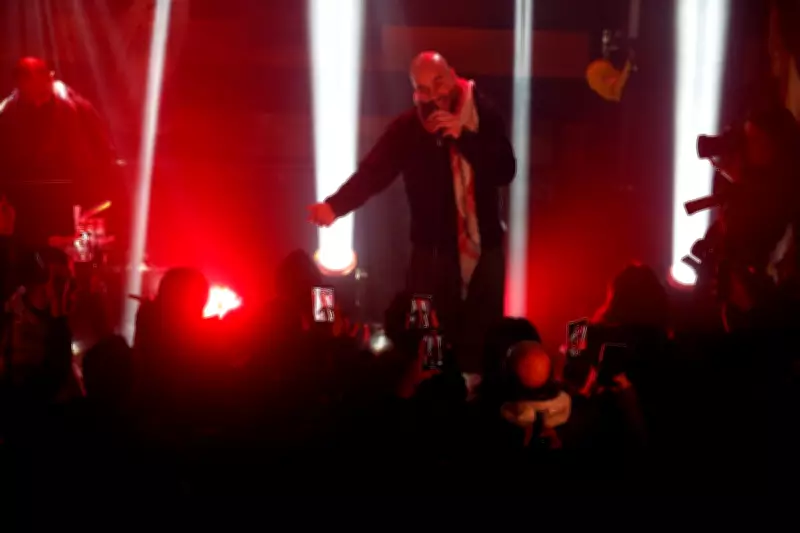
In a moment charged with profound emotion, Syrian rap artist Hani Al Sawah, widely recognised by his stage name Al Darwish, recently walked the familiar streets of Damascus. This marked his first visit to his homeland in thirteen long years, culminating in a series of sold-out performances that represented a significant personal and national milestone.
"Never in my wildest dreams did I think I could ever return to Syria," the musician confessed to The Associated Press following his concerts on 16 and 17 January. The audience's fervent participation, singing along to every lyric, created an overwhelming atmosphere where he could barely hear his own voice. "I have this weird feeling that I never left, or that I left a part of me here that I was able to find again," Al Sawah reflected, capturing the surreal nature of his homecoming.
A Journey from Underground Activism to International Recognition
Al Sawah's musical journey began in his hometown of Homs, where he discovered rap in 2001. He quickly embraced the genre as a potent form of self-expression, becoming part of a clandestine underground scene. "We had a nice scene at the time in Homs, of course everything was underground and nobody knew anything about us and that we were rapping," he recalled. This early period was fraught with challenges, as authorities frequently stopped him and his friends, criticising their attire and dismissing rap as a symbol of Western cultural imperialism.

The 2011 uprising against President Bashar Assad's regime ignited Al Sawah's creative fire. His lyrics boldly championed mass protests and defied dictatorship, illuminating a rap scene few knew existed. Secretly attending demonstrations in Homs against his father's wishes, he channelled the revolutionary spirit into his music, which also paid tribute to anti-government movements across the region.
Fleeing to Lebanon in 2012 and later relocating to Germany, Al Sawah continued his artistic mission from abroad. Throughout Syria's devastating civil war, he amassed a significant online following, with his music resonating deeply with Syrians both within the country and throughout the diaspora.
Returning to a Transformed Nation
Al Sawah's return comes more than a year after a lightning insurgency in December 2024 toppled the Assad dynasty's half-century rule. While hopeful that the new rulers in Damascus will build a just and prosperous nation, the rapper remains acutely aware of the country's fragile state and complex challenges.
"What happened here were fast and sudden changes, and we're only talking about Damascus," he observed after strolling through the capital. "Sure it changed, but not like my city of Homs, Aleppo, or any of the cities where two-thirds or three-quarters of it were destroyed." This stark contrast between the capital and other devastated regions weighs heavily on his mind.
During conversations with friends and acquaintances, Al Sawah detected a palpable, lingering fear of criticising the new authorities—a sentiment he describes as "inherited" from decades under the Assad family's extensive security apparatus. "If we want to say that the regime really did fall, then so should this fear," he asserted, highlighting the psychological scars that persist despite political change.
Confronting Sectarian Violence Through Music
This cautious optimism is tempered by concern over recent incidents of violence that have taken on sectarian dimensions. Al Sawah has spoken out online against such conflicts, particularly referencing two troubling events:

- A government counteroffensive against armed Assad loyalists from the Alawite religious minority along the coast, which escalated into widespread revenge attacks targeting the community.
- Government intervention in the Druze-majority province of Sweida last summer, which clearly sided with armed Bedouin tribes against Druze militias, resulting in hundreds of civilian deaths.
"If you can justify what happened on the coast—which of course you can't—by saying they were armed (Assad) loyalists and so on, then you cannot justify what happened in Sweida," he stated firmly, calling it a "fatal error" in the Islamist-led government's efforts to win minority support and unify the nation.
During his Damascus performance, Al Sawah courageously paid tribute to both the coastal province and Sweida in one of his songs, admittedly nervous about the crowd's reaction. To his surprise and immense relief, the audience responded with cheers and applause. "This is the reaction I was looking for," he said, visibly moved. "It's what encourages me to come back."
This historic homecoming represents more than just a series of concerts; it symbolises a tentative step toward healing and reconciliation in a nation forever changed by conflict. As Al Darwish reconnects with his roots and his people, his music continues to serve as both a mirror reflecting Syria's complex reality and a beacon of hope for its uncertain future.