Netflix's Culinary Class Wars Transforms South Korea's Fine Dining Landscape
Chefs and culinary experts across South Korea are reporting a seismic shift in the nation's fine dining scene, with much of the transformation attributed to Netflix's popular cooking competition series Culinary Class Wars. The show has not only increased public interest but fundamentally changed how diners engage with high-end culinary experiences.
From Basic Questions to Philosophical Discussions
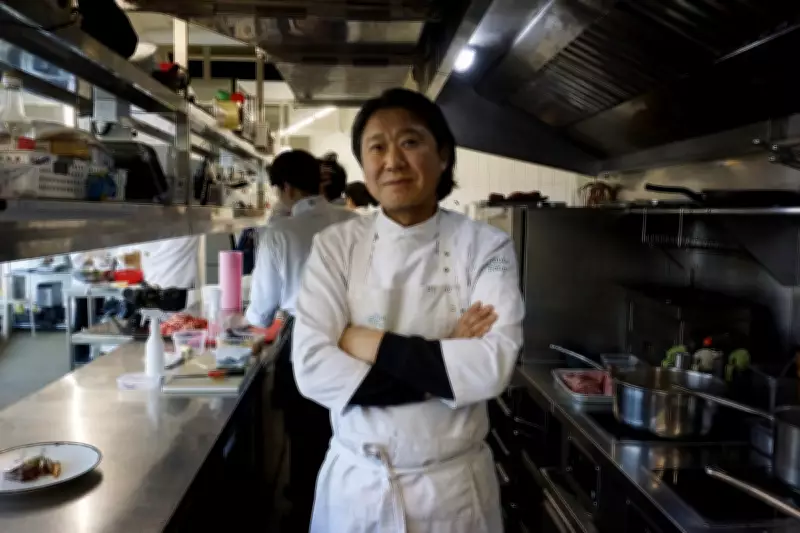
When chef Jun Lee first opened SOIGNÉ in Seoul thirteen years ago, his primary challenge involved educating customers about the very concept of fine dining. His establishment, which exclusively serves tasting menus featuring 'modern Seoul cuisine,' frequently encountered patrons requesting à la carte options or questioning meal durations.
Today, Lee's conversations with diners have evolved dramatically. Discussions now centre on flavour combinations, cooking techniques, and the philosophical foundations behind his culinary creations. "Many people either didn't know this culture existed or weren't particularly interested," explained Lee, whose restaurant name translates to "well-made" in French. "But now they're becoming interested, and when they come to dine, the questions they ask — the style of their questions — have more depth."

The Netflix Effect: From Entertainment to Cultural Phenomenon
Chef Lee recently appeared in the second season of Culinary Class Wars, an unscripted series that pits acclaimed "white spoon" chefs, including Michelin-starred restaurateurs, against underdog "black spoon" challengers. The show's impact has proven extraordinary.
The second season debuted at number one on Netflix's Global Top 10 Non-English TV list in December and remained on the chart for five consecutive weeks. Netflix has officially confirmed production of a third season, indicating sustained popularity.
Tei Yong, CEO of CATCHTABLE, South Korea's leading restaurant reservation platform, emphasised that the show's influence extends far beyond mere entertainment value. "I never imagined a single TV show could generate this level of interest in gastronomy," Yong told The Associated Press.
The numbers substantiate this claim. Following Season 1, Seoul's Metropolitan Government hosted a pop-up event featuring fine dining chefs from the Netflix series. When CATCHTABLE opened 150 reservations, nearly 450,000 people attempted to book — approximately 3,000 individuals competing for each available spot.
Interest has remained robust. The average booking and waitlist registrations per participating restaurant surged approximately 303% in the five weeks following Season 2's premiere compared with the five weeks prior.
Chefs Experience Celebrity Status and Overwhelming Demand
Chef Kim Sung-woon of Table for Four in Seoul reported that reservations have tripled since the show aired. His staff receives roughly 100 phone calls daily — so many they struggle to answer while managing restaurant operations.
Kim's life has transformed in unexpected ways. "Customers ask for photos constantly now — I feel like a celebrity," he revealed. "I've received more letters than at any time since my military service. Young fans, even children, write to me."
Born and raised in Taean, a seaside town south of Seoul, Kim grew up farming and once dreamed of becoming a baseball umpire before entering the restaurant industry. Despite decades in the culinary world, he was speechless when arriving at the Netflix set and encountering legendary chefs he had long idolised.
Chef Lee has witnessed similar changes. People now stop him on the street requesting photographs, and international collaboration proposals have increased significantly. "Before the show, foreigners made up the majority of our reservations," Lee noted. "Now South Korean customers book so quickly that foreign visitors often can't secure tables."
Redefining Korean Culinary Identity
The show has proven particularly significant for chefs who incorporate Korean cuisine with fine dining techniques — a category gaining international attention. For Lee, simply adding Korean ingredients doesn't automatically make a dish culturally Korean.

"If you just put kimchi in a dish and say it's inspired by Korean food, does that make it Korean?" he questioned. "Korean food culture isn't about specific recipes — it's the accumulated lifestyle habits people have created."
Beyond the familiar Korean barbecue and bibimbap that have defined Korean cuisine globally, chefs like Lee are reclaiming a more nuanced cultural identity. He draws upon French, American, and other techniques learned in New York kitchens. "But because I'm expressing them as a South Korean person living in Seoul, Korean elements naturally come through," he explained.
Rather than translating concepts into Western terms, Lee maintains them in Korean — beginning with his signature dish, Hanwoo and Banchans, featuring top-quality beef with an array of seasonal Korean condiments and vegetables.
"Side dishes in English suggest something optional. But in Korean culture, without banchan, a meal feels incomplete. The number of banchan signals whether it's an ordinary day or a special occasion — emotions shared by those who live this culture."
Building on Government Efforts and Reaching Younger Audiences
The show's success builds upon years of groundwork, as the South Korean government has actively promoted Korean cuisine globally since the late 2000s. Jihyung Andrew Kim, a professor in culinary arts and food management at Hanyang Women's University, observed that entertainment content has proven particularly effective in reaching younger demographics.
"The government made genuine efforts for a long time," Professor Kim stated. "But Netflix and cultural content — like BTS gaining international recognition — accelerated globalization of Korean food." The academic noted that fine dining interest has grown especially among diners in their 20s and 30s, driven by social media culture where dining experiences become shareable content.
Challenges and Future Prospects
Despite the enthusiasm, significant challenges persist. Chef Kim highlighted service staff shortages following COVID-19 as a critical industry obstacle. "For fine dining to truly develop, we need service teams to grow alongside chefs," Kim emphasised.
Lee acknowledged that Korean fine dining chefs now face intense competition within a thriving market. "If the market hadn't broadened through Netflix and the show like this, it would have been a much more difficult environment," he concluded.
The transformation of South Korea's fine dining scene demonstrates the powerful intersection of entertainment media and culinary arts, creating new opportunities while presenting fresh challenges for chefs navigating this rapidly evolving landscape.