Judges Clash Over Purpose of National Designer Award at Melbourne Fashion Festival
A significant conflict emerged among the panel deciding this year's National Designer award, raising fundamental questions about the prize's purpose: should it champion creativity or commercial appeal? The process to select the winner was one of the most contentious in recent history, with one judge describing the result as a missed opportunity.
Contentious Judging Process Sparks Debate
Established in 1997 at the Melbourne Fashion Festival, the award is widely regarded as a crucial step toward becoming a legacy Australian designer, with past winners including Toni Maticevski and Romance Was Born. After a hotly debated two-hour meeting, no consensus could be reached by the award's seven judges. The conflict centred on whether the award has a duty to prioritise creativity over commercial success and whether it should favour labels with an established track record.
In the end, an emerging but commercially focused label won: the Brisbane-based label Joaen, run by creative director Grace Kelly and her mother, Mandy Kelly. Of the ten finalists, two other brands, Haluminous and Beare Park, both based in Sydney, were seen as worthy winners by some panel members.

Divergent Perspectives on Creativity and Commerce
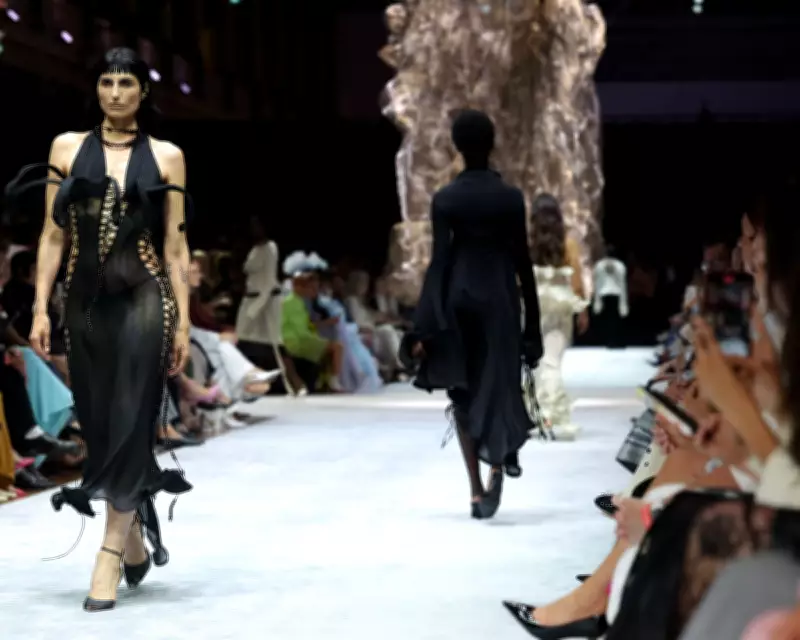
Megha Kapoor, a creative director and judge, championed Haluminous, whose futuristic jersey tops and lace-up dresses evoke early Sass & Bide or past winner Christopher Esber. "The whole point is that you find a talented designer with that creative spark and a unique point of view. They don't have to be perfect because you'll give them the support to become a commercial brand," said Kapoor. "Sometimes the most original voices sit just outside the mainstream ecosystem. So for me, a missed opportunity to bring a creative into the fold."
The award winner receives a $20,000 prize and a business development package provided by sponsor David Jones. Melvin Tanaya, a judge and co-founder of Sydney label Song for the Mute, noted, "Usually there's a clearcut winner, but this time it was so hard." He emphasised backing someone with longevity, stating, "For me, creativity is good but if someone is not ready and you push them, it could backfire." After the award, Tanaya reached out to Hannah Teresa Kim, designer behind Haluminous, to offer mentorship outside the award structure.
Scoring System and Industry Implications
Designers are judged across five categories: brand vision and business strategy are given the least importance, followed by sustainability, quality manufacturing and garment construction, and finally an "innovative, creative and cohesive design aesthetic," which is worth 40% of the total score. Kapoor observed, "From my perspective, the outcome leaned toward commercial readiness. I would have loved to see more emphasis on design innovation."
The prize includes the opportunity to be stocked by department store David Jones. Another judge, Chris Wilson, an executive general manager at David Jones, said he looks for "hanger appeal" alongside other factors. He attributed the contentious process to the high-quality field this year, noting, "Sometimes the outcome is clear, I'll be honest, and sometimes it's not. So, you have some pretty rigorous debates ... The judges are quite heavy hitters within the industry and come from different backgrounds."
Reflections on Past Winners and Future Directions
Of the past five National Designer award winners, only Alémais is currently stocked at David Jones. This year's judging panel included two senior executives from David Jones, Melbourne Fashion Festival CEO Caroline Ralphsmith, sustainability expert Courtney Holm, and accessory brand Oroton's creative director Sophie Holt, alongside Kapoor and Tanaya.
Last year's winner, Amy Lawrence, was not a commercial choice; her eponymous label focuses on bespoke dresses, challenging traditional ready-to-wear models. Ralphsmith commented, "I think we probably didn't have the equivalent of an Amy Lawrence in the mix this year. Last year there was a fairly consistent thread amongst the judges that ... the vision was so holistic in everything Amy did. The quality of it was just extraordinary. It was easier to rally around."

Beare Park, founded by Gabriella Pereira in 2021, was also a finalist, with significant commercial success including a flagship store and wholesale experience with David Jones. Tanaya said awarding Beare Park was viewed as "too easy" by some judges. Ralphsmith reflected, "I think whether you are commercially successful now is less important than the opportunity for commercial success in the future."
Broader Context of Australian Fashion Industry
The Australian fashion industry is at a crossroads, with local manufacturing in peril and Australian Fashion Week undergoing transformations. For younger brands struggling to achieve commercial stability, the National Designer award offers a rare foothold. Kapoor, with a global outlook from her role as former head of editorial content at Vogue India, emphasised, "The panel members are coming at it from completely different perspectives. We've got to think about what the kids will wear, it's not just about what we find palatable and whether we would wear it. It's about what is reflective of this moment in fashion."