Ghana's Fugu Fashion Surge: National Pride Rises After Presidential Mockery
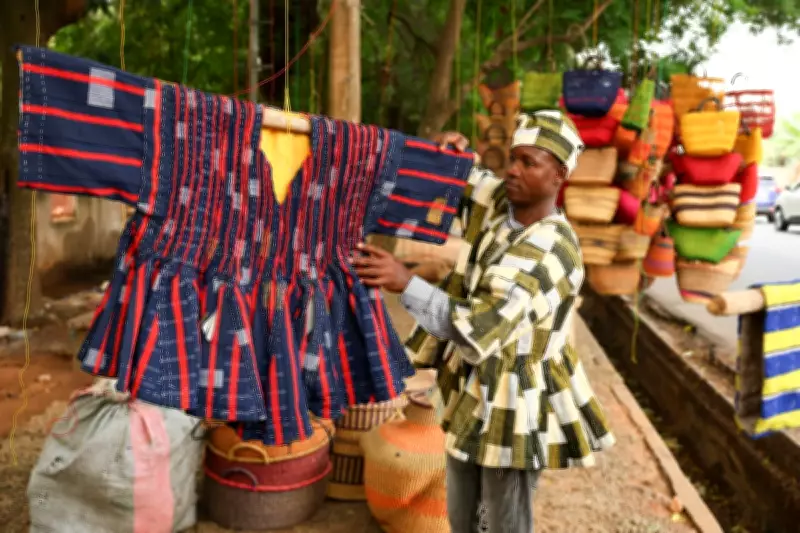
In the bustling heart of Accra, Clement Azaabire meticulously arranges vibrant fugu smocks on display lines, their multicolored stripes dancing in the gentle breeze. For fifteen years, Azaabire has dedicated himself to selling this traditional garment, deeply rooted in northern Ghanaian culture. Today, his craft has become a national sensation, capturing the attention of the entire country.
A Trend Born from Defiance
This remarkable surge in popularity stems from an incident of online mockery directed at Ghana's President, John Dramani Mahama. In early February, during an official visit to Zambia, President Mahama chose to wear the fugu garment, a decision that sparked ridicule from some social media users. Rather than retreat, Ghanaians rallied in defense of their rich cultural heritage.
The public response was swift and powerful. In a significant move, Tourism Minister Abla Dzifa Gomashie declared Wednesdays as official "Fugu Day," encouraging citizens to wear the smock with pride. Since this declaration on February 10th, the trend has exploded. Not only are more people donning the fugu to work on Wednesdays, but its wear has extended to other days of the week, creating a sustained cultural movement.

Traders like Clement Azaabire are witnessing unprecedented demand, with stocks selling out rapidly. "It makes me feel profoundly connected to my origins," expressed businessman Wango Abdul Karim, who now wears fugu to work every Wednesday, embodying the spirit of this cultural revival.
Historical Significance and Modern Evolution
Ghana is globally renowned for its rich textile traditions and ancient weaving heritage. The production of the fugu smock, also known locally as batakari, has historically been the preserve of northern communities, with skills passed meticulously through generations.
The garment first gained significant national prominence in March 1957, when Ghana's inaugural President, Kwame Nkrumah, wore it during the country's independence ceremony. Traditionally, the loose-fitting robe is crafted from handwoven cotton strips, stitched together to create a flowing garment often worn over trousers and paired with a matching cap. The fabric is woven on narrow looms in Ghana's northern savannah, with regional identifiers visible in distinctive stripe patterns and stitch lines.
Scholars trace its development to West African trade and migration, incorporating influences from Mossi and Hausa communities. The term 'batakari' derives from Hausa, meaning "outer gown," while 'fugu' in Mossi translates to cloth. Historically, the smock has symbolized prestige, worn by chiefs, warriors, and community leaders, with specific designs reserved for ceremonial occasions.
Artisans and Economic Impact
At the Accra Arts and Crafts Centre, artisan Moses Adibasa carefully guides woven fabric strips through a sewing machine, pausing to align the narrow bands by hand before stitching. Having earned his livelihood from crafting traditional smocks for nearly two decades, Adibasa is optimistic about the ripple effects of "Fugu Day."
"This movement will benefit everyone in the chain—those selling thread, the weavers, and us, the sewers," he remarked, highlighting the broader economic implications.
However, the surge in demand presents challenges. According to Abigail Naki Gabor, secretary of Ghana's smock weavers and sellers association, many weavers are struggling to increase production to meet the new demand. "Using our hands slows the process and limits productivity. We urgently need industrial machines," Gabor emphasized, calling for increased government investment to modernize production.
Contemporary Interpretations and Cultural Preservation
In a modern Accra studio, fashion designer Perfectual Linnan, founder of Roots by Linnan, is reimagining the fugu fabric. She transforms it into contemporary jackets, trousers, and tops designed for everyday wear, representing a growing movement of young designers integrating traditional textiles into modern fashion.
"We aim to demonstrate that northern fabric can be worn in diverse, contemporary ways," Linnan explained. "If the traditional smock isn't your style, you can still carry a piece of your culture with you through these modern adaptations."

Despite this innovation, traditional production faces hurdles. Many weavers now rely on imported yarn due to a shortage of locally grown cotton, though traditional looms remain in use.
National Campaigns and Future Outlook
Beyond "Fugu Day," Ghana is engineering a broader "Wear Ghana" campaign to promote local fashion and heritage, with upcoming trade exhibitions planned, as noted by Kofi Atta Kakra Kusi of the Ghana Tourism Authority. This initiative seeks to sustain the momentum and embed cultural pride in the national consciousness.
Yet, amidst the celebration, Perfectual Linnan sounds a cautionary note. "Weaving fugu is a careful, intentional process," she asserts. "If we treat it merely as a commodity and neglect its heritage, we risk losing something profoundly important."
This cultural resurgence, sparked by a moment of mockery, has blossomed into a powerful expression of national identity, weaving together tradition, commerce, and pride in Ghana's rich heritage.