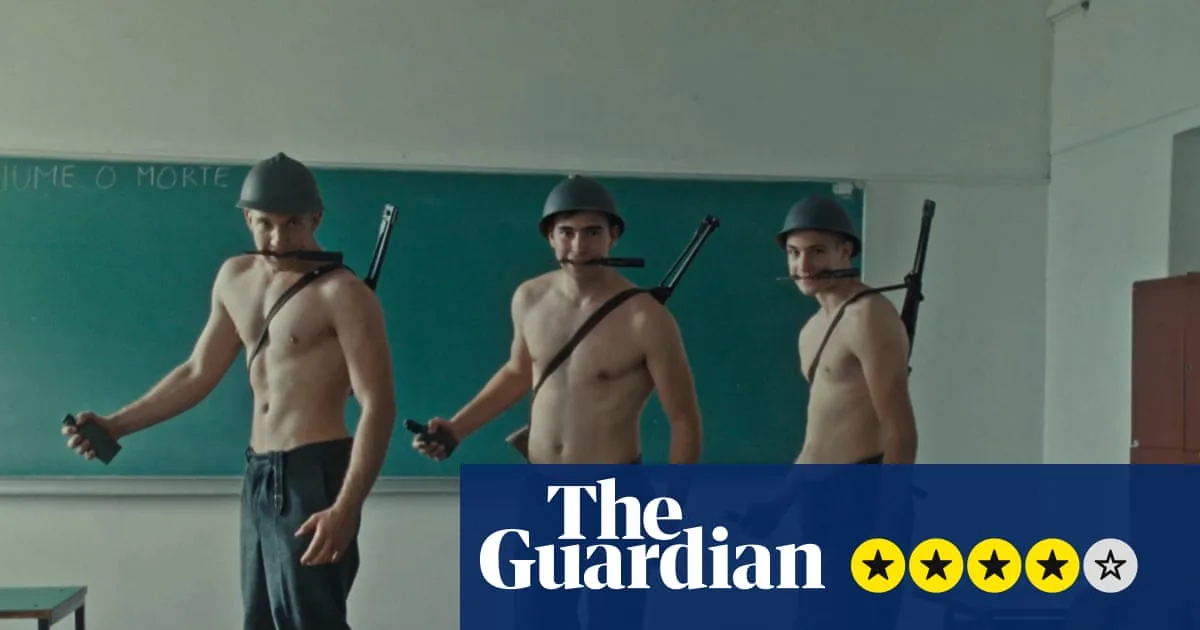
Igor Bezinović’s intriguing documentary is partly a comic opera and partly a chilling message from the past. It focuses on his hometown of Rijeka, a port on the Adriatic that after the First World War became the site of one of the 20th century’s strangest episodes. The director stages key moments through re-enactments with local residents, creating a protofascist Passport to Pimlico.
In 1918, the city, known as Fiume and with a significant ethnic Italian population, was formerly ruled by the Habsburgs. After the war, it was not absorbed into Italy as many expected but left under the control of the Kingdom of Serbs, Croats and Slovenes (later Yugoslavia). Enraged by this betrayal, Italian aristocrat, poet and cocaine addict Gabriele D’Annunzio led a bizarre insurgency with 186 mercenaries, establishing a pro-Italian city state under his absolute control.
This supposed romantic visionary attracted many discontented, unemployed Italian men to serve as his soldiers. The mini-realm lasted until 1920, when Italy forced D’Annunzio out. He staged massed marching displays creating the illusion of popular support, but when plebiscites indicated the non-Italian majority was against him, the votes were scrapped. A maritime incident involving a Croat attack on an Italian ship in Split became the pretext for brutal assaults on non-Italian businesses in Fiume, a grisly curtain raiser for Kristallnacht.

The young Benito Mussolini was a huge admirer of D’Annunzio and later adopted his followers’ song Giovinezza as his own fascist anthem. Many international celebrities, including Marconi and Toscanini, affected to admire D’Annunzio, as the movie records. Bezinović amusingly gets many different local Rijeka men to play D’Annunzio in high-spirited tableau-style scenes mimicking old photos and archive footage. One of the D’Annunzios is a middle-aged former military officer and “veteran of the Croatian war of independence”, perhaps reminding us that no country has a monopoly on nationalism or fascism.