Danny Boyle's one-day pop culture spectacular You Are Here at the Southbank Centre in London is an undertaking of impressive scale. This self-styled 'epic, one-off pop-cultural spectacular' involves immersive theatre, dance, music, and a 'cast of hundreds'. It takes up a hefty chunk of the Southbank Centre and sets itself a similarly hefty task: reimagining some of the most vivid and influential youth and social movements that have driven culture forward since 1951, the year of the Festival of Britain, when the Royal Festival Hall opened for business.
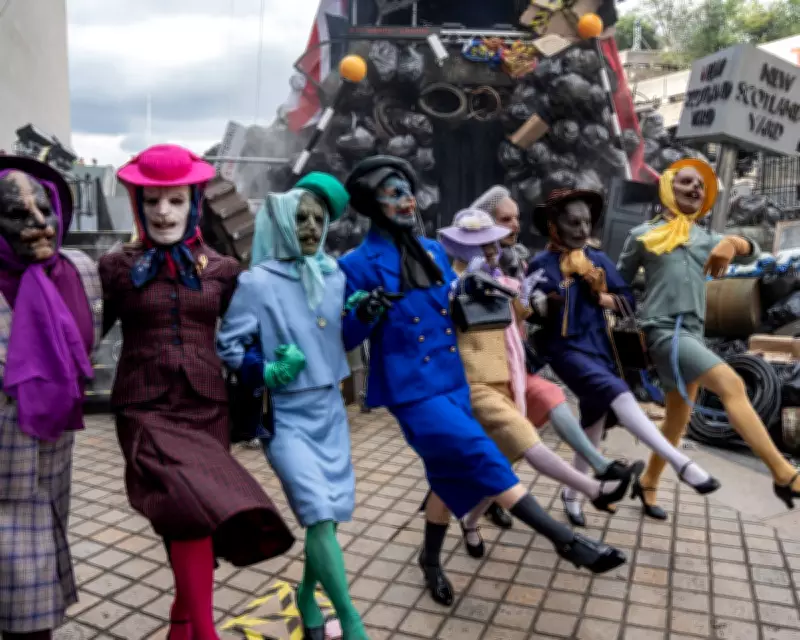
'Some of' turns out to be the operative phrase: there is an awful lot going on, but even so, the sheer enormousness of its subject means a degree of selectivity is necessary. Its take on British pop culture takes a noticeably dancefloor-centric view. There is more about rave than the 1960s pop explosion that really shifted the UK out of the postwar doldrums that the You Are Here audience first encounters (you wander through an authentically eerie evocation of smog-bound London, its inhabitants literally grey). New Romantics and Britpop are also hard to spot, and the hippy counterculture of the late 1960s and early 1970s gets very short shrift indeed, unless you count the repurposing of some old west London graffiti that may have been the handiwork of 'alternative society' collective the Albion Free State ('THE TIGERS OF WRATH ARE WISER THAN THE HORSES OF INSTRUCTION').
Still, you might reasonably argue that the New Romantics have already had their own exhibition – the Design Museum's Blitz: the Club That Shaped the 80s – and we have all heard enough about Britpop in recent years to last us a lifetime: better to redress the 1990s balance by concentrating on post-acid house club culture than wheel out Wonderwall for the umpteenth time. And you cannot doubt the organisers' fondness for their subject. Indeed, you are sometimes struck by the sense that the event might be taking slightly too rosy a view of British youth culture for its own good.

In one dance piece, a group comprising teddy boys, spider's-web-tattooed skinheads, and punks – one of the punks is very clearly based on the legendary Sex Pistols camp follower Jordan Mooney – are first wary of, then welcoming towards a group of Windrush immigrants. It is a lovely idea, and it is beautifully choreographed, but it does seem to overlook the fact that, had you assembled a group of teds, skins, and punks together in the late 1970s, the end result would not have been joyous dancing and an exemplary attitude towards immigrants but a massive ruck. Someone would have ended up in A&E.
At other points, it is a little unclear what the performances are driving at. There are references to the Dagenham machinists' strike of 1968 and the 1963 Bristol bus boycott: these are important events well worth commemorating – the latter faced down appalling racism towards the city's black and Asian population; the former was a trigger for the passing of the Equal Pay Act – but it is hard to see what either of them have to do with British youth or pop culture.
In the Royal Festival Hall's ballroom – transformed into a club where the music continually shifts from Northern soul to house to drum'n'bass to grime – the dancefloor is temporarily cleared for a choreographed routine with an accompaniment that moves from Elvis Presley's Jailhouse Rock into the fearsome Dutch techno sub-genre gabber. The dancing is amazing – supremely athletic jiving, filled with whiplash-inducing lifts and spins – but you struggle to work out what it is trying to say.
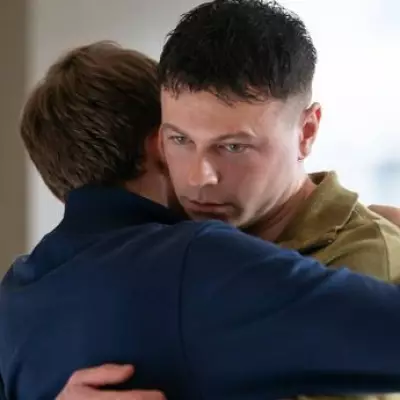
Meanwhile, the Royal Festival Hall's main auditorium plays host to a group of teenagers frantically dancing to Bronski Beat's Smalltown Boy. They gradually fall to the floor, before the room is strafed by mirror-ball lights and David Bowie and Freddie Mercury's isolated vocals from Under Pressure boom out. It is probably about the impact of the Aids epidemic, but you cannot be entirely certain.

Equally, the whole business is clearly well-intentioned and it is frequently really fun: the dancefloor in the ballroom remains understandably packed throughout; the stage outside the Royal Festival Hall's main entrance, featuring DJs on a set made up to look like a 1970s living room, plays a succession of undeniable bangers and people dance happily in the evening sun; the atmosphere throughout is rather lovely. Perhaps the best course of action is to ignore the shortcomings, not query it too deeply, and simply give yourself over to the experience – in the same way that a teenager embracing a youth cult might.