The Unexpected Return of VistaVision in Contemporary Filmmaking
VistaVision, the large-scale film format that flourished in the 1950s before fading into obscurity, is currently enjoying a remarkable resurgence on the big screen. This analog technology, which many considered obsolete, is now being embraced by some of today's most visionary directors, including Paul Thomas Anderson, who utilized it extensively for his epic film "One Battle After Another." The format's revival represents a fascinating counter-trend in an era dominated by digital filmmaking and artificial intelligence.
From Museum Pieces to Oscar Contenders
When cinematographer Michael Bauman first learned that Anderson wanted to shoot "One Battle After Another" using VistaVision cameras, his initial reaction was one of practical concern. "Question one was: Is this even going to be reliable?" Bauman recalls. For over six decades, most remaining VistaVision equipment had been gathering dust on shelves or displayed in museums, with the last major film shot entirely on the format being 1961's "One-Eyed Jacks."
Despite these challenges, "One Battle After Another" has become a major awards contender, with Bauman earning an Academy Award nomination for Best Cinematography. The production team ran approximately 1.5 million feet of film through antique cameras borrowed from collectors and institutions, demonstrating that vintage analog technology can still produce breathtaking cinematic results that captivate modern audiences.

The Technical Superiority of VistaVision
VistaVision's appeal lies in its technical specifications. First introduced by Paramount Pictures with 1954's "White Christmas," the format utilizes film stock that is eight perforations wide rather than the standard four, running horizontally through the camera instead of vertically. This creates double the resolution of conventional 35mm film, resulting in exceptionally detailed and immersive images that many filmmakers believe digital formats cannot replicate.
"It's a revitalization of a level of the craft of cinematography," explains Bauman. "Photochemical has got a strong voice in the room, still." The format's visual characteristics have attracted numerous contemporary directors, including Yorgos Lanthimos, who used VistaVision for parts of "Poor Things" before shooting the entire Oscar-nominated "Bugonia" with it. Emerald Fennell's recent adaptation of "Wuthering Heights" and Greta Gerwig's upcoming "Narnia" film also employ the format.
Practical Challenges and Creative Solutions
Working with VistaVision presents significant practical difficulties. The cameras are notoriously awkward, noisy, and limited to approximately five-minute takes due to film capacity constraints. For her 2025 drama "The Testament of Ann Lee," filmmaker Mona Fastvold ultimately decided against using VistaVision because the equipment's noise level would have disrupted the intimate atmosphere she sought to create.
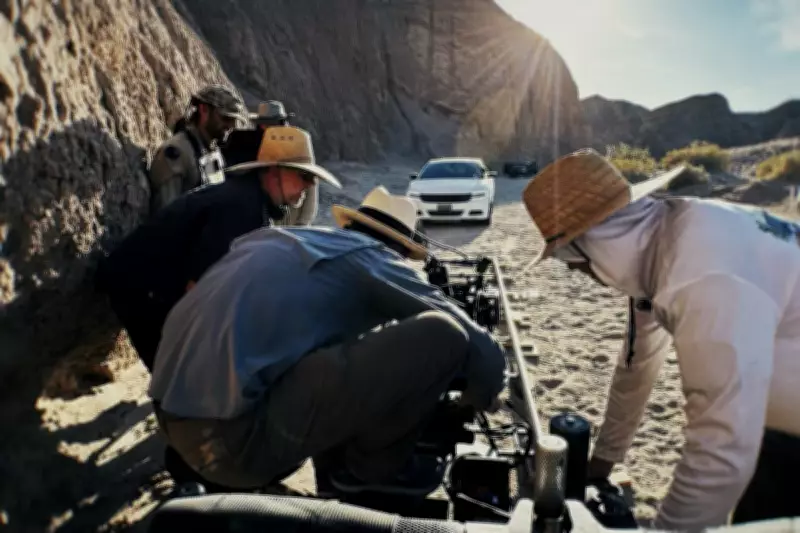
Nevertheless, many cinematographers consider the extra effort worthwhile for the distinctive visual quality the format produces. The "One Battle After Another" team employed creative solutions to overcome technical limitations, including building sound-dampening enclosures around the cameras and utilizing a more mobile Beaumont VistaVision camera owned by actor Giovanni Ribisi.
"It's not something that you can just press a button and you just let it roll for two hours," Ribisi observes. "It fights back a little bit, maybe too much. You kind of have to earn it, and I like that."
A New Era of Exhibition and Audience Engagement
The VistaVision revival extends beyond production to exhibition. "One Battle After Another" became the first wide-release film in over sixty years to be projected in VistaVision format, with only four theaters worldwide equipped to handle the specialized presentation. The Coolidge Corner Theatre in Brookline, Massachusetts, went to extraordinary lengths, borrowing projectors from the George Eastman Museum and completely reorganizing their projection booth to accommodate the vintage equipment.

"People were incredibly interested to come out and see what the fuss was about," reports Mark Anastasio, artistic director at the Coolidge. "Everyone was asking to peak into the booth because we were truly using museum pieces." The theater's VistaVision screenings of "One Battle After Another" became its highest-grossing feature ever, demonstrating significant audience appetite for unique cinematic experiences.
The Future of Analog in a Digital World
This resurgence of VistaVision occurs during a period of significant anxiety within the film industry, as streaming services and large-screen home televisions challenge traditional theatrical exhibition. In response, many filmmakers are emphasizing distinctive presentation formats as a selling point, with Christopher Nolan promoting IMAX screenings and Ryan Coogler utilizing 70mm film for "Sinners."
Ribisi believes formats like VistaVision represent more than mere nostalgia. "I don't think it's just a flash in the pan," he asserts. "I think a lot of people are wanting to not just explore this but consider it their new sword in the battle for filmmaking." The format's multidimensional, immersive quality offers something that even advanced digital technologies struggle to replicate, suggesting that analog filmmaking may have an enduring place alongside digital innovation in cinema's future.