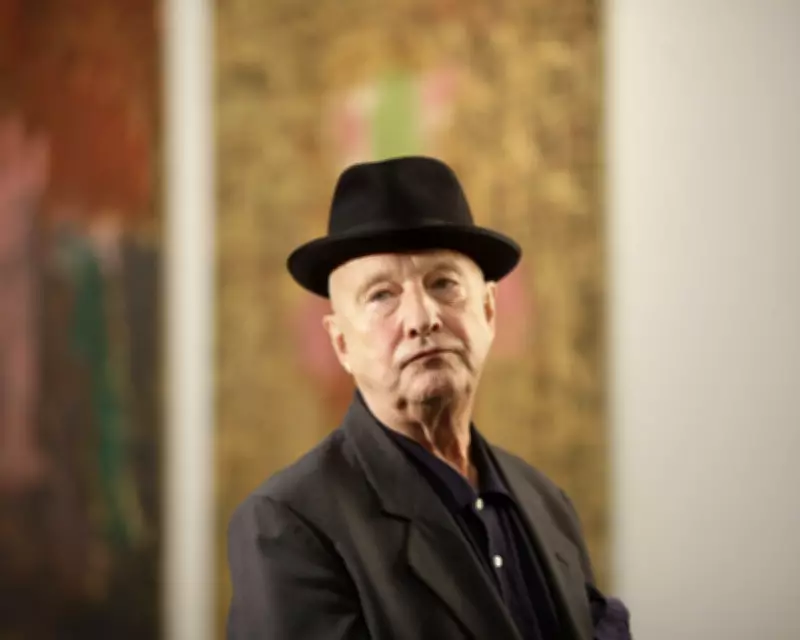
Georg Baselitz, the German painter whose raw expressive works captured the great rupture of the 20th century and helped redefine postwar art, has died aged 88.
A Life Shaped by Dictatorship and War
Born in 1938 in the village of Deutschbaselitz, north-east of Dresden, Baselitz was a child of Nazi Germany. He survived two dictatorships: Hitler's Nazism and Stalin's Soviet grip over eastern Europe. The horrors he witnessed infused his work, as seen in his 1966 work Das Grosse Pathos.
Defining Postwar Art
By 1994, Baselitz was regarded as the defining artist of the postwar period, a rebel who had grown up near Dresden and witnessed the horrific destruction of the second world war and its aftermath under East German communist rule. His paintings often featured deformed figures, which he called 'gristly outgrowths,' exploring what happens when a society represses Nazi crimes against humanity.

The Inverted Technique
From the late 1960s, Baselitz painted many of his works inverted, giving them a spontaneous quality and liberating the viewer's experience from representational context. This technique became his hallmark, as seen in works like Schwarze Säule (Black Column) and Die Dornenkrönung (The Crowning With Thorns), exhibited in London in 2018.
Later Works and Exhibitions
In 2024, Baselitz presented A Confession of My Sins at White Cube Bermondsey in London, featuring 50 new paintings and works on paper that blended portraiture, memory, and figures, including depictions of himself and his wife, Elke. His 2020 exhibition at White Cube Mason's Yard included paintings with ghostly gold hands, drawings, fire-gilded bronze reliefs, and sculptures.
Recognition and Legacy
Baselitz's works have been displayed worldwide, including at the Serpentine in London, the Zwinger museum in Dresden, and the Gallerie dell'Accademia in Venice. In October 2021, he was inducted into L'Académie des Beaux-Arts in Paris. He is survived by his wife, Elke, and a legacy that continues to influence contemporary art.