UK Authors Introduce 'Human Authored' Logo to Distinguish Books from AI Content
The Society of Authors (SoA) has launched a pioneering new scheme designed to clearly differentiate between books written by human authors and those generated by Artificial Intelligence (AI). This initiative allows authors to register their works and download a distinctive "Human Authored" logo, which can be prominently displayed on the back cover of their publications.
Protest and Symbolism at the London Book Fair
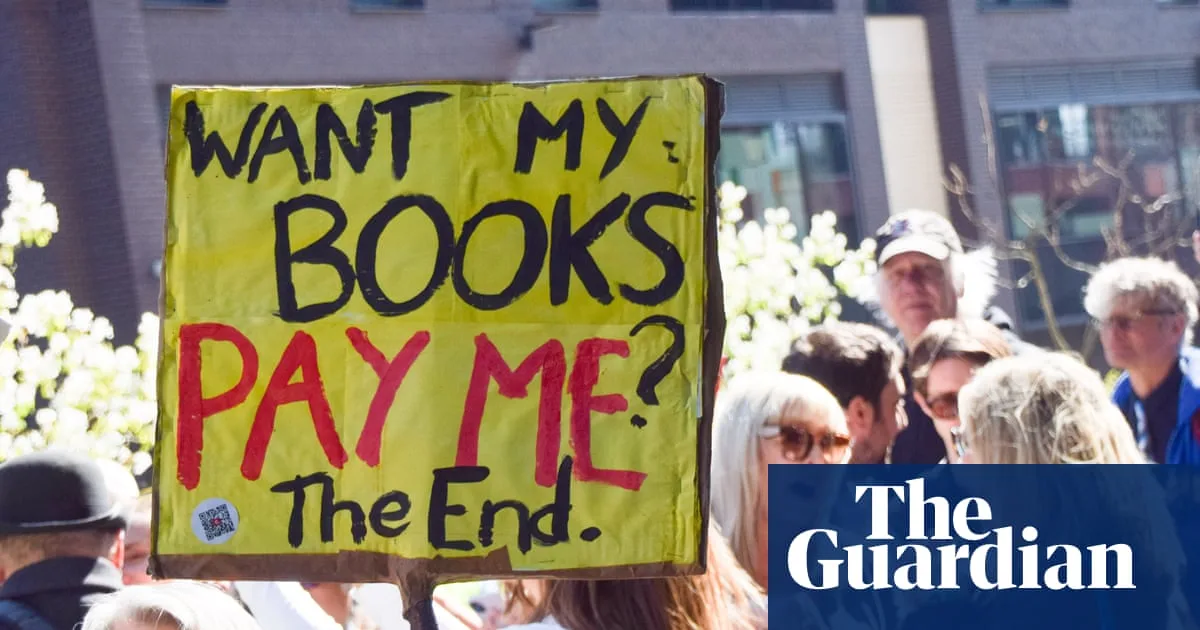
The scheme was officially unveiled by acclaimed novelist Tracy Chevalier at the London Book Fair on Tuesday, mirroring a similar movement initiated by the Authors Guild in the United States during 2025. In a powerful act of protest, approximately 10,000 authors collaborated to distribute empty books titled 'Don't Steal My Book' at the event. These books contained nothing but the names of the participating writers, serving as a stark symbol against the unauthorised use of their copyrighted material by AI companies.
Notable literary figures including Richard Osman, Jeanette Winterson, and Kazuo Ishiguro were among those who participated in this symbolic demonstration. The organiser, composer and copyright campaigner Ed Newton-Rex, vehemently criticised the AI industry, stating it was "built on stolen work taken without permission or payment."
Defending Human Creativity and Craft
Author Malorie Blackman passionately endorsed the new labelling scheme, emphasising that it "seeks to highlight the imagination, commitment, craft and care taken to produce stories and books which can be enjoyed by everyone." She elaborated further, arguing that creative endeavours require time, effort, and a willingness to learn from failures—essential skills that cannot be replicated by allowing AI to handle all creative thinking and production.
Blackman added, "Surely part of the pleasure of reading, listening to songs, watching films and dramas, looking at an artwork and in fact, sharing any creative endeavour is that sense of connection with the content creator, that feeling that they are speaking to you on some deep, emotional level that is entirely absent when the work has been produced by AI."
Addressing Copyright Infringement and Legal Battles
Anna Ganley, Chief Executive of the SoA, described the new labelling scheme as "an important sticking plaster to protect and promote human creativity in lieu of AI labelled content in the marketplace." She highlighted that since generative AI platforms became mainstream, the SoA has been actively campaigning to defend authors' interests and safeguard creators against the wholesale theft of their work by AI tech companies training their chatbots.
This issue has sparked numerous lawsuits from authors and publishers in recent years. Copyrighted works, including books sourced from the open web, form a significant part of the extensive data used by generative AI to develop tools like chatbots. In a landmark case in 2025, leading AI firm Anthropic, behind the Claude chatbot, agreed to settle a £1.1 billion class-action lawsuit brought by book authors who alleged the start-up used pirated copies of their works to train its product.
Government Response and Future Implications
The government has been approached for comment regarding these developments, underscoring the growing pressure on policymakers to address the ethical and legal challenges posed by AI in the creative industries. The SoA's scheme represents a proactive step by the literary community to assert the value of human authorship and combat the unauthorised exploitation of intellectual property.
As the debate intensifies, this initiative not only aims to provide clarity for readers but also to reinforce the irreplaceable role of human creativity in literature, ensuring that the emotional and intellectual connection between author and audience remains preserved in an increasingly automated world.