For over seven decades, the chilling tale of schoolboys descending into savagery in Lord of the Flies has captivated millions. Now, an investigation suggests William Golding's masterpiece was rooted in the real lives of the grammar school pupils he once taught, with the tragic figure of Piggy potentially inspired by a boy known as 'Piglet'.
The Real 'Piglet' of Maidstone Grammar
More than 85 years after Golding was mysteriously dismissed from his post at Maidstone Grammar School in Kent, the Daily Mail has uncovered a remarkable connection. The author taught a pupil who 'rejoiced' in the nickname 'Piglet', a moniker strikingly similar to the character known only as Piggy in his seminal novel.
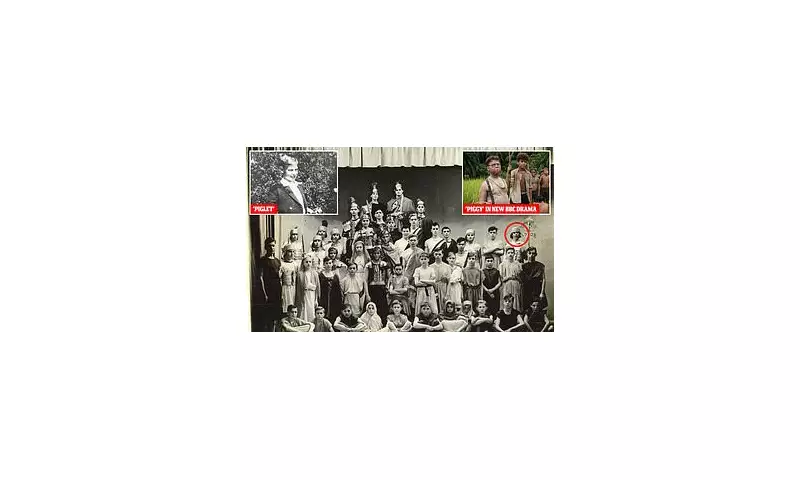
The boy, remembered by former classmates as Raymond Boorman, was a contemporary of Golding's during his tenure from 1938 to 1940. Archival evidence, including a school play programme, confirms their association. Raymond performed as 'First Citizen - Act III' in a 1939 production of Shakespeare's Julius Caesar, which Golding, who taught English and Music, co-produced.

A surviving cast photograph offers a glimpse into the world that likely inspired the young teacher. Raymond's daughter, Pilar Boorman, 71, was tracked down to her home in southern Spain and expressed astonishment at the link. She recalled her father, who died in 1997, insisting she read Lord of the Flies as a girl.
Parallel Lives: Fiction and Reality
While Raymond Boorman was not bullied like his fictional counterpart, intriguing parallels exist. School records show he was a brilliant sportsman and excellent musician, playing rugby like Golding himself. He gained entry to the fee-charging school via a scholarship, hinting at a potentially difficult start in life—a theme echoed in Piggy's background.
Pilar revealed her father's own complex childhood: born out of wedlock in 1924, he grew up believing his grandmother was his mother and his mother was his sister. His father, a married local man, refused all contact. This sense of being an outsider mirrors Piggy, who is parentless and raised by his aunt.
Former pupil Norman Gibson, 99, the last surviving classmate who shared memories with the Mail, described Raymond as a 'very lovable' and 'light-hearted' character, known for his practical jokes. Another ex-student, Keith Mitchell, suggested the nickname 'Piglet' derived from his facial features—'small eyes and a snubby nose'—rather than his nature.
Golding's 'Experiments' and Lasting Legacy
The revelations add weight to long-held theories that Golding drew heavily from his teaching experiences. His biographer, the late Professor John Carey, noted that at his later post at Bishop Wordsworth's School in Salisbury, Golding admitted to pupils they 'might recognise bits of yourself' in his characters. He was even known to 'stir up antagonism' between boys to observe their reactions.
Golding's daughter, Judy Carver, reserved judgement on the specific link to Raymond but acknowledged the nickname 'Piglet' may have stemmed from A.A. Milne's popular Winnie-the-Pooh character. She confirmed that if Raymond was in the school play, her father would have known him.
Published in 1954, Lord of the Flies was not an instant success but became a global phenomenon after the 1963 film adaptation. It has since sold more than 10 million copies and become a staple of school curricula. Golding, who won both the Booker and Nobel Prizes, died in 1993.
His legacy is set for a revival with a new BBC television drama adaptation, written by Jack Thorne of Harry Potter and the Cursed Child fame. For Pilar Boorman, the discovery adds a profound new layer to her father's memory and to one of literature's most enduring explorations of human nature.