Bob Carr's Profound Journey Through Grief and Memory
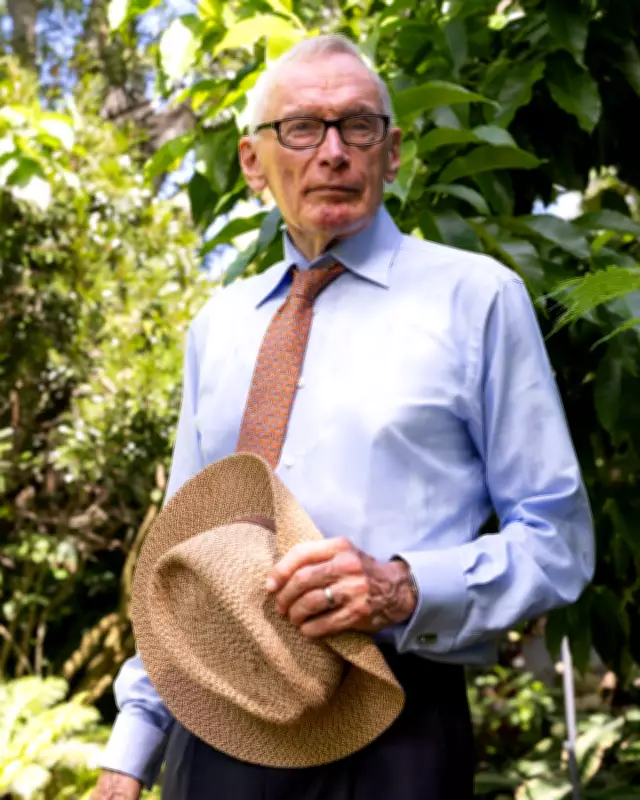
Walking with Bob Carr through Sydney's Botanic Gardens feels deeply appropriate. His new memoir, Bring Back Yesterday, begins with him wandering the city's night-time streets for kilometres in a trance of grief following the sudden death of his beloved wife, Helena. "You become what I call 'memory struck' in your bereaved condition. Knocked sideways. Unabashed nostalgia becomes part of the approach to life that a bereaved person takes," says Carr, the former New South Wales Labor premier who served for a decade until 2005 with Helena constantly by his side.
The Night Walks and Daily Survival
Today, here is a man surviving grief, walking and talking, often poignantly but sometimes animatedly about heartfelt memories. He moves in the sunshine now, unlike the man who strolled silently through darkness, wondering if he might not actually endure the pain of losing his wife. His book provides an affecting account of love, devotion, inextricably entwined lives, and Carr's profound grief after Helena's sudden death from an aneurysm while holidaying in Vienna in October 2023, following five decades of marriage.
We meander from Mrs Macquarie's Chair around an edge of glittering harbour and through the Botanic Gardens as he discusses the eventual catharsis of writing a book that simultaneously honours Helena and parses with searing candour the profound aftermath for him. On those night-time sojourns for many months after her death, Carr would venture from their Maroubra home past countless places of shared experience: restaurants where they'd dined, now dilapidated and shuttered; a city corner where he kicked a rubbish bin after Whitlam almost lost the 1974 federal election; Belvoir St theatre where they'd enjoyed productions with Paul and Annita Keating.

Living the 'Leftover Life'
His existence since Helena died at 77, after "half a century of co-conspiracy," involves "living the leftover life." This apt literary allusion refers to Leftover Life to Kill, a memoir by Caitlin Thomas, widow of writer Dylan Thomas, which bibliophile Carr describes as "unreadably bad" but whose title succinctly evokes continuing life for the surviving spouse.
"It is a creepy neuralgic experience to go from that daily partnership with its jokes and references into a lonely state," Carr reflects. "For weeks you'd actually feel the depression on the other side of the bed when there is no one lying in it. I think that severing, that rupture, the awareness of that obliteration is the very essence of it and will severely stress-test your sanity. But sadness, bereavement, is not mental illness, it's not depression and I think most people will survive it ... but it is a particularly uncomfortable condition to be flung into."
Learning to Live Again
Carr has had to learn practical skills from scratch. "I thought, 'This is a joke on you Bob, but it's going to be a start – you're going to have to learn a lot.' In days of getting home from Vienna with Helena's ashes, I learned to turn on a washing machine. I learned to cook vegetables in a wok. I learned how to use Uber. She loved driving – I've never driven. I learned after many false starts how to do internet banking. I learned how to shop at the supermarket and the butcher. And I really thought repeatedly, 'Bob, the joke is on you.'"
Always a voracious and wide reader, immediately post-Helena the only books he could manage were literary takes on loss and grieving. He turned to accounts by Joan Didion and Julian Barnes on losing long-term partners, and to A Grief Observed by C.S. Lewis. These were front of mind as he walked Sydney's dark streets while composing poignant letters to his dead wife in his head.
Motivations for Writing
"My motivation was to not lose images of Helena," Carr explains. "There is a slight panic in the bereaved condition that the image of the lost one will fade. C.S. Lewis likens that to seeing a photograph on the floor and having snow fall upon it. I wanted to capture stories like Helena coming to school in Australia and her upbringing in that beautiful corner of Malaysia before they faded in my memory."

"The other motivation is to be of help for someone who suddenly unexpectedly loses their life partner and is thinking what the hell is this? How bad does it get? How does it end? If they read about someone they know of as a public figure saying I was slightly cracked ... that perhaps would be helpful. It would've been helpful to me."
From Personal Grief to Political Commentary
As our walk concludes, Carr's contemplative tone shifts when discussing political matters close to his heart. Asked about recent visits by Israeli officials, he states: "The challenge is what our attitude should be to a state operating blatantly outside international law ... At what point do we acknowledge that this country is doing things that are unconscionable to Australian opinion and unconscionable to so much that is in Jewish thought and Jewish history."
Carr has been a vocal critic of recent American foreign policy, warning Australia can no longer rely on the US-Australia alliance as it long has and urging the Albanese government to rethink the Aukus submarine deal. "We should be looking at the spectrum of possibilities, given that America has announced that just about everything about the postwar settlement is now finished. America is now repudiating the idea of a rules-based order. I had never in my wildest imaginings thought anything like this could possibly happen."
He heads back into the sweltering heat and up the path towards his office near state parliament, walking and thinking, continuing his journey through grief while sharing his story with others facing similar loss. Bring Back Yesterday by Bob Carr is available now through Allen & Unwin.