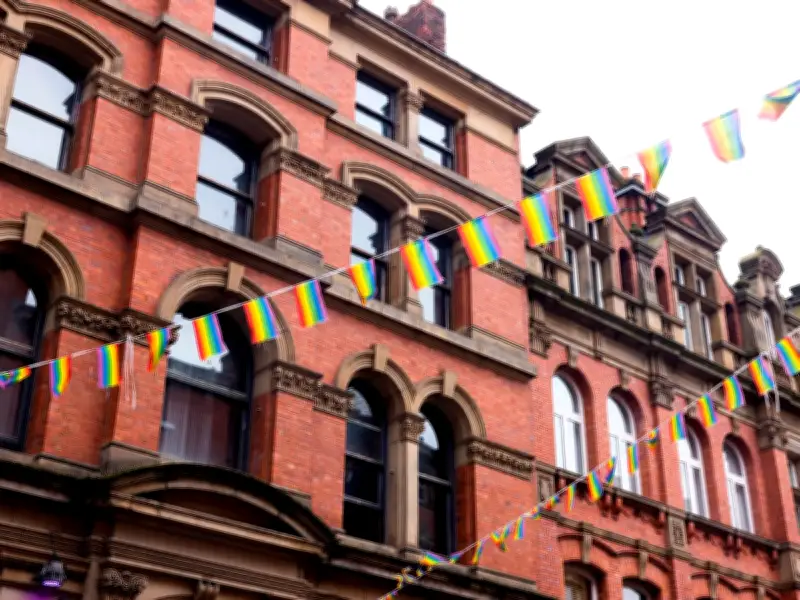
Liverpool's most colourful and vibrant community is on the verge of losing its home. Another venue in the city's shrinking Pride Quarter closed its doors last weekend after eight memorable years, leaving many heartbroken - though it won't come as a surprise for those paying attention.
The owner of OMG Liverpool announced the venue's closure after spending the past two years unsuccessfully trying to find a suitable management team. OMG was part of the same group as the now-defunct Dorothy's Show Bar and Dorothy's Diner. The group also launched Sugarboys nightclub, which promised "premium table service from hot guys in crop tops", but the concept lasted only a few months.
OMG announced on Friday (June 12) that "a well-known LGBT+ business man" will take over the site and it will "remain an important part of the LGBT+ community", with specifics about the owner's identity and nature of the succession to be revealed. The closures reflect wider issues affecting Liverpool's Pride Quarter, including accessibility problems, a dire need for an image overhaul, businesses redirecting focus and an overall decline in interest.
Heaven and GBar: Titans of the Scene
Heaven and GBar are titans of the scene, competing for the crown of the best after-hours club, but neither is particularly willing to advertise themselves as a "gay bar." Heaven has hid the title of "Liverpool's legendary LGBTQ+ afterhours venue" exclusively to its Linktree and GBar has opted for the term "LGBT+ friendly" on Instagram.
When both venues were quizzed as to why this is, Heaven issued a "no comment" statement while GBar's owner, Amy Gwynn, said "it remains an iconic gay venue". GBar was recently saved by Amy who said the venue had been 'dying' and couldn't sustain itself, promising "the most important thing for us is preserving and enhancing one of Liverpool's most loved gay venues and ensuring it continues to thrive for generations to come".
The Navy Bar complex on Stanley Street was sold after 17 years in late 2024 to drag queen Linda Gold, who reopened the main concept along with a bar themed around ITV's Benidorm programme, a room called Dysco led by the performer's partner, drag queen Dys Alexia, and whatever concept "The Basement" offers on the lower level. Navy went on to overhaul its image in March last year after customers "stopped coming" though I couldn't tell you what changed.
The hospitality industry across the country is facing problems, from rising operating costs and shifting customer behaviours to the broader impacts of the cost-of-living crisis with little to no relief from the Government, and perhaps gay and gay friendly venues face even worse business conditions as they are appealing to a smaller community.
Poste House: A Lasting Stronghold
One of the few lasting - and cheapest - strongholds is Poste House on Cumberland Street, which isn't even technically a gay bar, it's simply the community's go-to old fashioned pub. Barmaid Kelly Spartiatis told the ECHO: "I think COVID was difficult for everyone. For us, being located down a side street has made things more challenging. We petitioned the council to improve the area, but nothing came of it."
Kelly says that without support and with venues restricted in what they can do themselves, businesses, particularly those on less attractive streets, are left struggling. She added: "People don't know where we are. People wander around looking for us and only find us because somebody told them about us, not because it's properly signposted. There should be more signage like they have in The Lisbon. Smarten it up, put signs at either end of the street, or let us do it ourselves."
Cumberland Street businesses asked the council to "take a look" at the street as they were "sick of how ragged the street looks". They hoped a revamp would generate footfall, create more revenue and increase the chances of investors wanting to open new venues in empty spaces. Despite asking for change since 2023, there has yet to be any work done.
Liverpool City Council told the ECHO it "recognises the important role the Pride Quarter plays in the city's cultural life and nightlife, and the contribution its businesses make to Liverpool's inclusive identity and visitor offer". A spokesperson said: "We are aware of the views expressed by businesses regarding Cumberland Street, and we welcome ongoing feedback from stakeholders about how the area can be enhanced and supported to thrive. As previously stated, proposals relating to improvements in this area, including signage and public realm enhancements, have not yet been progressed but remain under consideration. The Council continues to review opportunities to work with partners, local businesses and the community to explore what improvements may be possible in the future. We are committed to working collaboratively to ensure Liverpool remains a welcoming and vibrant city for all."
The Masquerade: Struggling Despite Longevity
Cumberland Street's image problem was echoed by the owner of The Masquerade, Joanne Holden. The bar is another dedicated community stronghold with regular patrons and themed evenings, but even it is struggling with everything working against it. Joanne told the ECHO: "The scene needs to be bigger. We're one of the longest-running gay venues on the scene. We've been here for 35 years but we are struggling. If you've only got three venues left, people from outside aren't going to want to come because there's not enough here for them. It's not appealing. The problem we've got is that the street itself is a disgrace. People can't believe venues like ours are on a street that looks this scruffy. We've had so many people put off because of the street, but once they come inside they say, 'We didn't expect it at all'. We've done everything we can, but people are still put off by what they see outside."
Although Joanne is one of a group who want the street refreshed, she's not oblivious to the fact the hospitality sector is changing. She added: "I don't think the problems are entirely because of anything the council are doing. People are coming out later and drinking less. They're going home by a certain time and OMG said it just couldn't get a manager. There's a lot of different aspects to why the scene is the way it is but we'll get through. Hopefully we'll be here a lot longer."
Accessibility Issues
Whether people choose to support the scene or not is largely beside the point when accessibility remains such a significant issue. Not a single venue across the Pride Quarter is fully accessible for disabled people. Most venues occupy historic buildings, with multiple steps leading down to basements or up to rooms, and none operate entirely from ground-floor spaces without stair access.
Some venues come closer than others. Poste House, for example, only has a couple of steps where a ramp could realistically provide access, though its upper floor remains inaccessible. Meanwhile, Heaven, Superstar Boudoir, OMG, Lisbon, GBar and the Navy complex are primarily spread across basement spaces, meaning visitors are often expected to navigate stairs simply to enter.
Accessibility has always been a focal point, especially by Pride organisers who promise it remains a top priority. There may be limited options for resolving these structural challenges, particularly within older buildings, but the LGBT community's already overshadowed disabled community is omitted regardless.
Community Support Wanes
The common cry is everyone needs to come together to support these venues, but Liverpool's willingness to support its own community was put to a numerical test when charity Sahir House launched a fundraiser to save last year's Pride event. With a target of £60,000, the campaign ultimately raised £53,503 - but the top 20 donations accounted for £44,450 of that total (83.08%), driven largely by major organisations including Liverpool and Everton FC, law firm Taylor Wessing and Merseyside Police.
With tens of thousands attending Liverpool Pride each year, it raises questions about why the target was never reached and why the overwhelming majority of funding came from a few businesses rather than the people who often describe these spaces and events as central to their lives. There's no doubt the most vocal put their money where their mouth is, but where did everyone else disappear to? There's a sense that people want change, but don't want to be the change - a classic "someone should do it, just not me" attitude, reflected in the declining state of the Quarter. The fundraiser launched on June 10 2025, leaving just over a month until the event itself, yet after a week had raised only slightly more than £3,000. At the time of writing, the 2026 fundraiser stands at £330 raised from 16 donations against a £100,000 target.
Beacons of Light
Despite declining interest, a few beacons of light are still breaking through thanks to Heaven. Liverpool's "goth mom," Shuv Barbital, launched the first alternative, queer-led punk night, paving the way for sister events from others such as Carmen Sutra, who runs the regular Big Gay Cabaret, showcasing both national acts and local talent. In July, a new concept, Wee Froot, will launch in a bid to connect the community with a fun-fuelled evening of entertainment.
Wee Froot organiser Cai Milligan hopes the concept takes off. He told the ECHO: "If we want to preserve Liverpool's LGBTQ+ nightlife, the most important thing the community can do is support it. These spaces are more than just bars - they are community hubs, safe spaces, and an important part of Liverpool's cultural identity. Without that support, we risk losing even more of them."
Cai believes the Pride Quarter is not lacking in creativity, talent or events "but attendance and advance ticket sales remain a constant challenge". He added: "The reality is that nightlife has dramatically changed since the pandemic. Thursday nights were once packed with people taking advantage of cheap drinks and a vibrant scene. Now, many venues struggle to attract the same midweek footfall, making it increasingly difficult to cover rising operating costs, keep booking their entertainers, and keep prices accessible for their customers."
On the other side of the city in the Baltic Triangle, LGBT-led nightlife is thriving. Sonic Yootha, a queer club night on Kitchen Street, has surpassed a decade of service while the city's first-ever Queer Festival was held at Sub Rosa just last month alongside Lavender Nights, a growing lesbian and queer social event. On the horizon is even more, namely a new drag open mic night at Botanic Garden.
Superstar Boudoir and The Lisbon are two of the Quarter's oldest venues and consistently full of customers. A guess as to why is very little has changed over their decades of service, remaining dedicated venues built by the LGBT community, for the LGBT community - even if the soundtracks can be a little bit cheesy at times. If it's broke, don't fix it. A lot needs to be done but you don't use it, you lose it.