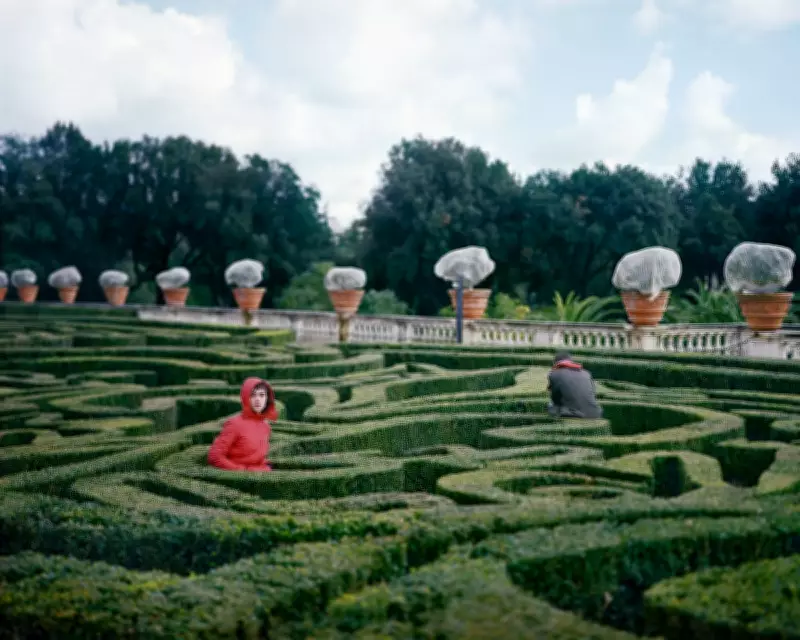
Archipelago: A Visual Exploration of Human Bonds and Solitude
Spanish-born, New York-based photographic artist Yolanda del Amo has released her debut photobook, Archipelago, published by Kehrer Verlag. This compelling collection, created between 2004 and 2014 using a large-format camera, captures the intricate dynamics of human relationships across countries, generations, and genders. Through staged tableaus featuring friends and family, del Amo constructs moments that reveal the social frameworks shaping identity, class, family, and gender, illustrating how closeness and separation can coexist within the same space.
The Artistic Vision Behind Archipelago
Del Amo describes the photographs as 'a collection of "islands", separated by the loneliness of each one and linked by the intimate bond of belonging to the same world'. Her work raises profound questions about class, gender, intimacy, and social connectivity in contemporary times. Influenced by the dance theatre of Pina Bausch, which she experienced during her formative university years in Germany, del Amo draws from Bausch's exploration of interpersonal relationships and her precision in translating emotion into gesture and movement.
In her essay Islands in the Sea of Life, critic Vicki Goldberg notes that 'Del Amo does not take portraits; she invents, designs, and constructs moments from unwritten plays'. The casts are amateurs – friends and relatives – directed by del Amo to act out the feelings and relationships she envisions, with settings arranged to mirror or explain the emotions on view. This approach results in a union of psychological tension, subtle formality, wavering levels of reality, and striking visual beauty.

Key Themes and Imagery in the Photobook
The photographs in Archipelago delve into the contradictions of human connections. For instance, one image depicts a couple with a newborn, where the mother sits by a sunlit window, turned away from her family with a blank stare, while the father is absorbed in contemplating the baby he holds. Small objects like tissues and a baby bottle mark the reality of new parenthood, yet the woman's withdrawal suggests exhaustion or perhaps depression, highlighting the fragile balance between connection and solitude.
Another poignant scene shows a young couple side by side in separate beds, each staring at a laptop with faces illuminated by screens. Wedding portraits above their beds hint at the novelty of their matrimonial status, but there is a noticeable lack of affection, foreshadowing how technology contributes to isolation even in shared spaces – a theme del Amo explored years before it became a public anxiety.
Jean Dykstra, in her essay Alone Together, reveals that del Amo grew up immersed in theatre and film, influenced by her filmmaker and playwright father. She was exposed to European filmmakers like Michelangelo Antonioni, whose 'alienation trilogy' explores isolation and emptiness, and Bertolt Brecht's notion of breaking the fourth wall to make audiences active participants. Dykstra adds that the images can be subtly funny and playful, with interventions that slyly puncture their sombre surface, such as in Macarena, Rosario, where wigs on bedposts in a pink childhood bedroom pose puzzles about disguise or playacting.
The Impact and Reception of Archipelago
Together, the photographs form a meticulous study of intimacy and estrangement, depicting people performing roles that both define and confine them. Del Amo's style is deliberate: though compositions are balanced and quiet, each portrait is emotionally charged, inviting viewers to observe and read the emotional exchanges between subjects. The book not only showcases her artistic prowess but also sparks broader conversations about the complexities of human interaction in modern society.
By focusing on real interiors and outdoor locations in countries like Spain and the United States, Archipelago offers a global perspective on universal themes. It stands as a significant contribution to contemporary photography and art literature, resonating with anyone interested in the nuanced interplay between our longing for closeness and our desire for individuality.