Seized, Subverted, Shuttered: A Year in Trump's Assault on the Kennedy Center
Since a presidential post on Truth Social, the Washington DC arts hub has lost its leadership, had its name controversially changed, and will now be closed for years, marking a dramatic unraveling of a once-stable American institution.
A Cultural Institution Under Siege
The Brentano String Quartet had just finished their performance when a special guest dropped in backstage: US Supreme Court Justice Ruth Bader Ginsburg. "We thanked her for everything she had done for our country," recalls violinist Mark Steinberg. "It was a nice moment." The year was 2016 at the John F Kennedy Center for the Performing Arts. Fast forward a decade, and old certainties have been shattered: Ginsburg is deceased, Donald Trump is president, and the Kennedy Center has become a case study in institutional collapse.
The Brentano String Quartet were scheduled to perform there last week but cancelled, citing Trump's hostile takeover. Steinberg explained: "I would have felt ashamed to walk out on stage. I can't quite bring myself to go into the building at this point. Had we appeared there, that would be a way of condoning everything that's happening."

The Takeover Begins
As the US national capital, Washington is primarily a politics town, often overshadowed by New York as an arts and culture hub. In 1961, President John F. Kennedy observed: "Somebody once said that Washington was a city of northern charm and southern efficiency." His predecessor, Republican President Dwight Eisenhower, backed a bill from the Democratic-led Congress calling for a "national culture center." It was later designated as a living memorial to Kennedy after his 1963 assassination.
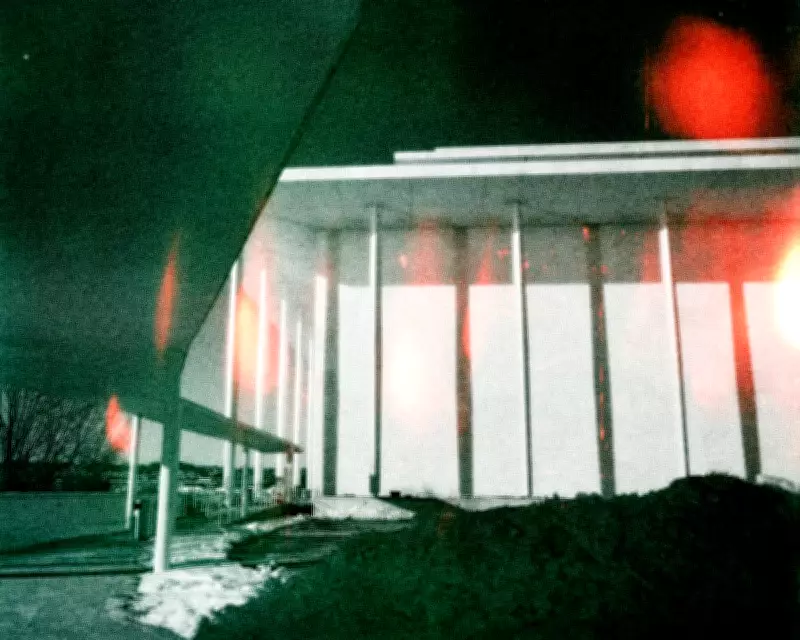
Construction began in 1965, and the center formally opened in 1971 on the banks of the Potomac River, premiering Leonard Bernstein's Mass. Over decades, it hosted Stephen Sondheim musical festivals, staged readings of August Wilson's plays, Wagner's Ring Cycle, ballet, children's theatre, comedy, contemporary dance, hip-hop, jazz, international festivals, and educational programmes.
Trump's Truth Social Declaration
During Trump's first term, he ignored the proudly non-partisan complex and did not attend the annual Kennedy Center Honors. But his second term proved radically different. The takeover began with a Truth Social post on 7 February 2025. Trump wrote that he was immediately terminating "multiple individuals" from the center's board of trustees "who do not share our vision for a Golden Age in Arts and Culture." He announced a new board with himself as chairman.
He also criticised past programming: "Just last year, the Kennedy Center featured Drag Shows specifically targeting our youth – THIS WILL STOP. The Kennedy Center is an American Jewel, and must reflect the brightest STARS on its stage."
Internal Chaos and Staff Exodus
The post sent shockwaves through staff. One anonymous employee recalled: "There was confusion at first because we weren't sure what that meant. Then it became very clear within days." Trump claimed the center's finances were in a parlous state, a notion strongly rejected by management. He fired President Deborah Rutter and installed Ric Grenell, a former US ambassador to Germany with no arts administration experience.
The ex-employee added: "Deborah gathered the entire staff and reminded us of President Kennedy's values. That stood in deep contrast to Grenell, who never once met with the entire staff. You could sense a depression within the building."
In March, the center dissolved its social impact initiative, created in 2020 to promote anti-racism and community outreach, affecting 10 staff. Marc Bamuthi Joseph, former vice-president of social impact, said: "It wasn't shocking but it was still seismic. The atmosphere was morally untenable."

Artistic Boycotts and Empty Seats
The 100ft-high complex soon resembled a marble mausoleum. Artists ranging from actor Issa Rae to composer Philip Glass cancelled performances. When shows proceeded, social media filled with photos of empty rows as audiences voted with their feet. Mark Rosenman, 82, a retired academic, cancelled his subscription after three decades: "It was clear what he was trying to do, which was to impose his taste and vision. That can be described as nothing other than megalomania."
Renaming and Closure
Trump inserted himself as host of a Kennedy Center Honors ceremony featuring Sylvester Stallone and Michael Crawford, leading to a sharp drop in TV ratings. The new board suddenly announced renaming the building the "Trump Kennedy Center," adding Trump's name to the exterior wall before Congress could object.
Last month, the 70-year-old Washington National Opera announced it was leaving the center, its home since 1971. Timothy O'Leary, general director, said via Zoom: "We're transforming ourselves into a company that produces in multiple different venues. That resilience has defined us."
On 29 January, the center hosted the world premiere of Melania, a documentary about the first lady, with the Trumps attending. But three days later, Trump used Truth Social to announce a two-year closure for renovation: "I have determined that the fastest way to bring The Trump Kennedy Center to the highest level of Success, Beauty, and Grandeur, is to cease Entertainment Operations for an approximately two year period."
Institutional Knowledge at Risk
Critics suspect this is a fig leaf to avoid embarrassment from diminishing shows and dwindling audiences. In just a year, Trump has sent one of America's great cultural institutions into a death spiral. Bob McDonald, a singer and actor who has performed on nearly every stage there, said: "I consider the Kennedy Center to be a part of the family and it feels like I've lost somebody. It's one of the gems of Washington and I'm heartbroken."
Michael Kaiser, president from 2001 to 2014, noted: "The Kennedy Center had always been non-partisan. We didn't talk politics. It was upsetting to see different standards applied. Many people who cared stopped caring."
Trump's closure decision could destroy support networks assembled over decades. Kaiser added: "When you close a venture for two years, much of that family wanders off. You don't recreate that overnight." Similarly, institutional expertise may be lost. Charlotte Canning, a drama professor at the University of Texas at Austin, said: "Across the country, people respected the folks who worked there. That took decades to build. How do you rebuild that?"
The Kennedy Center now symbolises how, after just a year, Trump has laid waste to seemingly impregnable institutions. Canning reflected: "It's always easy to destroy something. That can be done in seconds. It is very difficult to build something good that works. The vision, the expertise, the history - it feels to me like it's gone."