National Gallery's Stubbs Exhibition: A Magnificent Nag Deserves a Longer Canter
In a move that has left art enthusiasts and critics alike yearning for more, the National Gallery in London has unveiled a modest exhibition dedicated to George Stubbs, the 18th-century master of animal anatomy. Titled "Stubbs: Portrait of a Horse," the show is confined to a single room, a decision that has sparked debate over whether Britain's greatest painter of horses is receiving the recognition he truly deserves.
A Beautiful but Brief Display
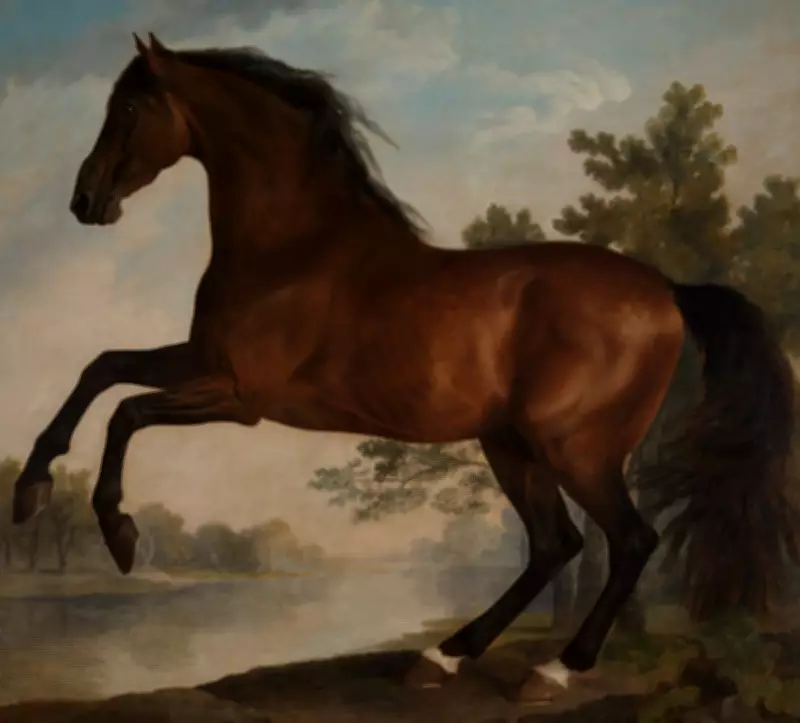
The exhibition, running from 12 March to 31 May, is undeniably stunning in its presentation. At its heart stands Scrub, a spectacular painting of a bay horse belonging to the Marquess of Rockingham, created around 1762. This towering work captures a riderless, unsaddled horse in mid-rear, with chestnut flanks that reveal an almost X-ray-like network of veins and a ribcage that seems to materialise before the viewer's eyes.
Adjacent to Scrub, the display includes some of Stubbs's breathtaking anatomical drawings, which he produced as research for his 1766 book, The Anatomy of the Horse. These drawings, hung against a dark green wall, showcase the artist's meticulous dissection of horse carcasses in a Lincolnshire cottage, where he slung up bodies to study their inner workings. The flayed and dissected forms possess a mysterious dignity, hinting at the scientific rigor behind Stubbs's art.

Missed Opportunities and Historical Context
Despite its beauty, the exhibition feels incomplete. It features only a couple of later horse portraits and an interloping sheep, leaving visitors—even passionate fans—wanting more. One peculiar aspect is the inclusion of Scrub when Stubbs's masterpiece, Whistlejacket, is permanently on display elsewhere in the gallery. Whistlejacket is renowned for its conceptual emptiness, with the horse set against an olive-toned void, whereas Scrub is placed in a romantic wooded landscape that feels somewhat cursory and unnatural.
Both horses were owned by the 2nd Marquess of Rockingham, a gambler, horse aficionado, and Whig politician, who commissioned Stubbs to paint them for his stately home, Wentworth Woodhouse. This historical link opens a window into 18th-century Britain, with its contradictions of scientific Enlightenment, Romanticism, and the shadow of the slave trade. However, the exhibition fails to delve deeply into this rich context, offering only a tiptoeing exploration similar to the National Gallery's concurrent show on Joseph Wright of Derby.
Stubbs's Radical Vision and Legacy
George Stubbs, born in Liverpool and operating outside the Royal Academy establishment, was a radical artist entranced by new science and Enlightenment ideals. He saw his dissections as scientific inquiry, and his paintings of animals—from horses to zebras and kangaroos—raise profound questions about how humans treat other species and each other. For Stubbs, horses were often depicted as servants or slaves with souls finer than their masters, echoing the wise Houyhnhnms from Jonathan Swift's Gulliver's Travels.
In works like Scrub and Whistlejacket, Stubbs sets these animals free, using anatomy to suggest inner mystery and the soul, much like Rembrandt did in The Anatomy Lesson of Dr Nicolaes Tulp. The anatomical drawings in the exhibition take on a ghostly, visionary quality, comparable to William Blake—though many argue Stubbs was a superior artist.
A Call for Greater Recognition
Despite his significance, Stubbs is often dismissed as a "sporting artist" or seen as a stooge of the aristocracy, with his radical vision overlooked. Critics contend that he deserves as many exhibitions as John Constable and J.M.W. Turner, if not more, yet the National Gallery has allocated him only one room. While every piece in the show is loved, it underscores a broader trend of simplification in cultural presentations. Stubbs's ability to change perspectives through his art warrants a more expansive and immersive exploration, one that does justice to his legacy and enriches public understanding.