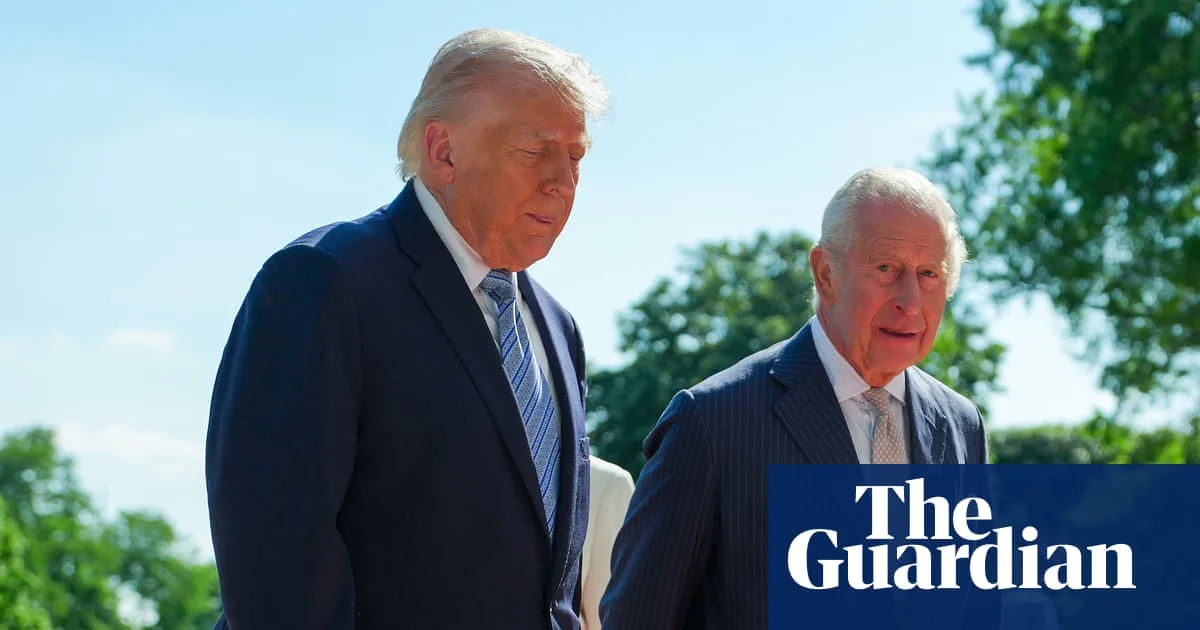
King's US Visit Highlights Resilience of Special Relationship Amid Strains
King's US Visit Shows Special Relationship Resilience

The gunshots fired at the White House correspondents' dinner by what the president called a "lone wolf whack job" highlight the security risks that attend even the most tightly controlled events. No doubt the administration will be swiftly reviewing the arrangements for the visit of King Charles and Queen Camilla to the United States, and all concerned will be as vigilant as possible. The trip will likely pass off as happily as the first such mission by a British monarch, made by the King's grandfather, George VI, in 1939, and the numerous occasions when the late Queen was invited by presidents from Dwight Eisenhower to George W. Bush. Donald Trump's deference to the House of Windsor and his almost embarrassing praise for the King and his consort should ensure that his natural tendency to wander off script and indulge in poor-taste wisecracks will be suitably restrained.

At any rate, the visit comes at a dismal moment in what is still called, at least by optimists, "the special relationship." During last year's second state visit by President Trump and the first lady, the phrase was still being used, even as the administration's tariff wars strained US links with close friends and allies. Now, the continuing effects of the war in Iran have pushed matters to breaking point. The president's confused demands for help in an illegal and poorly planned war that partners were neither consulted over nor initially invited to join have left Nato in disarray. The president wrongly says Nato partners, including the British, were not there when the US needed them: the wars in Afghanistan and Iraq prove otherwise. He derides the bravery of His Majesty's armed forces and makes fun of Britain's "toy" aircraft carriers, named The Prince of Wales and Queen Elizabeth. The prime minister, who once got on so well with Mr Trump, is dismissed as "no Winston Churchill," and the US defence secretary mocks European preference for the peaceful settlement of international disputes. An interestingly timed leak from the Pentagon points to the US siding with Argentina over the sovereignty of the Falkland Islands, whose sovereign is Charles III.

None of this is an ideal backdrop for a visit which, in more normal times, should be a festival to celebrate the US's 250th birthday, smothered with goodwill, garnished with Churchillian nostalgia and bons mots about our two peoples separated by a common language. Unfortunately, the atmosphere will not be as amicable as it was for the bicentennial visit 50 years ago, when Elizabeth II danced with President Gerald Ford and the Marine Band played "The Lady is a Tramp" in the East Room.

Wide Pickt banner — collaborative shopping lists app for Telegram, phone mockup with grocery list

However, that is all the more reason for this visit to go ahead. The point, which will be made so subtly as to be unspoken, is that the UK-US relationship is between two peoples and two nations, rather than the two particular personalities that head their respective governments at any one time. The links between friends and families, businesses and diplomats, soldiers and spies, entertainers, writers, philosophers and intellectuals all transcend the differences or clashes of personality – sometimes grave – that emerge from time to time. These, understandably, tend to be conventionally forgotten during such state visits, but they have been real and painful. The British felt let down when the US embraced an earlier version of isolationism and abandoned the League of Nations after the First World War. Churchill was troubled by Franklin Roosevelt's willingness to gift most of Eastern Europe to Europe at the end of the Second World War. Lyndon Johnson never forgave Harold Wilson for not sending even a token British unit to Vietnam. The Suez crisis, in which the US, Israel, France and Britain were playing slightly different roles, was another rift. So was the failure of the British security services to protect US nuclear secrets. The Americans never considered sending forces to help the British recover the Falklands in 1982, and Edward Heath went further than Sir Keir Starmer has recently in refusing permission for British bases to be used in the Yom Kippur War. The UK is still waiting for the full US-UK free trade agreement that Theresa May and Boris Johnson begged for, and was supposed to be one of the main wins from Brexit.

Pickt after-article banner — collaborative shopping lists app with family illustration

In other words, there have been rocky episodes before, though none as deeply disturbing as the current threat to Nato. What may be truly "special" about the special relationship is how resilient it has been, despite so many deep disagreements and frustrations. It has survived on more than affection, shared history or personal chemistry, and it has done so because of a broad alignment of national interests and enduring shared "Western values." Such an understanding will infuse everything the King and Queen do this week, but no one should expect them to restore the transatlantic alliance.




