Historic Slave Ship Artifact Returns to South Africa as Smithsonian Loan Concludes
The National Museum of African American History and Culture in Washington, D.C., is undertaking a significant alteration to one of its most poignant displays. A rare timber piece from the sunken slave ship São José-Paquete de Africa, a central artifact in the museum's "Slavery and Freedom" exhibition, is being prepared for repatriation to South Africa. This move coincides with the conclusion of a decade-long loan agreement that began when the museum opened its doors in 2016.
The End of a Decade-Long Display
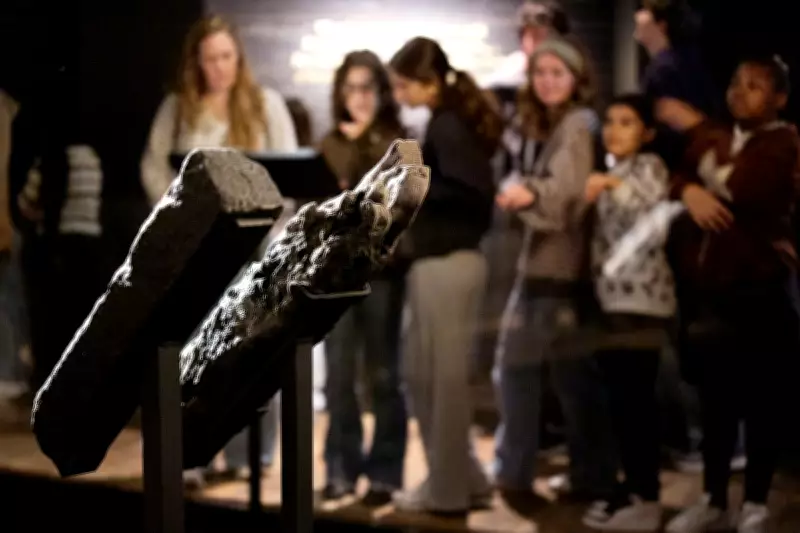
According to documents examined by The Associated Press, the initial five-year loan for the 33-pound (15-kilogram) timber was extended for another five years in 2021. This agreement is now set to formally conclude on July 1. The artifact, which has been displayed prominently—seemingly suspended over a dark void with a ship's ballast beside it—will be carefully crated for its delicate journey back to the Iziko Museums of South Africa later this year.
"The wooden materials are more fragile, and they need a little more close care," explained Paul Gardullo, the museum's assistant director of history. He noted that South Africa's robust cultural patrimony laws govern the treatment and loan duration of such historical materials. The last day for public viewing of the timber in Washington is scheduled for March 22.

A Relic of the Middle Passage
The São José was a Portuguese vessel transporting over 400 captives from Mozambique to Brazil when it struck a rock and sank off the coast of Cape Town in December 1794. Tragically, half of those aboard perished, with survivors subsequently resold into slavery in the Western Cape. The wreckage was recovered and identified in 2015 through the international Slave Wrecks Project, confirming it as one of the first known recovered shipwrecks where enslaved Africans died.
This timber piece resides in the museum's lowest public level as part of the broader exhibit focusing on the trans-Atlantic slave trade. The display addresses the harrowing Middle Passage, the segment of the Atlantic crossing where millions of captives are believed to have died, though no precise count exists.
Exhibit Evolution Amid Political Scrutiny
The timing of this change occurs against a backdrop of increased scrutiny regarding historical narratives in federal institutions. President Donald Trump's administration has emphasized presenting the United States in a positive light ahead of the nation's 250th anniversary celebrations. An executive order titled "Restoring Truth and Sanity to American History," signed in March 2025, has placed several Smithsonian museums, including the National Museum of African American History and Culture, under review.
However, museum officials stress that the artifact's return is solely related to the loan agreement. "This is really about the conservation needs of that item," stated Michelle Commander, the museum's deputy director. She acknowledged the potential for public questions given the political climate but emphasized transparency in the process.
Visitor Reactions and the Exhibit's Future
Recent visitors have described the display as profoundly moving. Krystina Hernandez, who chaperoned a school group, noted that the tangible nature of the artifact brings history out of textbooks and into stark reality. Anehtra Reynolds from northern Virginia expressed how the presentation, including the darkened gallery and artifacts, conveyed a sense of the captives' misery.
Jim Carnes, a civil rights educator from Alabama, described the artifacts as "extraordinarily powerful," evoking sadness and anger not only at historical conditions but also at contemporary efforts to downplay this history. Jorge Carvajal, a visitor from Florida, highlighted the exhibit's capacity to foster empathy and challenge stereotypes.

While the timber will depart, other items from the São José, including ballasts used to counterbalance the human cargo, will remain on display for another two years before their eventual return. A cargo manifesto from the ship will replace the timber piece. Commander assured that the museum staff is committed to ensuring the exhibit retains its impactful narrative. "The story does not leave the museum because this timber is going to be returned to its owners," she affirmed.