Pompeii Exhibition Reveals Agonising Final Moments of Vesuvius Victims
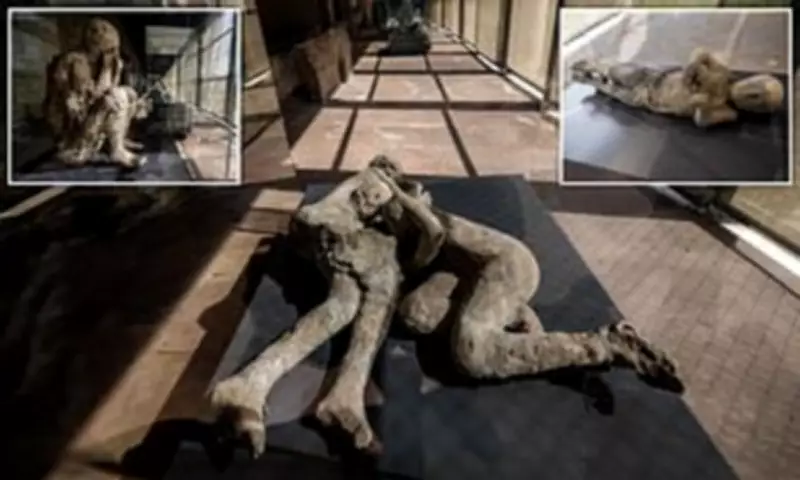
A powerful new exhibition at the Archaeological Park of Pompeii is showcasing the last desperate moments of the city's residents, who were engulfed by deadly volcanic ash during the catastrophic eruption of Mount Vesuvius in AD 79. The display features 22 preserved plaster figures, offering a haunting snapshot of the agony endured by victims as their poses were captured in stone for centuries.
The Tragic Legacy of Vesuvius
The eruption of Italy's Mount Vesuvius remains one of the most deadly volcanic events in recorded history, with estimates suggesting it killed up to 16,000 people. Archaeologists created the casts by pouring plaster into the body-shaped cavities left behind when scalding-hot pyroclastic currents wiped out the bustling Roman city. These moulds perfectly preserved the final poses of the Pompeiians, revealing them curled up and writhing in pain as they succumbed to the disaster.
Heartbreaking Human Stories
Among the poignant displays, one cast depicts two individuals huddled together for comfort, while another shows a man clenching his fists in despair as a young child rests on his knees. Nearby, a teenage boy is displayed with a cloak wrapped around him, and a woman lies on her side. This woman, discovered near a city gate in 1976, was found with gold and silver rings, coins, and a statuette of the god Isis, which she attempted to flee with during the chaos.

Another cast reveals a man sitting with his knees pulled up under his chin and his hands over his face, appearing to cover his mouth with a cloak. Perhaps the most touching exhibit is the cast of a three-year-old child in a tunic, found in Pompeii's House of the Golden Bracelet, whose lips are visibly swollen from the intense heat of the eruption.
A Scientific and Respectful Tribute
Gabriel Zuchtriegel, the director of Pompeii, emphasised the exhibition's purpose at its opening, stating, 'We want to tell the story of a tragedy that destroyed a city, the biggest natural disaster in antiquity, but also left us with an archaeological and historical treasure.' Archaeologist Silvia Bertesago added, 'We are recounting in a scientific way, for the first time, what happened in those hours.'
Visitors are asked to proceed with respect and in silence, as indicated by a sign placed just outside the exhibit. Each body cast is accompanied by a full description detailing where it was found, when, and in what condition, providing context for the tragic scenes.
The Cause of Death and Historical Significance
The majority of Pompeii's victims died from asphyxiation, overwhelmed by the giant cloud of scorching volcanic ash and toxic gases released during the eruption. The city remained hidden for nearly 1,700 years until its rediscovery by Spanish military engineers in the mid-18th century. Today, the ruins of Pompeii are a popular tourist attraction, drawing approximately one million visitors annually, who come to witness the preserved remnants of this ancient catastrophe.
This exhibition not only honours the dead but also serves as a stark reminder of the power of nature and the fragility of human life, immortalising a moment frozen in time by one of history's most devastating events.