Pianist Defies Orchestra in Landmark Workplace Rights Case Over Gaza Comments
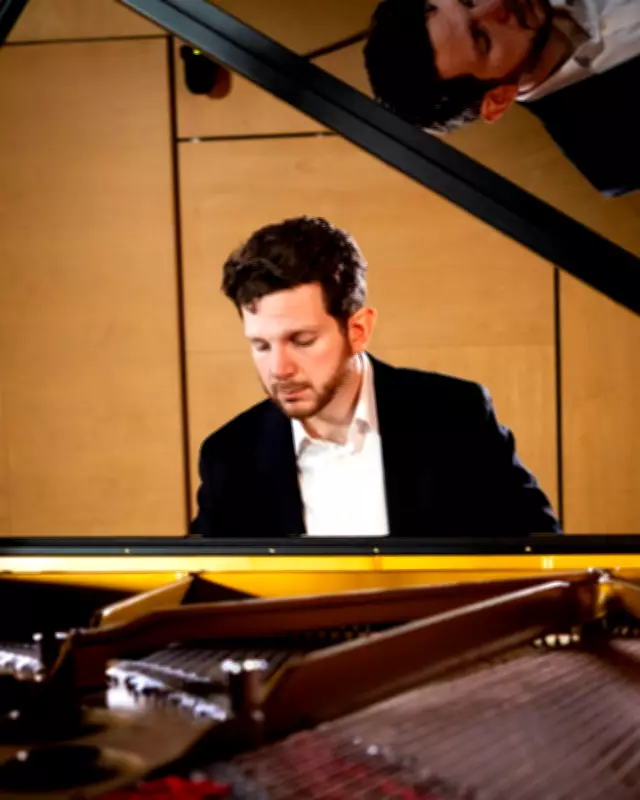
Australian-British pianist Jayson Gillham finds himself at the centre of a groundbreaking federal court workplace rights case, following the cancellation of his appearance by the Melbourne Symphony Orchestra after he expressed views on Gaza. The musician remains defiant, stating firmly, "I stand by what I said."
From Concert Hall to Courtroom
The controversy erupted in August 2024 when Gillham delivered a short speech at Melbourne's Iwaki Auditorium, dedicating a composition by Connor D'Netto to over 100 Palestinian journalists killed in Gaza. The Melbourne Symphony Orchestra swiftly cancelled his subsequent performance, citing unspecified "safety concerns", igniting a national debate about political expression in artistic spaces.
Gillham reflects on the timing of his actions, noting that while supporters called him "ahead of his time", he believes he was actually "10 months late" in responding to media reports from Gaza. The realisation that his role as a performer could no longer remain isolated from world events fundamentally changed his approach to his career.

Building an Independent Stage
While preparing for his May federal court showdown with the MSO, Gillham has taken matters into his own hands by organising an entirely independent national tour. In July, he will perform alongside Palestinian-Jordanian pianist Iyad Sughayer, bypassing traditional institutional gatekeepers by personally hiring venues, managing ticketing, and assuming all financial risks.
"It's sort of a natural progression for me," Gillham explains about his move into artistic curation. "I want to have this direct line to my audience... and I know that there are many people who are itching to come to a concert of mine."
The tour will feature performances at prestigious venues including Melbourne Recital Centre, Brisbane's QPAC, Adelaide's Elder Hall, and Sydney's City Recital Hall. Gillham dismisses previous safety concerns, stating simply, "I don't see any issue. We're bringing a concert like any other."
Artistic Partnership with Political Resonance
Gillham first met Sughayer at a London fundraising concert for Gaza two years ago, discovering a shared vision of music as a powerful tool for human connection rather than mere formal performance. Sughayer, recognised as a rising star by Classic FM and supported by the UK's Young Classical Artists Trust, has established himself as one of the world's leading interpreters of Aram Khachaturian's works.
The tour program combines classical and romantic repertoire by Mozart, Ravel, and Debussy with Khachaturian's compositions, plus the world premiere of a new commission by Palestinian-Lebanese composer Houtaf Khoury. This inclusion continues the musical response that originally compelled Gillham to take his stand.
Legal Principles and Artistic Freedom
As the federal court case approaches, lawyers will debate fundamental questions about artistic freedom and the legal definitions distinguishing contractors from employees. Gillham hopes his entrepreneurial response won't set a necessary precedent for other artists.
"I don't want it to become necessary for people to self-present, because not everyone can do it," he acknowledges. "Why I'm bringing the case is because I think what I'm fighting for is that a performer should be able to do that, even if the presenter is somebody else."
The legal battle has profoundly shaped Gillham's perspective on the concert hall, transforming it from what he once saw as a vacuum into a space for truth and meaningful expression. "I've always loved playing the piano and I've loved sharing music with audiences," he reflects, "and now I feel like I understand what art is a bit more... It's certainly broadened and probably deepened and matured my understanding of the role of artists in society."
The "Keys to Life: Two Friends, Two Pianos" tour represents both a musical collaboration and a statement about artistic autonomy, running parallel to a landmark legal case that could redefine workplace rights for performers across Australia.