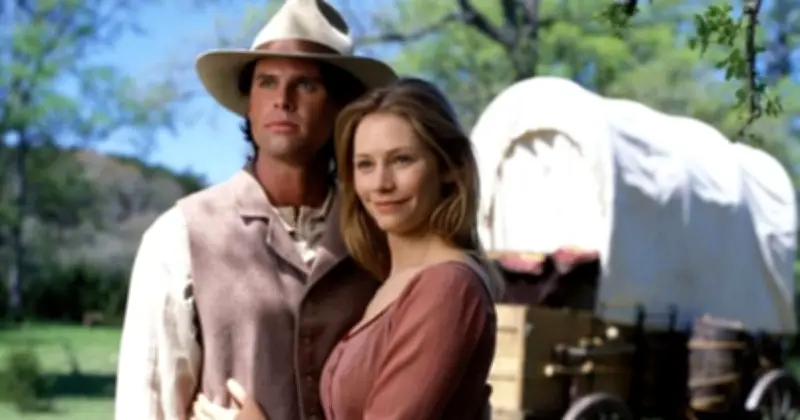
Period drama enthusiasts are celebrating a two-part television docudrama that has left viewers 'completely hooked' just before the anticipated Netflix reboot. Beyond the Prairie: The True Story of Laura Ingalls Wilder is a biographical drama offering a historically precise and grounded portrayal of the celebrated author behind the award-winning Little House series.
The film series delves into the later, less-known adult experiences of Laura Ingalls Wilder's life, drawing heavily from the final books of her fictional series, including The Long Winter, Little Town on the Prairie, These Happy Golden Years, and her posthumously published diary, The First Four Years. It explores her teenage years on the frontier, her romance with Almanzo Wilder, and the subsequent challenges of their early marriage.
Plot and Setting
The story begins in the harsh yet beautiful landscape of De Smet, South Dakota, in the 1880s. A teenage Laura Ingalls (played by Meredith Monroe) lives with her restless father Charles 'Pa' Ingalls (Richard Thomas), her mother Caroline (Lindsay Crouse), and her sisters. Laura struggles with her own 'wandering strain'—a deep love for the open prairie inherited from her father—but puts her personal dreams aside to support her family from falling into debt. At 16, she takes on the grueling job of a schoolteacher in a remote, primitive settlement. During this time, she is courted by a handsome local homesteader, Almanzo Wilder (Walton Goggins).

Almanzo famously braves brutal blizzards to pick up Laura from her teaching post every weekend to prevent her from suffering homesickness. The second installment explores the hardships of early married life on an isolated homestead, closely following the events of The First Four Years. Laura and Almanzo's resilience is tested by a rapid succession of devastating tragedies.
Challenges and Tragedies
These include an unpredictable hailstorm that completely destroys their critical wheat crop weeks before the harvest, plunging them into debt. The couple also battles diphtheria, leaving Almanzo partially paralyzed with permanent disabilities. They experience the profound loss of their newborn son, who passes away days after his birth, and a tragic house fire that destroys their family home. The film delves into their difficult decision to pack up their belongings, along with their young daughter Rose, and leave South Dakota for good. They travel by covered wagon to Missouri, where Laura will eventually sit down decades later to write her infamous Little House book series.
Production and Reception
The series was largely filmed in central Texas, in and around the cities of Bastrop, Uhland, Austin, Buda, and Driftwood. Following its 2000 release, producers received an Emmy Nomination for Outstanding Music Composition for a Miniseries, Movie, or a Special. Despite airing more than 25 years ago, fans continue to praise the two-part series online.
On the popular critics website IMDb, one user wrote: 'Very impressive. I have always been a fan of Laura Ingalls Wilder's novels, so I was absolutely glued to the TV during the entire movie. I was very impressed with the attention to detail, the descriptions of her home on the prairie and her feelings about marriage were so honest. Even if you're not a Laura Ingalls Wilder fan, I'm betting you will enjoy it.'
Another agreed: 'I have been a fan for a long time. I started watching this in my 20s, and I've not forgotten how much I enjoyed it. This was a great show.' A third echoed: 'I love this movie. I think it was more like the real story of Laura than other movies about her.' A fourth chimed in: 'I truly enjoyed this movie. I always enjoyed the 1990s TV series, but this movie is far more factual, and I highly recommend it. Richard Thomas was a perfect Pa, Meredith Monroe was perfect as Laura, and the rest of the cast was great, too.'