Tracy-Ann Oberman Advocates Arts Over Boycotts in Antisemitism Fight
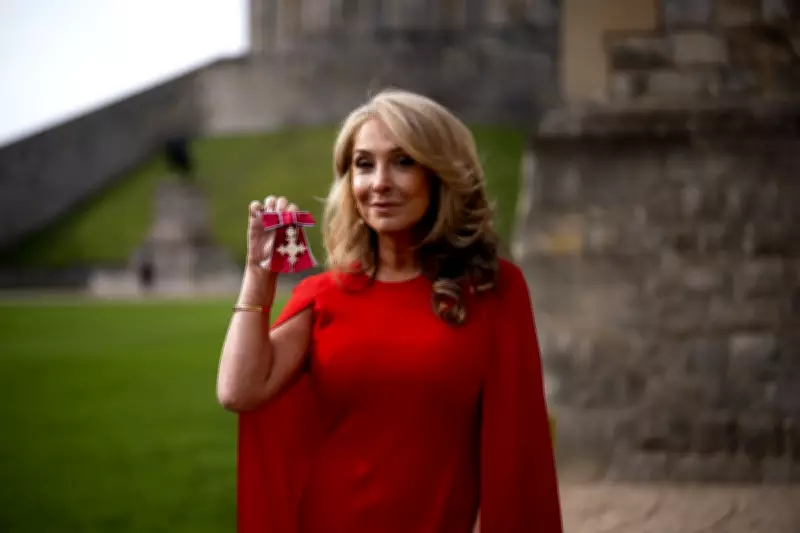
Actress and activist Tracy-Ann Oberman has declared her belief in the transformative power of the arts to combat antisemitism, arguing it surpasses the effectiveness of cultural boycotts. The statement came as she was honoured with an MBE by King Charles III at Windsor Castle for her dedicated work in Holocaust education and antisemitism campaigning.
Honours for Holocaust Education Efforts
The 59-year-old performer, renowned for her roles as Chrissie Watts in EastEnders and Valerie Lewis in Friday Night Dinner, received the recognition in the King's Birthday Honours. Oberman emphasised the profound personal significance of the award, noting her family's Holocaust survival background and history of enduring pogroms.
"It's an incredibly meaningful day for me as I come from a Holocaust background and a family who survived pogroms as well," Oberman told the Press Association. "They all came over here as immigrants and are incredibly proud and grateful to be British."

Personal Experiences with Antisemitism
Oberman highlighted contemporary antisemitism, referencing recent incidents involving public figures. She mentioned her friend Matt Lucas, the Little Britain star, who was recently harassed by a pro-Palestinian activist on the London Underground. Additionally, she noted that she and friend Rachel Riley, the Countdown star who also received an MBE and Freedom of the City of London for antisemitism campaigning, regularly face security threats.
"My family knows only too well that any society that lets Jew hatred flourish will see that all other evils follow," Oberman stated, underscoring the broader societal dangers of unchecked antisemitism.
The Power of Storytelling Through Arts
Oberman, who recently portrayed Shylock in The Merchant of Venice 1936—a production that reimagined Shakespeare's play in 1930s Britain—asserted that storytelling is essential for changing perspectives. She explicitly rejected cultural boycotts as a strategy, advocating instead for engagement through artistic expression.
"I don't believe in cultural boycotts because I believe the arts and sports are one of the few ways to speak to power and to wider society to get a message across," she explained, positioning creative works as vital tools for dialogue and education.
Meeting with King Charles III
Following the ceremony, Oberman shared her experience of meeting King Charles III at Windsor Castle. She described the encounter as a great honour, praising the monarch's knowledge and generosity.
"He was so generous with his time, and I was truly impressed by how much he knew about the work I've been doing with Holocaust education, raising awareness of antisemitism, and my production of The Merchant of Venice 1936," she recounted.
Oberman added that the day was deeply meaningful, made more special by sharing it with her mother, husband, and daughter, whom she called her "rocks." This personal touch underscored the emotional weight of her advocacy work and the recognition it has received.