John Proctor Is the Villain Review: A #MeToo Reimagining of The Crucible
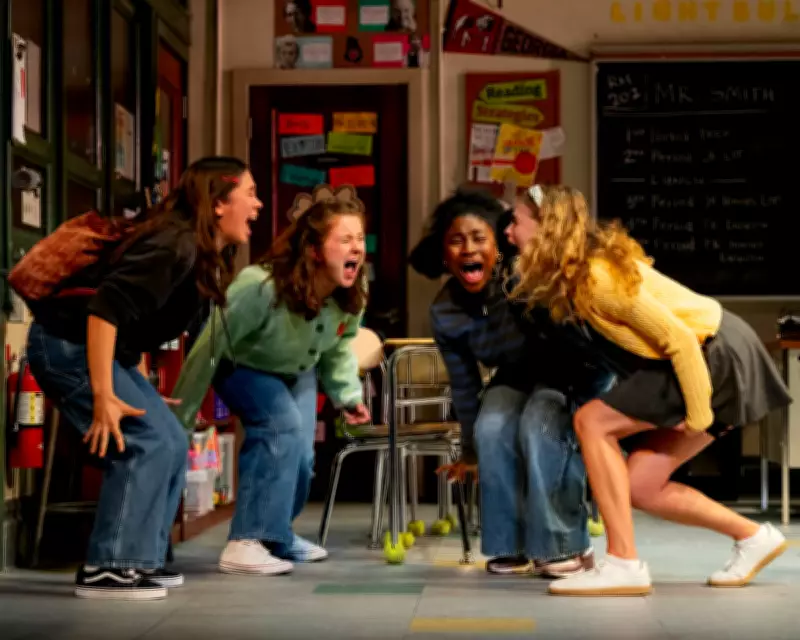
Royal Court theatre, London – Kimberly Belflower's provocative play John Proctor Is the Villain delivers a bold revisionist take on Arthur Miller's classic The Crucible, reframing its themes of witch-hunts for the #MeToo generation. Set in a small-town Georgia high school in 2018, the production captures the tumultuous aftermath of the Harvey Weinstein scandal through the eyes of a group of teenage girls.
A Classroom Awakening
The narrative unfolds in a classroom where students, predominantly girls, are inspired to establish a feminist club. This initiative emerges directly from the headlines of the time, reflecting the growing consciousness around sexual misconduct and power dynamics. The play's central characters include Beth, portrayed by Holly Howden Gilchrist as the academic overachiever; Ivy, played by Clare Hughes, whose father faces accusations of inappropriate workplace behaviour; Nell, the newcomer embodied by Lauryn Ajufo; and Raelynn, a pastor's daughter acted by Miya James, grappling with betrayal by her ex-boyfriend.
The idea of a feminist club initially meets resistance until Carter Smith, a charismatic teacher played by Dónal Finn, intervenes. He suggests including boys to make the club more palatable, a move that adds layers of complexity to the group's dynamics. Directed by Danya Taymor, the performance runs straight through at under two hours, maintaining a brisk pace that gradually builds emotional intensity.

Parallels with The Crucible
The script's pivotal element is the students' study of The Crucible under Mr. Smith's guidance. As they delve into Miller's play, troubling parallels with contemporary issues of sex and power begin to surface. The teenagers' growing understanding of intersectional feminism is portrayed with flashes of personal drama, each character spotlighted at key moments. The production features exuberant pop culture references, including paeans to artists like Lorde, Taylor Swift, and Beyoncé, which inject a youthful vibrancy into the narrative.
Initially, the play carries a Dead Poets Society vibe, but this tone sours as the dark contemporary relevance of The Crucible becomes apparent. The parallel remains somewhat hazy; Ivy views her father as a casualty of a modern witch-hunt, while the group collectively raises consciousness around previously unspoken male predatory behaviour. Sadie Soverall delivers a standout performance in a role originally played by Sadie Sink on Broadway, sharing an intimate and awkwardly goofy chemistry with Miya James as estranged best friends.
Dialogue and Character Dynamics
Belflower's dialogue adeptly captures the humour and pathos of how teenage girls communicate, as well as their internalisation of societal micro-aggressions towards women. However, the relationships often feel flattened by their cuteness rather than exhibiting the sharp-edged grit typical of the transition from girlhood to adulthood. The play comfortably passes the Bechdel test, with male characters portrayed as dolts, but some viewers may crave more complexity in the interactions between female characters.
Moral Equivalences and Emotional Climax
A potential false equivalence arises between Miller's John Proctor—a morally complicated figure who betrays his wife but upholds his principles—and the predatory male in Belflower's play, who is depicted as a repellent serial groomer and abuser with little nuance. The climax features a surge of emotion as the students enact their liberation through a dance interpretation of scenes from The Crucible where girls have fits. This sequence, reminiscent of a wilder version of Taylor Swift's Fortnight video, delivers a cathartic high, yet underscores that nothing has fundamentally changed, with the predator still present in the room.

Reflections on #MeToo and Legacy
Despite an ending that may feel too neat and easy, John Proctor Is the Villain remains a moving play that captures the mood of 2018 for a generation of girls growing into womanhood in Weinstein's shadow. It feels almost historical in light of subsequent backlash, prompting poignant questions: What has become of #MeToo? What do these girls think now? The production runs at the Royal Court theatre in London until 25 April, offering a timely exploration of enduring social issues through the lens of classic literature and contemporary feminism.