In Defence of Disney Adults: Why Fantasy Worlds Offer Authentic Joy
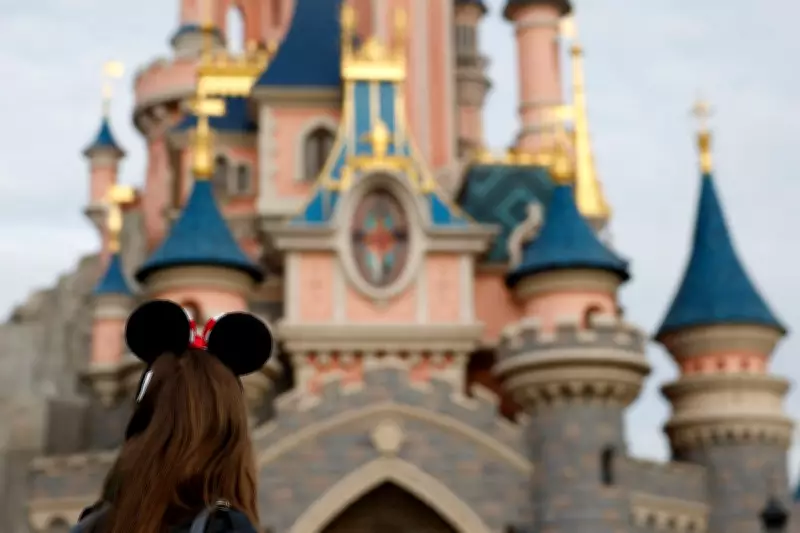
The meticulously crafted realms of Disney might provide an unexpected degree of authenticity, argues philosopher Adam Kadlac. If you have ever voiced even a casual wish to visit Walt Disney World, you have likely encountered friends who raised eyebrows, groaned, or even sneered. The core of their critique extends beyond the notion that Disney is solely for children or its significant expense. It centres on what Kadlac terms the "authenticity objection" – the conviction that visits to theme parks like the Magic Kingdom are inherently inferior because they occur within a completely manufactured setting.
The artificial mountains and rivers, the rides offering pure diversion, the costumed characters portraying fictional beings – critics dismiss it all as profoundly fake. While some express this view in jest, others genuinely believe the artificial environment verges on a cultural abomination. One online forum explicitly cites the manufactured nature of Disney World as a reason to avoid it, describing the "smiling staff, the piped-in music, the perfect landscaping" as feeling "creepy and overly controlled".
The Authenticity Debate: Fake or Frank?
Journalist EJ Dickson, a self-professed Disney enthusiast, concedes that park visitors "willingly spend thousands of dollars on an authentic emotional experience that they know, at least on some level, isn't really authentic at all". A representative TripAdvisor review similarly dismisses Disney World as "a hot, commercialised, fake experience". For those opposed to consumerism or who dislike warm climates, these criticisms hold some validity: Florida is indeed warm, and Disney is unequivocally a profit-driven enterprise.

However, as a philosopher who recently authored The Magic Kingdom and the Meaning of Life, Kadlac finds critiques of the parks as "fake" more challenging to comprehend. Disney is transparent about its identity. Marketing experts George Newman and Rosanna Smith observe that philosophers often assess authenticity by whether "entities are what they are purported to be". Applying this standard to Disney World raises a question: does it misrepresent itself as anything other than a Disney-themed amusement park?
There are legitimate grounds to question the authenticity of certain experiences. Purchasing a ticket to a Van Gogh exhibition only to find reproductions would rightly provoke complaint. The inability to discern the difference during viewing would be irrelevant – the promised experience of seeing original works would not have been delivered. In stark contrast, Disney attractions make no pretence of being anything other than what they are.
When guests at Disney's Hollywood Studios board Mickey and Minnie's Runaway Railway, they are fully aware they are not actually on a runaway train piloted by a talking dog named Goofy. Had Disney marketed the attraction as, for instance, an Amtrak journey for children, accusations of falseness might be justified. That is clearly not the expectation of anyone queuing for the ride. Experiencing the Runaway Railway might not align with personal preferences, but there is nothing inauthentic about what it claims to offer.
Judging the Fans: Are Disney Adults Inauthentic?
If the initial form of the authenticity objection is relatively straightforward to address, a more subtle concern lingers: the notion that Disney fans themselves become somehow fake due to their willingness to immerse themselves in an artificial world. This belief suggests that individuals who spend considerable time in manufactured environments may delude themselves, thereby avoiding engagement with their true selves. Concepts like "existential authenticity" or "self-authenticity" seem to capture this perceived risk.
Media scholar Idil Galip highlights that the parks are intensely "engineered and focus-grouped; there's a whole lot of work that goes into selling this sort of experience". This can, at a certain point, signify "a break from regular society or real life". This alleged link between Disney's fabricated world and the corruption of personal authenticity is vividly illustrated in depictions of so-called Disney Adults.

Dickson encapsulates this perspective in her Rolling Stone article, stating that being an adult Disney fan is seen as professing to be "nothing less than an uncritical bubblehead ensconced in one's own privilege, suspended in a state of permanent adolescence … refusing to acknowledge the grim reality that dreams really don't come true". Kadlac vigorously contests the idea that a fondness for Disney World renders people fake or inauthentic in any meaningful manner.
As journalist and blogger A.J. Wolfe argues in her 2025 book, Disney Adults, even the most ardent Disney devotees defy simple classification. None of them, she explains, appear to be fleeing their true selves or attempting to reside in an imaginary realm. For instance, Wolfe profiles Lady Chappelle, a British tattoo artist who moved to San Diego to specialise exclusively in Disney-themed tattoos. Another example is Brandon, a Hollywood drag queen who designed a Carousel of Progress-themed kitchen honouring the iconic attraction at Disney's Magic Kingdom in Orlando.
These individuals typify the vast majority of Disney Adults: they are passionate about Disney, but equally passionate about tattooing, drag, and countless other interests. For Disney Adults, Wolfe writes, an affection for Disney primarily adds "extra color and brightness – maybe definition, motivation, or inspiration if you're lucky – to the complex and evolving masterpiece that is [their] life". If such complexity characterises the most committed fans, it becomes considerably more difficult to portray casual visitors in such a negative light.
The Unexpected Virtues of the Magic Kingdom
If theme parks do not appeal to you, that is perfectly acceptable. A fulfilling life is entirely possible without ever visiting Epcot or the Animal Kingdom. However, as Kadlac notes in his book, Disney World possesses several virtues that its critics frequently overlook. He posits it is as commendable a place as any for individuals of all ages, backgrounds, and abilities to gather and forge valuable memories.
When riding Tiana's Bayou Adventure with his wife and their intellectually disabled daughter, Kadlac finds something for everyone: sufficient thrill and narrative for the adults, without overwhelming his daughter. This combination can be elusive in many other settings. Furthermore, because the parks transport visitors from their daily routines, they can also foster surprising opportunities for introspection. Kadlac has pondered cultural expectations surrounding happiness while at Disney, contemplating whether to maximise pleasure during a short trip or simply embrace each day as it unfolds, ultimately learning to favour the latter approach.
He has also grown to appreciate the value of anticipatory pleasure – the positive emotion derived from looking forward to an event before it occurs – often reflected upon while considering the time people spend queuing at theme parks. Certainly, many individuals seek to use Disney's worlds – whether parks, films, or other media – as an escape from everyday drudgery. Yet, is pursuing such an escape a greater threat to authenticity than checking out via video games, watching sports, reading novels, or using substances?
Is it possible for people to lose themselves in fantasy? Undoubtedly – just as it is possible to become consumed by careers, relationships, or hobbies. However, in an era dominated by curated social media profiles, influencer marketing, and political doublespeak, the manufactured worlds of Disney might offer a more authentic respite than one might initially presume.