The Unlikely Pilgrimage of Harold Fry Review: A Folkie Feelgood Musical Transcends Its Tweeness
With music by the acclaimed hitmaker Passenger, known for the folky 2012 anthem "Let Her Go," this charming stage adaptation brings Rachel Joyce's beloved novel to life at the Theatre Royal Haymarket. It follows an ordinary, freshly retired man who breaks free from his stifling life and strained marriage in rural Devon, embarking on a long, transformative walk to find meaning and connection.
A Familiar Story with Fresh Musical Energy
Rachel Joyce's hit feelgood novel, The Unlikely Pilgrimage of Harold Fry, may not boast the most original plot on the shelves, reminiscent of venturesome tales like Eat, Pray, Love or The Salt Path. However, the stage show it inspires feels like a rare gem: a new British musical with an engrossing, albeit familiar, narrative, powered by genuinely catchy songs. When the second half takes an abrupt plunge into darkness, it starkly reminds audiences that Harold is not merely on a holiday but on a pilgrimage to escape a very secular, personal kind of hell.
Quirky Characters and Eccentric Staging
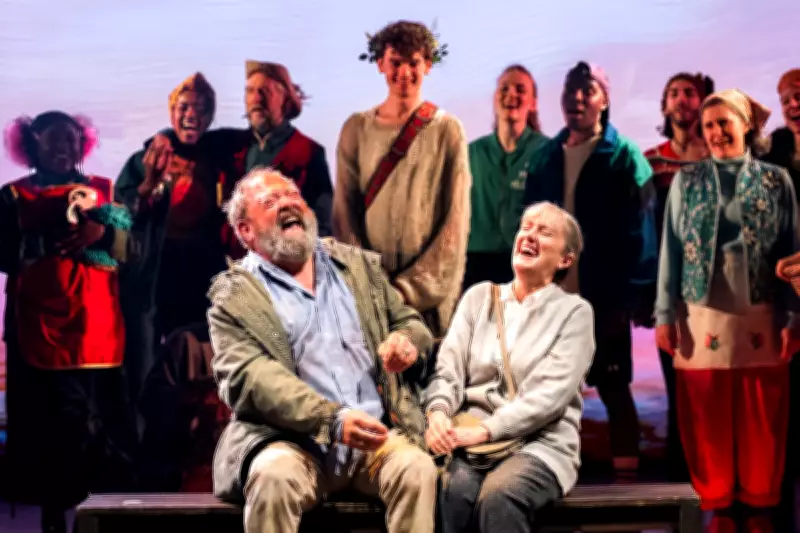
The show's structure is initially straightforward, akin to a fur-free version of Lloyd Webber's Cats. Harold Fry, portrayed by Mark Addy, encounters a series of quirky characters along his journey, each introducing themselves through songs that range from loosely stereotypical to brightly original. They then melt into a dancing herd of chorus members. The adventure begins with a petrol station attendant, played by Nicole Nyarambi, who inspires Harold's mission with the gospel-tinged number "Walk Upon The Water." Clutching a letter intended for Queenie, who lies on her deathbed in a distant hospice, Harold decides to walk there instead, tearing his boat shoes over an 87-day trek that magically seems to keep his old friend alive.

Passenger's Music and Creative Direction
Passenger's songs prove a perfect match for this story, capturing the rousing, footstomping, almost spiritual energy of the 2010s British folk revival. While the lyrics occasionally veer into earnestness, the delightfully nuts staging ensures each song has a distinct texture. Under Rudd's direction, with Samuel Wyer's design and Tom Jackson Greaves's choreography, every number is packed with eccentric flourishes. The chorus transforms into pole-walking exercise enthusiasts waddling like Indian runner ducks, car wash rollers adorned in plastic fringing, or sheep baa-ing in shaggy fur gilets. It's undeniably twee, yet fitting for the show's unashamedly feelgood premise.
Depth and Pathos in the Narrative
When pathos and calm are required, the delivery is abundant. Jenna Russell imbues Harold's wife Maureen with repressed depth, pouring out her loneliness in "Tin of Soup For One," where she sings, "I used to cook exotic foods/ I used to feel erotic moods," offering a welcome burst of lyrical humour from Passenger. Gradually, Joyce's adaptation of her own book skillfully reveals what went wrong in the Frys' marriage. Their lost son David is evoked by "The Balladeer," a Pan-like figure played by Noah Mullins, who wears a crown of leaves and hymns the wonders of spring in "Song for the Countryside." Mullins's soaring voice adds a horrible poignancy to the role, later revealing a less euphoric side.
Exploration of Grief and Recovery
The second act delves sharply and painfully into themes of grief and loss, lending a much-needed acidity to the musical comfort food that precedes it. However, this exploration only goes so deep, as Harold is never truly forced to confront his own failings. Yet, this is not a story about his downfall; it is a tale of painfully rebuilding and recovering lost happiness. Ultimately, the musical achieves its goal, taking audiences on a journey that leaves them feeling a bit lighter and more hopeful than before.
'The Unlikely Pilgrimage of Harold Fry' continues at the Theatre Royal Haymarket in London until 18 April.