Glastonbury Festival Artist Unveils Major Exhibition of Works Crafted from Junk Materials
Joe Rush, the visionary artist who has brought monumental sculptures constructed from reclaimed materials to Glastonbury Festival for over four decades, is seizing the opportunity of the event's fallow year to present a significant solo exhibition of his distinctive works.
A Legacy of Iconic Installations
Rush first arrived at Worthy Farm in 1985, driving a truck he had ingeniously converted into a colossal skull directly to the Somerset festival's main stage. Since that groundbreaking debut, the London-born artist has become synonymous with Glastonbury's artistic landscape, delivering unforgettable installations including Carhenge – a remarkable replica of Stonehenge meticulously built from vintage vehicles – and the spectacular Glastonbury-on-Sea, a towering 60-foot pier that captivated audiences.
The world-renowned music festival is not occurring this summer due to a scheduled fallow period, during which the land is rested and cattle are granted extended grazing time across the fields before approximately 210,000 revellers return in 2027.

Unnatural: An Exhibition of Reclaimed Creativity
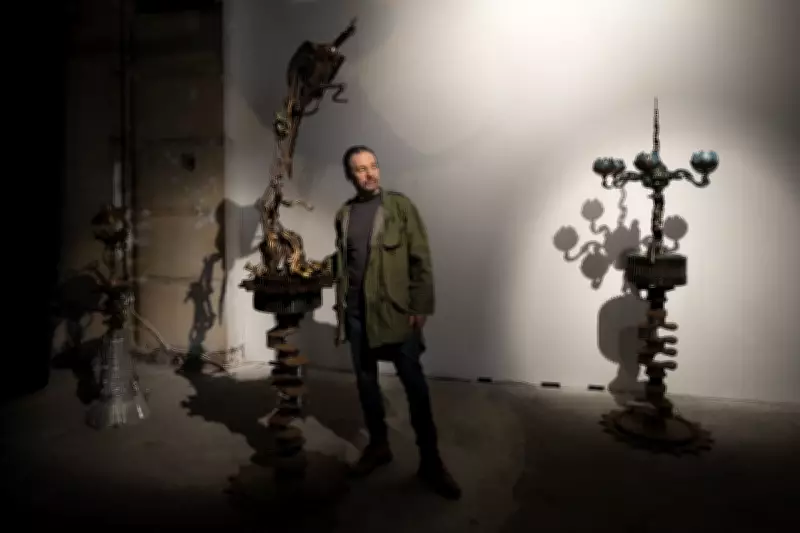
Rush, who founded the influential arts collective Mutoid Waste Company, is currently exhibiting dozens of new and existing works at the Bomb Factory Art Foundation's Marylebone gallery throughout this month. The exhibition, titled Unnatural, showcases his unique artistic philosophy and technical mastery.
Emily Eavis, the festival's esteemed organiser, paid heartfelt tribute to Rush's sculptures ahead of the show's opening, stating they have "inspired generations of festival-goers" with their imaginative power.
The Art of Transformation
Rush's creations are meticulously fashioned from an astonishing array of reclaimed materials sourced from diverse backgrounds. His materials inventory includes:
- Motorcycle, car, and agricultural components
- Animal horns and tank cogs
- An antique bronze chandelier
- Assorted tools including hammers, knives, and spanners
- Repurposed bicycle chains and vintage gas masks
Among the exhibition's standout pieces is a giant dinosaur fossil crafted entirely from hammers, knives, and spanners, positioned alongside a serpentine sculpture formed from an old bicycle chain. Another striking work features a bull whose nostrils are ingeniously constructed from a vintage gas mask.
The collection also includes representations of birds, bees, butterflies, horses, and dogs, with the final piece – inspired by his son – depicting a boy within a garden of metallic flowers.
Environmental Commentary Through Art
Rush explained to the Press Association that his larger-scale works emerged following the creation of Carhenge at Glastonbury, when he found himself with surplus classic car pieces and engines. "The story I wanted to tell was all included within the body of work. It is the story of extinction and of the loss of biodiversity," he revealed.
"These things that I have built are totemic creatures but also prayers for the existence and continuation of creatures and insects," Rush continued. "The main piece is a giant bee made out of three dead engines and it is called Insecticide is Suicide. It compares the anatomy of an industrial object that has come to the end of its life with the anatomy of nature."
He described the exhibition as "an unnatural history museum" that reflects on human behavior. "We are natural creatures living in an unnatural way, which is destroying the equilibrium of the planet," Rush observed thoughtfully.
From Festival Grounds to Gallery Walls
Rush acknowledged that this exhibition was only possible due to Glastonbury Festival's fallow year. "Glastonbury is a rock and roll event," he noted. "The art has to be quick and punchy and funny. Here I can focus much more on very specific details."

He characterized scrap items as possessing "organic eccentricity" and expressed hope that his work would inspire others to create art from their own discarded materials. "The world is full of scrap. Any car I see driving down the street, I think that in 10 years' time, I will have it and make it into something else," Rush added with enthusiasm.
"I'm trying to encourage people to look at things in the way of a child, to look at discarded and broken things and find creative uses for them," he explained. "I also want people to really look and see that insects and creatures are not pests or vermin, they are really beautiful little things. It is the little things that keep us working."
Institutional Recognition and Celebration
Pallas Citroen, managing director of The Bomb Factory, confirmed that Rush's exhibition forms part of the charity's annual programme focusing on collective production and material reuse.
Eavis further elaborated on Rush's significance, stating: "Joe Rush has been a defining creative force at Glastonbury Festival for decades. His extraordinary ability to transform scrap metal into imaginative, otherworldly sculptures has inspired generations of festival-goers. It's wonderful to see his work celebrated in a major solo show."
The exhibition Unnatural will be on display at the Bomb Factory Art Foundation's Marylebone gallery from March 13 to March 29, offering audiences a rare opportunity to experience Rush's visionary work outside the festival context.