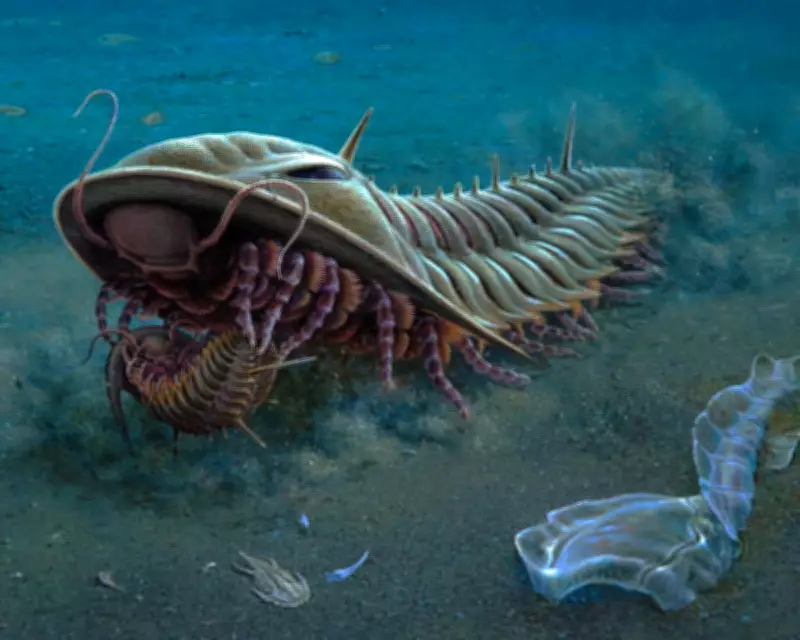
Prehistoric Fossils from Kangaroo Island Transformed into Vibrant Stamp Art
Ancient fossils discovered on Kangaroo Island have been brought to life through detailed, colourful illustrations, which have now been officially released as a new series of postage stamps by Australia Post. The collection, titled "Creatures of the Palaeozoic," showcases the work of renowned artist Dr Peter Trusler, who used cutting-edge research to recreate these 512-million-year-old organisms.
Scientific Accuracy Meets Artistic Interpretation
Trusler collaborated closely with leading palaeontologists, including Associate Professor Diego Garcia-Bellido from the South Australian Museum and Adelaide University, along with Professor John Paterson from the University of New England-Armidale. The artist received comprehensive research papers and scientific data to ensure the illustrations were as accurate as possible given current knowledge.
"Obviously, we don't know the colours so there's a fair bit of artistic licence, but the images produced by Peter Trusler are as accurate as we can make them in 2026," Garcia-Bellido explained. "I sent him all our research papers and he started coming back to me with these incredible recreations. He's so good."

The Emu Bay Shale deposit on Kangaroo Island represents an exceptionally rare fossil site in the southern hemisphere. It preserves delicate, non-mineralised external skeletons and some internal soft tissues that are seldom found elsewhere, providing unique insights into early animal evolution.
Featured Creatures from the Cambrian Explosion
The stamp series highlights four remarkable creatures from the Palaeozoic era, specifically the Cambrian period when most major animal groups first appeared in the fossil record. This evolutionary burst, often called the "Cambrian explosion," included the emergence of primitive backboned animals.
The stamps will feature:
- Nesonektris aldridgei: An 18-centimetre-long swimmer possessing a rudimentary backbone, a front-facing mouth opening, and a flexible swimming tail.
- Emu Bay Shale monster: A four-centimetre-long worm-like creature distinguished by spines along its back and stubby legs near its hind end.
- Anomalocaris daleyae: Approximately 50 centimetres in length, this predator featured large eyes, frontal appendages for grasping prey, and swimming flaps along its body.
- Redlichia rex: At about 25 centimetres long, this is the largest trilobite discovered from this period, equipped with spiny legs designed to crush and shred food.
Artist's Journey and Historical Context
Peter Trusler admitted that creating these illustrations presented a significant learning opportunity. "I don't have a strong background in painting invertebrates, so my learning curve was fairly steep," he acknowledged. The artist had long been interested in the Emu Bay site, which was originally discovered in the 1950s by South Australian scientist Reg Sprigg.
Sprigg played a crucial role in establishing the Arkaroola Wilderness Sanctuary within the fossil-rich Flinders Ranges, acting on a request from the renowned explorer Douglas Mawson. This region continues to be significant, with South Australia's Flinders Ranges recently nominated for UNESCO World Heritage status due to their exceptional fossil records.
Public Exhibition and Cultural Impact
The original illustrations will be publicly displayed at the South Australian Museum, offering visitors an immersive glimpse into this ancient world. Museum director Dr Samantha Hamilton expressed enthusiasm about the exhibition, stating, "As soon as visitors enter the museum, they will see these creatures in all their glory – you could not get a better glimpse at such a long-gone world."
This innovative stamp series not only celebrates Australia's rich palaeontological heritage but also bridges scientific discovery with public engagement through accessible art and philately. The project demonstrates how contemporary research can transform ancient fossils into captivating visual representations that educate and inspire audiences across generations.