Denmark's Culinary Revolution: The Art Debate Dividing Chefs and Critics
In Denmark, a profound question is simmering in kitchens and cultural circles alike: can food truly be considered art? This debate has intensified as the nation's Culture Minister, Jakob Engel-Schmidt, announced in January that Denmark would explore formally recognizing gastronomy as an art form. If successful, Denmark could become the first country to legally elevate cooking—or at least its highest expressions—to a status akin to painting or sculpture.
The Rise of Immersive Dining Experiences
More restaurants are now offering diners an "immersive dining experience," blending performance art, music, and projections with extraordinary cuisine. At the forefront is Copenhagen's Alchemist restaurant, opened in 2019 in a former industrial harbour area. Helmed by chef Rasmus Munk, Alchemist has rapidly ascended the culinary ranks, being named the world's fifth-best restaurant in 2025 and holding two Michelin stars.
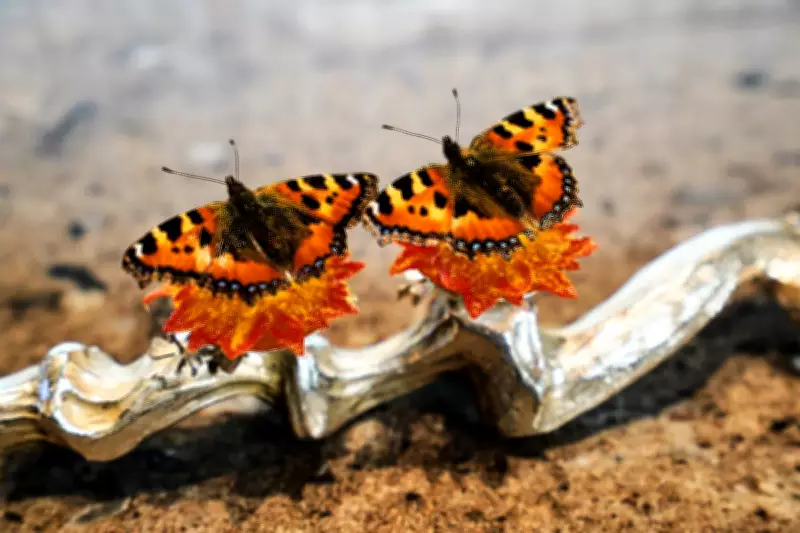
Guests at Alchemist embark on a multi-hour journey through 50 distinct "impressions," most of which are edible. The experience encourages deep reflection on innovative dishes and visual narratives, such as a large eyeball dish with caviar and codfish eye gel, or delicate nettle butterflies atop cheese and artichoke leaves. "We convey messages through our food, our food is our medium of expressing ourselves," said Munk, whose creations explore issues like state surveillance and animal welfare.

A New Nordic Legacy
Denmark's culinary ascent began in 2003 with René Redzepi's Noma, which championed a "New Nordic" philosophy celebrating foraging, fermenting, and Scandinavia's seasonal larder. Emboldened by this movement, Denmark now boasts 37 Michelin-starred restaurants, including Copenhagen's two-star Kadeau, opened in 2011 by head chef Nicolai Nørregaard.
Nørregaard approaches his craft like art, saying, "I approach it like I would approach making a piece of art, like an artwork or a piece of writing. It's about getting sort of an experience." He believes recognition would be a "big step," adding, "To acknowledge that this can also be looked upon as art... that's what's important for me."
Political and Cultural Implications
The proposal, still in its exploratory phase, would require a vote in Denmark's 179-seat parliament to reclassify gastronomy from craft to art. This could make chefs eligible for state subsidies and private foundation funding, similar to writers and musicians. However, the outcome may be influenced by Denmark's general election on March 24.
Denmark has previously expanded its definition of art, such as awarding a lifetime national arts honor to heavy metal act King Diamond. Last year, the Sonning Prize, Denmark's largest cultural award, went to French gastronomic artist and chemist Hervé This. Other nations with famed food cultures, like France and Japan, haven't made similar moves, though UNESCO granted Italian cooking cultural heritage status last year.
Critics Voice Concerns
Not everyone is toasting the idea. Nick Curtin, executive chef and owner of Copenhagen's Michelin-starred Alouette restaurant, argues that art and gastronomy are fundamentally different. "Art's sole purpose is expression. It's to evoke emotion. Food must be consumed," he said. "(Art) can evoke disgust or disappointment or pain or sorrow or joy or longing. Food actually can't express all of those things. It can, but it shouldn't."
Some in Denmark's art scene worry about increased competition for funding between chefs and traditional artists. Holger Dahl, architecture and art critic at Berlingske newspaper, is blunt: "I think it's quite silly, there's no use, it doesn't make any sense." He added, "It's a little bit like a bicycle and a car—they have round wheels, they'll take you from one point to another point, but it's not like a very good bicycle all of a sudden turns into a car. It doesn't happen."
As Denmark weighs this cultural shift, the debate highlights how far the nation's cuisine has evolved from its roots in bacon, herring, and rye bread. Whether gastronomy will join the ranks of art remains to be seen, but the conversation itself is reshaping perceptions of food and creativity in this Nordic nation of six million people.