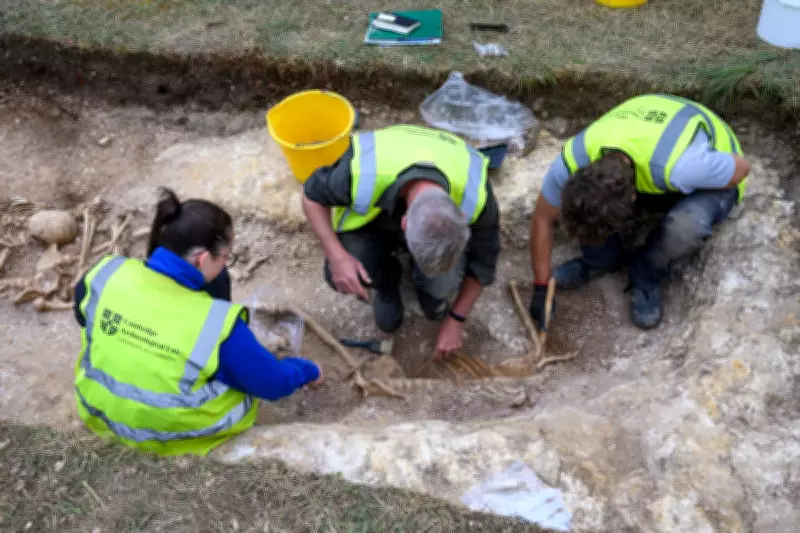
In a remarkable archaeological find, students from Cambridge University have uncovered an ancient burial pit containing the remains of at least ten individuals, with evidence pointing to decapitation and possible mass execution. The discovery was made during a training dig at Wandlebury Country Park near Cambridge, conducted in collaboration with the Cambridge Archaeological Unit.
Details of the Discovery
The burial pit, which potentially dates from around the ninth century AD, includes four complete skeletons. Some of these skeletons were found in positions that suggest they were tied, indicating they may have been bound before burial. Alongside these, dismembered remains and at least one instance of decapitation were identified, adding to the grim nature of the site.
Historical Context and Theories
Archaeologists believe the remains are of young men, leading to theories that this could be a mass execution site or a pit where bodies were dumped after a battle. This period was marked by significant conflict between Viking and Saxon forces, and the discovery aligns with historical accounts of such violent encounters. The findings provide a tangible link to this turbulent era, offering insights into the practices and aftermath of warfare during the early medieval period.

Notable Individual Remains
Among the remains, one individual stood out: an unusually tall man, estimated to have been 6 feet 5 inches in height. His skull featured a hole, which archaeologists suggest may be evidence of an ancient surgical procedure. This could have been performed due to a growth condition, highlighting the medical knowledge and practices of the time. Such details add a personal dimension to the discovery, reminding us of the human stories behind the historical events.
Ongoing Research and Public Engagement
Historic England is supporting further geophysical surveys of the site to uncover more about its extent and any additional features. This collaborative effort aims to preserve and study the area thoroughly, ensuring that all possible information is extracted from the find. Additionally, the discovery is set to be featured in an episode of BBC Two's Digging For Britain, bringing this fascinating piece of history to a wider audience and showcasing the important work of student archaeologists.
This excavation not only contributes to our understanding of ninth-century Britain but also underscores the value of hands-on training for students in uncovering and interpreting historical evidence. The blend of education, research, and public engagement makes this a significant event in the field of archaeology.