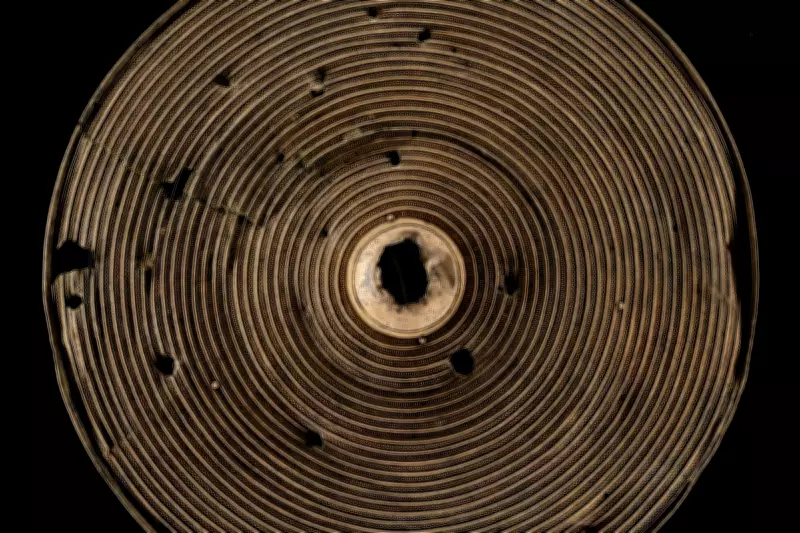
Bronze Age Shield Returns to Scotland After 230-Year Absence for Historic Exhibition
An incredibly rare Bronze Age shield has made a historic return to Scotland for the first time in more than 230 years. This significant artifact will be a centrepiece of the Scotland’s First Warriors exhibition at the National Museum of Scotland in Edinburgh, which opens to the public in June 2026.
A Remarkable Discovery and Long Journey Home
The shield was originally discovered during labouring work near Beith in North Ayrshire around 1779. In 1791, it was presented to the Society of Antiquaries of London, where it has remained ever since. Now, after more than two centuries, the shield has been brought back north of the border on loan, marking its first appearance in Scotland since its initial discovery.
Measuring approximately 60-70cm in diameter, the bronze shield features intricate hammered bosses and ribs. Evidence of spear damage and other combat marks indicates it was actively used in battle rather than being purely ceremonial. According to historical reports, the shield was found buried upright in a circle within peat, alongside five or six other shields—though the whereabouts of those additional shields remain a mystery to this day.

A Once-in-a-Lifetime Reunion of Ancient Artifacts
Ahead of the exhibition, this shield was reunited with five other Bronze Age shields discovered in the Borders and Aberdeenshire during the 19th century, all part of the National Museum of Scotland's collection. While only four shields, including the Beith example, will be displayed in the exhibition, bringing all six together beforehand provided experts with a unique opportunity to compare their craftsmanship and construction.
These shields date from 3300 to 3500 years ago, making them exceptionally rare finds for Britain. Dr. Matthew Knight, senior curator of prehistory at the National Museum of Scotland, described the moment the sixth shield arrived: "The moment the sixth shield arrived back in Scotland and was unpacked at the National Museums Collection Centre was breath-taking. The Beith shield is such a spectacular, intricate object... this is the first time it has been seen in Scotland since its discovery over 200 years ago."
Insights into Bronze Age Society and Conflict
Dr. Knight emphasized the significance of this reunion: "Bronze shields from this period are exceptional to Britain, and by bringing all six of these incredibly rare shields together, we can gain a deeper understanding of life and conflict in Bronze Age Scotland and beyond. It really is a once-in-a-lifetime opportunity."
The fragility of these artifacts means they are rarely removed from display, but the loan from London prompted curators to examine them collectively for the first time. Dr. Knight noted that most shields appear remarkably similar, potentially suggesting they were crafted by the same individual or workshop.
During the Bronze Age, wooden or leather shields were more common, making these bronze examples particularly special. They likely served not only as defensive tools but also as symbols of status for high-ranking warriors. Dr. Knight speculated about their burial: "When you think about the idea that it was one of five or six that were buried in a bog, it makes you think that there must have been this group of high status people who came together to bury their shields together... Perhaps it was a sign of peace."
Exhibition Details and Additional Artifacts
Alexandra Ault, head of collections at the Society of Antiquaries of London, expressed delight at the loan: "We are delighted to lend the Beith shield to the National Museums of Scotland... This loan marks the first time in over 235 years the shield has been back to Scotland and is an exciting opportunity to see it alongside other important Scottish Bronze Age artefacts."
The Scotland’s First Warriors exhibition will explore thousands of years of history, from the Neolithic period to the arrival of the Romans. Alongside the four shields, visitors can view internationally significant archaeological discoveries from across Scotland, including:

- The Carnoustie Hoard, featuring a rare spearhead decorated with gold
- A bronze sword preserved in a wooden scabbard, dating from approximately 1120-920 BC
The exhibition opens on June 27, 2026, and will run until May 17, 2027, offering an unprecedented look at Scotland's ancient martial heritage.