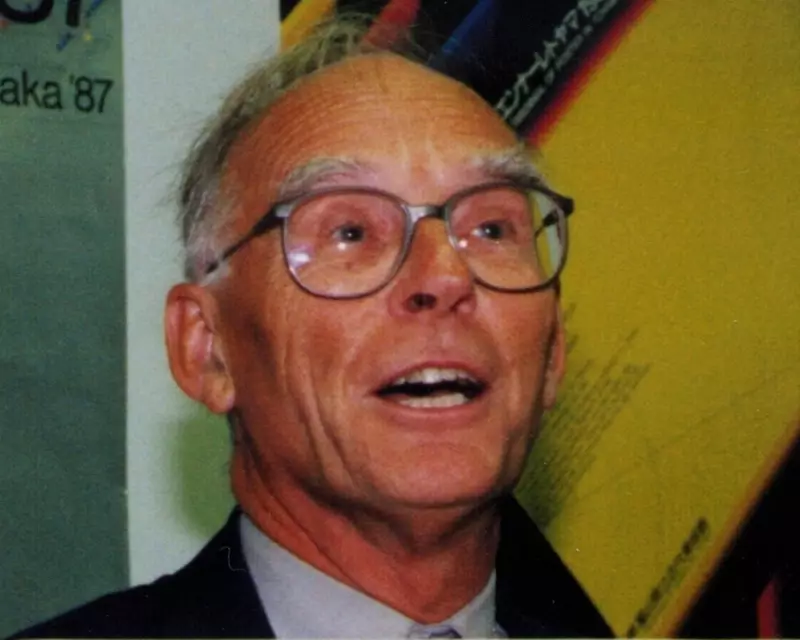
The academic world of design is mourning the loss of Professor Michael Twyman, a foundational figure who established typography as a serious university discipline in Britain. He has died at the age of 91.
The Architect of a Discipline
Twyman's most significant achievement was the founding of the Department of Typography & Graphic Communication at the University of Reading in the mid-1970s. His vision was revolutionary, moving beyond mere practical skill to create a holistic academic field. He combined history, theory, and practice, while also drawing on insights from linguistics, psychology, and social history to address the core concept of "design for reading".
This innovative approach was not confined to traditional print. He championed an understanding of visual communication as a form of rational thinking, an ethos that has proven adaptable to any new media, including the digital economy. His legacy lives on through the department he built and the generations of designers it educated.

A Lifelong Scholar and Educator
Born in London, Michael Twyman attended Sir George Monoux grammar school in Walthamstow, with wartime evacuation to Broadway in the Cotswolds fostering a lifelong love of historic landscapes. He began a fine art degree at the University of Reading in 1953 and later won a scholarship to research the history of lithography.
After a teaching qualification at Cambridge, he returned to Reading in 1959 to teach typography. His influence grew as separate degrees in the subject were launched from 1968 onwards. He inspired countless students who rose to leadership roles in the global design industry, particularly within technology firms.
His scholarly output was immense. In 1970 he authored the seminal work 'Printing 1770-1970', a classic text on graphic design history. Upon establishing his department in 1974, he was appointed a professor.
A Prolific Legacy Beyond Retirement
Even after retiring in 1998, Twyman's intellectual curiosity did not wane. He fulfilled a long-held ambition by publishing 'A History of Chromolithography: Printed Colour for All' in 2013. His most recent work, 'Reproducing the Bayeux Tapestry Over Three Centuries', was published in 2024 and dedicated to his daughter Nikky, who died shortly before its release.
He is survived by his wife, Nin Andrews, whom he married in 1957, their sons Jeremy and Dan, eight grandchildren, and one great-grandchild. The field of visual communication owes a profound debt to his pioneering work, which established a rigorous, intellectual framework for a subject that shapes our world every day.