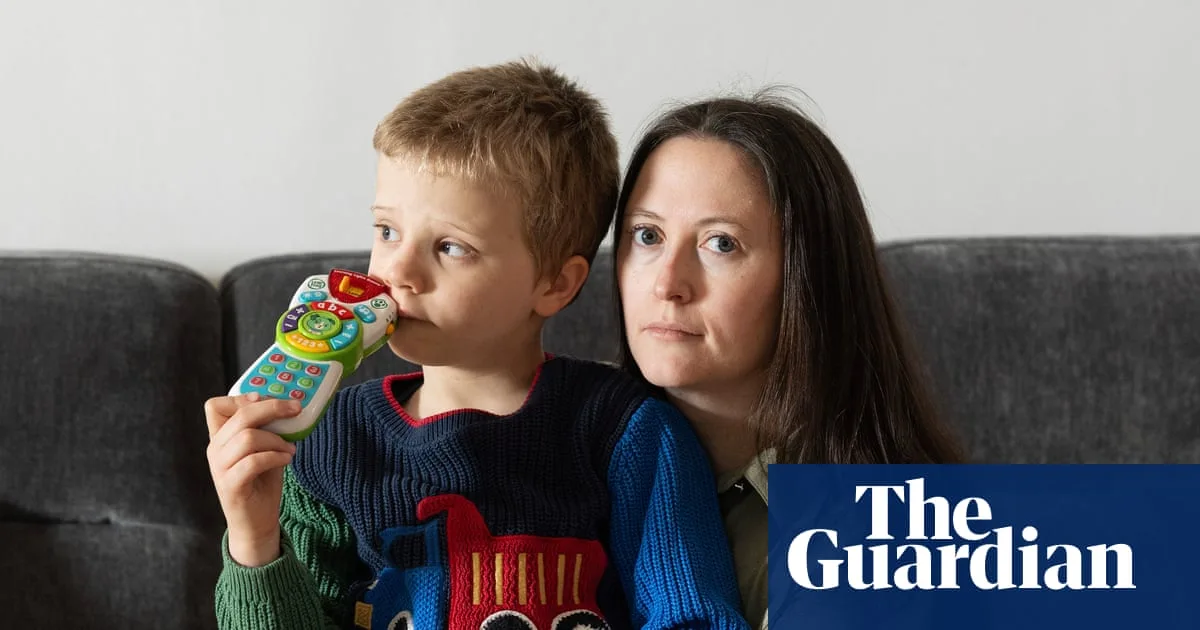
Parents of children with special educational needs and disabilities (Send) have given a mixed response to the government's long-awaited overhaul of the system in England. While some expressed relief that significant disruption would be avoided, others voiced concerns that children with the most complex needs may not benefit from the changes.
Becky, whose son Kyllian has cerebral palsy and is registered blind, said she was 'cautiously optimistic' about the reforms announced by Education Secretary Bridget Phillipson. She welcomed the immediate relief that her son would not have to move from his special school, but noted that the emphasis appeared to be on children who could attend mainstream schools. 'It's great that they're moving towards inclusivity but there wasn't a lot said to address children with more complex needs and physical disabilities, like my son,' she said.
The plans include improving inclusion in mainstream schools and new restrictions on education, health and care plans (EHCPs) from 2030. The government forecasts that about one in eight children with EHCPs will be moved to new individual support plans between 2030 and 2035, and those granted EHCPs after 2030 will have less say over school choices and fewer avenues for appeal.
Jolanta Lasota, chief executive of Ambitious about Autism, warned that limiting EHCPs to only those with the most complex needs relies heavily on mainstream schools becoming genuinely inclusive, yet much of the detail on how to achieve this remains undefined. 'We need to see tangible evidence of improvement before any attempt is made to change or remove existing rights and protections,' she said.
May Race, whose 12-year-old son Joseph has autism, ADHD and dyslexia, said she did not believe he would benefit from the changes, as he has struggled in mainstream education. 'There's been no acknowledgment that some children are unable to be in school, which is often due to the trauma caused by the failing system,' she said.
Cheryl Garner, whose non-verbal autistic daughter requires one-to-one support and studies 50 miles from home, welcomed the proposal that EHCPs be retained for children with the most complex needs. However, she feared the criteria could shift during implementation. 'If the government truly intends to protect children with the most complex needs, then that protection must be explicit, legally secure and enforceable,' she said.