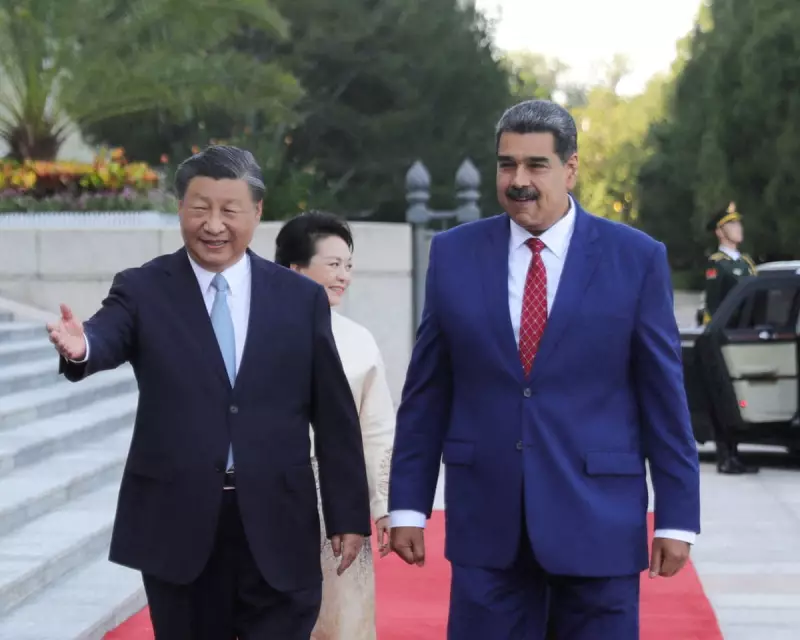
In a dramatic escalation of geopolitical tensions, the government of Venezuela has initiated a controversial campaign against Chinese corporate interests within its borders. This aggressive move is a direct retaliation against a fresh wave of stringent economic sanctions re-imposed by the United States under the returning administration of President Donald Trump.
A Retaliatory Strike Against Foreign Assets
The Venezuelan state, under the leadership of President Nicolás Maduro, has begun the process of seizing control of key assets and operations belonging to Chinese companies. This decisive action was publicly framed as a necessary response to what Caracas labels "imperialist aggression" from Washington. The sanctions spearheaded by Trump are designed to cripple Venezuela's primary economic engine: its oil industry.
The sanctions specifically target the state-owned oil giant Petróleos de Venezuela (PDVSA) and aim to drastically cut off the revenue streams that sustain Maduro's regime. Faced with this existential economic threat, the Venezuelan government has chosen a path that risks alienating one of its few remaining powerful international allies. Analysts view this as a sign of desperation, indicating that the leadership in Caracas perceives the new US measures as an unparalleled danger to its survival.

Geopolitical Calculations and Shifting Alliances
This development sends shockwaves through the complex web of international relations. For years, China has been a crucial financial and diplomatic backer for Venezuela, providing billions in loans secured against future oil deliveries. The relationship, however, has grown increasingly strained as Venezuela's economic collapse and default on debts have left Chinese investments vulnerable.
By targeting Chinese assets, Maduro is executing a high-risk geopolitical gambit. The strategy appears to be an attempt to force Beijing into a more confrontational stance against Washington, effectively painting China as a fellow victim of US economic coercion. This move could potentially reshape alliances in Latin America and test the limits of the strategic partnership between Caracas and Beijing. Experts are questioning whether China will tolerate such asset seizures or if it will recalibrate its engagement with the troubled South American nation.
Implications for Global Energy and Markets
The repercussions extend far beyond diplomatic spats. Venezuela sits on the world's largest proven oil reserves, and any further instability in its production and export capabilities has immediate consequences for global energy markets. The Trump sanctions, combined with Venezuela's retaliatory asset grabs, create a perfect storm for market volatility.
Key risks identified by analysts include:
- A significant disruption in global heavy crude oil supply, affecting refineries configured for Venezuelan grades.
- Increased financial and operational risks for all foreign energy companies remaining in Venezuela, not just Chinese firms.
- The potential for a cascading effect, where other nations facing US sanctions consider similar retaliatory measures against third-party assets.
This situation presents a profound dilemma for international businesses and policymakers. It underscores how great power competition, exemplified by the US-China rivalry, can trigger unpredictable and destabilising actions in vulnerable third countries. The coming months will reveal whether Venezuela's bold strike strengthens its hand or accelerates its isolation in a rapidly polarising global order.