A damning United Nations report has revealed that Sudanese paramilitary forces carried out a systematic massacre, killing more than 1,000 civilians during a brutal three-day assault on the country's largest displacement camp earlier this year.
A Campaign of Terror in Zamzam
The UN Human Rights Office, in its report released on Thursday, 18 December 2025, states that the Rapid Support Forces (RSF) stormed the Zamzam camp in April as part of its wider siege on the city of el-Fasher, the provincial capital of North Darfur. The attack, which lasted for 72 hours, saw hundreds of people summarily executed in a wave of extreme violence.
According to the investigation, victims were hunted down in house-to-house raids and killed in locations that should have been sanctuaries, including the main market, schools, and health facilities. The report meticulously documents harrowing patterns of sexual violence, including rape, gang rape, and sexual slavery, committed by the RSF fighters.
This is not an isolated incident of brutality but forms part of a consistent pattern of serious violations of international humanitarian law and gross abuses of international human rights law, the UN concluded. The findings arrive just weeks after Amnesty International separately accused the RSF of committing war crimes during the same attack.
History of Suffering and a Deepening Crisis
Prior to the April onslaught, Zamzam was the largest displacement camp in Sudan, sheltering over 500,000 people who had fled previous conflicts. The camp was originally established in 2004 for those driven from their homes by attacks from the Sudanese Janjaweed militia. Located south of el-Fasher, it had grown to cover an area approximately 8 kilometres long by 3 kilometres wide.
The UN report notes that for months before the violent incursion, the RSF had blocked the entry of food and other essential goods to the camp, laying the groundwork for a humanitarian catastrophe. Many areas within the camp have since experienced famine conditions.
This atrocity is set against the backdrop of a wider national conflict that has plunged Sudan into chaos. The war between the RSF and the Sudanese military, which began in April 2023, has killed an estimated 40,000 people—with rights groups suggesting the true toll is far higher. The fighting has created the world's worst humanitarian crisis, displacing over 14 million people.
International Calls for Action and Diplomatic Moves
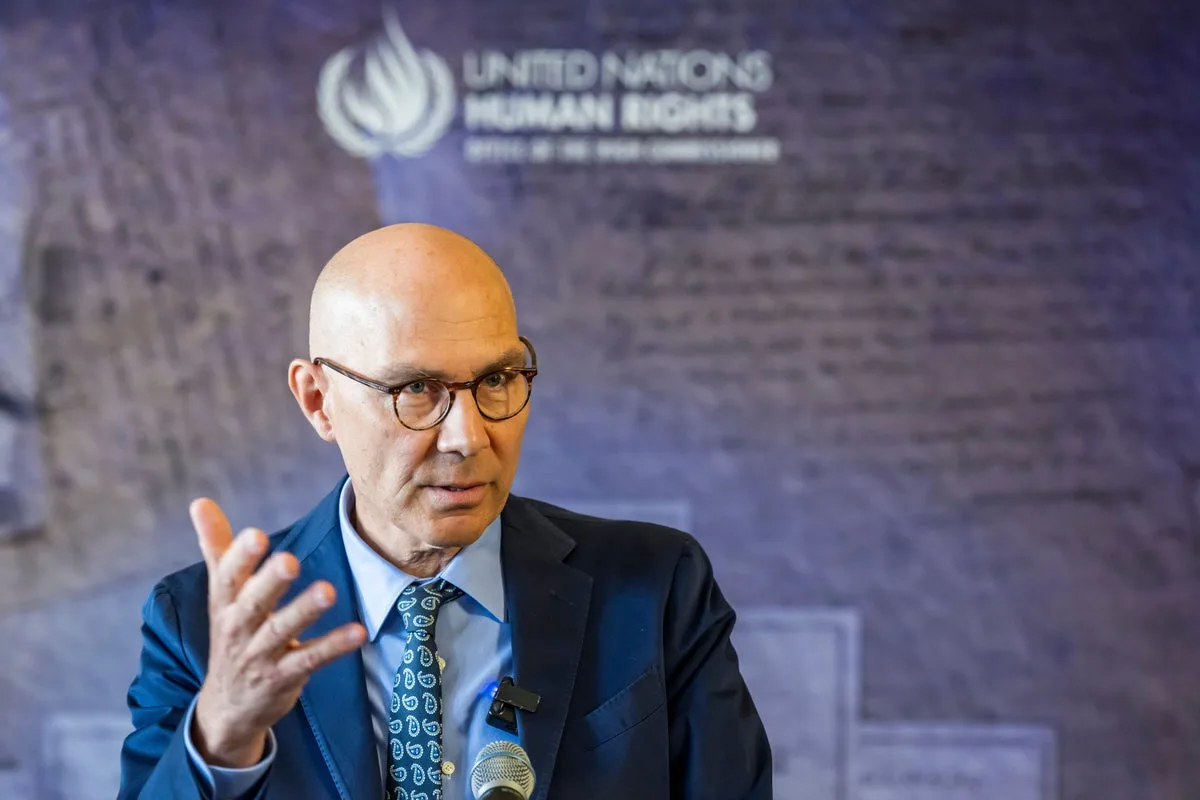
Volker Türk, the UN High Commissioner for Human Rights, issued a stark warning alongside the report's publication. "The findings contained in this report are yet another stark reminder of the need for prompt action to end the cycles of atrocities and violence, and to ensure accountability and reparations for victims," he stated.
Türk further cautioned that the horrific patterns of violence witnessed in Zamzam are now being repeated in el-Fasher, which the RSF seized in late October. "These horrific patterns of violations — committed with impunity — are consistent with what my office has repeatedly documented," he said.
Amid growing international pressure to resolve the war, Sudan's top general, Abdel Fattah al-Burhan, met with Egyptian President Abdel-Fattah el-Sissi in Cairo on Thursday. This followed talks Burhan held with Saudi officials in Riyadh earlier in the week. US envoy Massad Boulos was also in the Saudi capital and met with officials, though there was no public confirmation of a meeting with Burhan.
Boulos stated on social media platform X that there was an agreement with Saudi Arabia on practical steps "toward a humanitarian truce, durable stability, and expanded humanitarian access and assistance for the Sudanese people." Both the US and Saudi Arabia are part of a mediation group known as the Quad, along with Egypt and the United Arab Emirates.
However, the path to peace remains fraught. Burhan had previously rejected a ceasefire proposal in November, calling it unacceptable. In a statement after the Cairo meeting, the Egyptian presidency affirmed support for Sudan but firmly rejected "the establishment of any parallel entities or their recognition," a clear reference to the Tasis Alliance parallel government announced by the RSF in July. Egypt stated there are "red lines" that cannot be crossed, reserving its right to take measures under international law to protect them.