Kurdish Neighborhood in Aleppo Sees Swift Recovery After Violent Clashes
A month after intense clashes rocked the predominantly Kurdish neighborhoods of Sheikh Maqsoud, Achrafieh, and Bani Zaid in Syria's second-largest city of Aleppo, tens of thousands of residents have returned home. This marks an unusually rapid turnaround in a nation where conflict has often led to prolonged displacement lasting years.
Residents Return Amid Security Improvements
"Ninety percent of the people have come back," said Aaliya Jaafar, a Kurdish resident who operates a hair salon in Sheikh Maqsoud. "And they didn't take long. This was maybe the shortest displacement in Syria." Her family only briefly evacuated when government forces launched a drone strike on a nearby weapons storage lot, triggering explosions.
The clashes erupted on January 6 after negotiations between the Syrian government and the Kurdish-led Syrian Democratic Forces reached a deadlock regarding the integration of Syria's largest remaining armed group into the national army. Security forces captured the neighborhoods following several days of fierce fighting that resulted in at least 23 fatalities and displaced over 140,000 individuals.
Unlike previous violent outbreaks in coastal areas and the southern province of Sweida, where hundreds of civilians from Alawite and Druze minorities were killed in sectarian revenge attacks, the new government implemented measures to minimize civilian harm. Before entering the contested Aleppo neighborhoods, the Syrian army established safe corridors to allow civilians to flee.
Ceasefire Holds and Fears Subside
Ali Sheikh Ahmad, a former member of the SDF-affiliated local police force who runs a secondhand clothing shop in Sheikh Maqsoud, was among those who left. He and his family returned shortly after the fighting ceased. Initially, residents feared revenge attacks following the withdrawal of Kurdish forces and the handover to government troops, but such incidents have not materialized.
A ceasefire agreement between Damascus and the SDF has remained intact, with both sides making progress toward political and military integration. "We didn't have any serious problems like what happened on the coast or in Sweida," Sheikh Ahmad noted. "The new security forces treated us well, and residents' fears began to dissipate." Jaafar echoed this sentiment, stating that government forces "didn't harm anyone, to be honest, and they imposed security, so people were reassured."
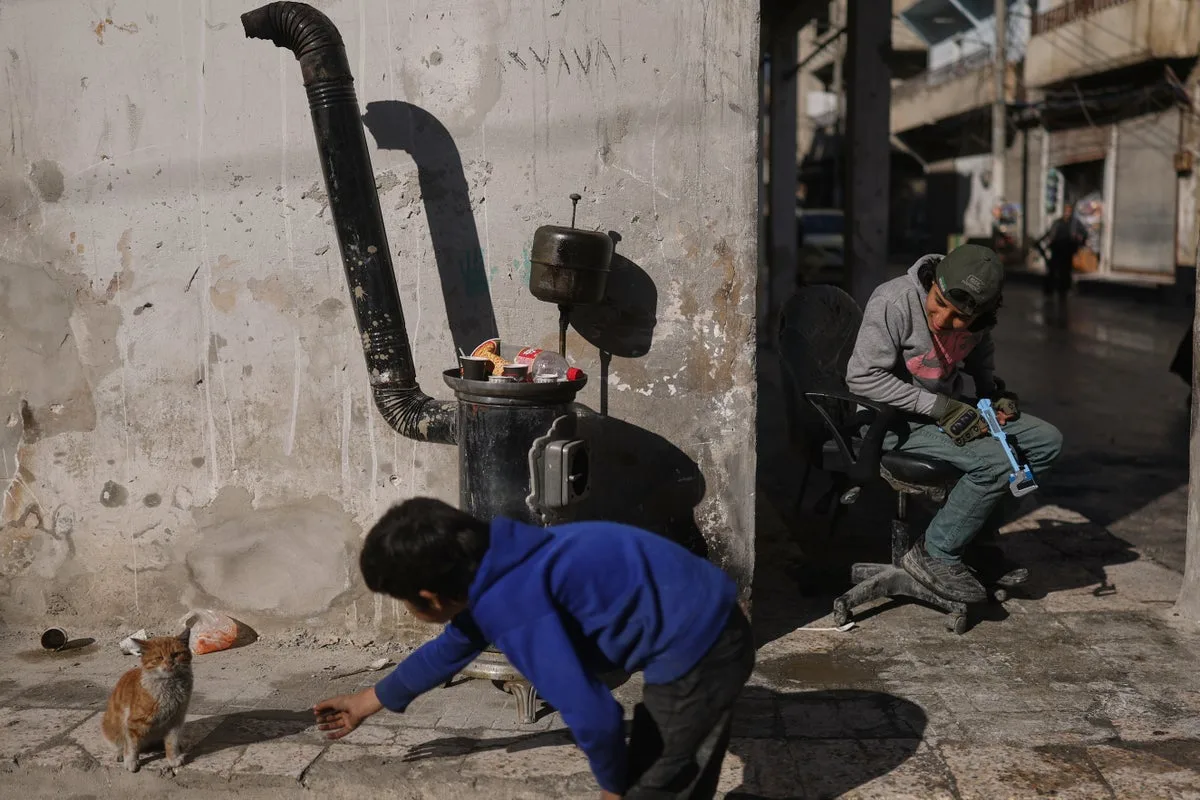
Shops have since reopened, and traffic flows normally, though the checkpoint at the neighborhood's entrance is now manned by government forces instead of Kurdish fighters. Residents, including both Kurds and Arabs, engage in casual conversations along the streets. In a symbolic moment of unity, an Arab man named Saddam—after the late Iraqi dictator known for oppressing Kurds—smiled as his son played with Kurdish children and a friendly orange kitten.
Economic Challenges Persist Despite Calm
While the security situation has stabilized, economic hardships have intensified. Many residents previously depended on employment with SDF-affiliated local authorities, who are no longer in control. Small businesses have suffered due to lost customers and disruptions to electricity and other services during the clashes.
"The economic situation has really deteriorated," Jaafar lamented. "For more than a month, we've barely worked at all." On Friday, SDF leader Mazloum Abdi reported a "very productive meeting" with U.S. Secretary of State Marco Rubio and Syrian Foreign Minister Asaad al-Shibani on the sidelines of a security conference in Munich to discuss integration progress.
Hopes for Reconciliation and Long-Term Stability
Sheikh Ahmad expressed optimism about returning to his original home in Afrin near the Turkish border, which his family fled during a 2018 Turkish offensive against Kurdish forces. Like many Syrians, he has faced multiple displacements since mass protests against former President Bashar Assad escalated into a brutal 14-year civil war. Assad was ousted in November 2024, but sporadic violence continues, and the new government struggles to gain trust from religious and ethnic minorities.
Last month, interim President Ahmad al-Sharaa issued a decree strengthening Kurdish minority rights, recognizing Kurdish as a national language alongside Arabic and adopting Nowruz—a traditional spring celebration observed by Kurds regionally—as an official holiday. The decree also restored citizenship to tens of thousands of Kurds in northeastern al-Hasakeh province, reversing a policy from the 1962 census.
Sheikh Ahmad welcomed these efforts, hoping for more than mere tolerance among Syria's diverse communities. "We want something better than that. We want people to love each other. We've had enough of wars after 15 years. It's enough," he said, reflecting a broader desire for lasting peace and reconciliation in a nation weary from conflict.