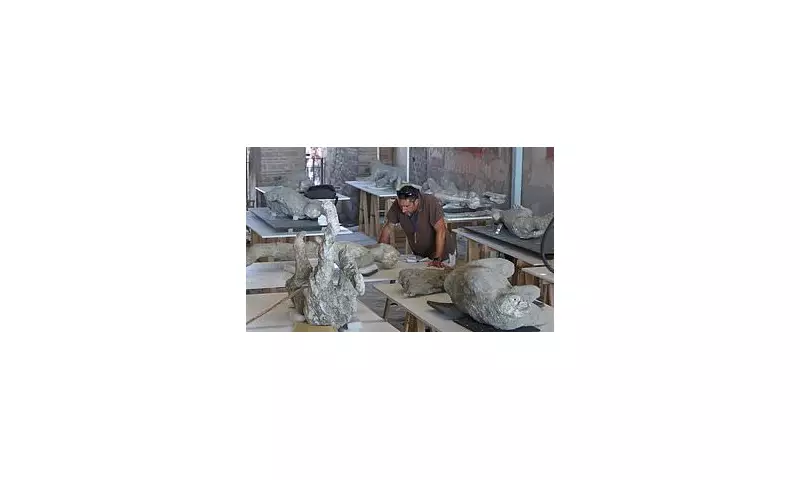
A poignant new discovery from the ruins of Pompeii is shedding fresh light on the final, desperate moments of the city's inhabitants and reigniting a centuries-old debate about when the catastrophic eruption actually occurred.
Frozen in Time: The Fabric of a Disaster
Experts from the University of Valencia have conducted a meticulous study of the famous plaster casts of victims from Pompeii, the Roman city obliterated by Mount Vesuvius nearly 2,000 years ago in AD 79. Their analysis reveals a heartbreaking detail: as people fled the raining volcanic rock and toxic gases, they were clad in heavy tunics and woollen cloaks.
Professor Llorenç Alapont, the study's lead archaeologist, explained that this thick, woven wool clothing likely served as a last-ditch attempt to shield themselves from the fiery onslaught. "But [it was] also a day with harmful conditions from which they needed protection," he stated. The sombre findings indicate the garments were both practical and, crucially, suggest the weather was cool at the time.

The Great Date Debate: August vs. October
This detail adds significant credence to the growing belief that the infamous eruption did not happen in August, as traditionally held, but in the cooler month of October. The question of the eruption's exact date remains "one of the most debated topics in the history of ancient Pompeii."
The traditional August date largely relies on letters from the eyewitness Pliny the Younger. However, evidence has been mounting for an autumnal disaster:
- The discovery of autumn fruits like calcified berries in the ruins.
- Braziers (portable heaters) found in homes.
- Fermenting wine sealed in clay vessels (dolia).
- Now, the victims' heavy woollen outerwear points to cooler conditions, "perhaps not typical of southern Europe in August."
Professor Alapont suggested Pompeii may have been experiencing "colder-than-normal weather" that fateful day.
A Glimpse Into History Through Plaster and Ash
The research focused on 14 plaster casts of victims found in Pompeii's Porta Nola Necropolis in 1975. These casts were created by filling the voids left in the hardened ash after the victims' bodies decayed, a process begun in the mid-1800s. In four of the casts, researchers could clearly identify the type of clothing and its heavy wool weave.
"From a study of the casts, we can learn how people dressed on a specific day in history," said Professor Alapont. "We can also determine the type of fabric they wore and the weave of the threads, which in this case is thick." The study noted that most victims wore a two-piece ensemble of a tunic and cloak, both of economical wool.
Furthermore, the same fabric patterns were found on casts from both inside and outside buildings, indicating people wore the same clothes indoors and out, perhaps caught utterly unprepared.
The eruption's power was apocalyptic. Mount Vesuvius' plume reached an estimated 21 miles (34km) high, and pyroclastic surges—scalding currents of gas and matter exceeding 500°C—vaporised some inhabitants and even vitrified human tissue. The disaster destroyed Pompeii, Herculaneum, Stabiae, and Torre Annunziata, killing up to an estimated 16,000 people.
Professor Alapont has called for new methodologies and further studies to finally pinpoint the circumstances of the Vesuvius eruption. These latest results were presented at the International Congress on the Date of the Eruption of Vesuvius and await peer-reviewed publication.