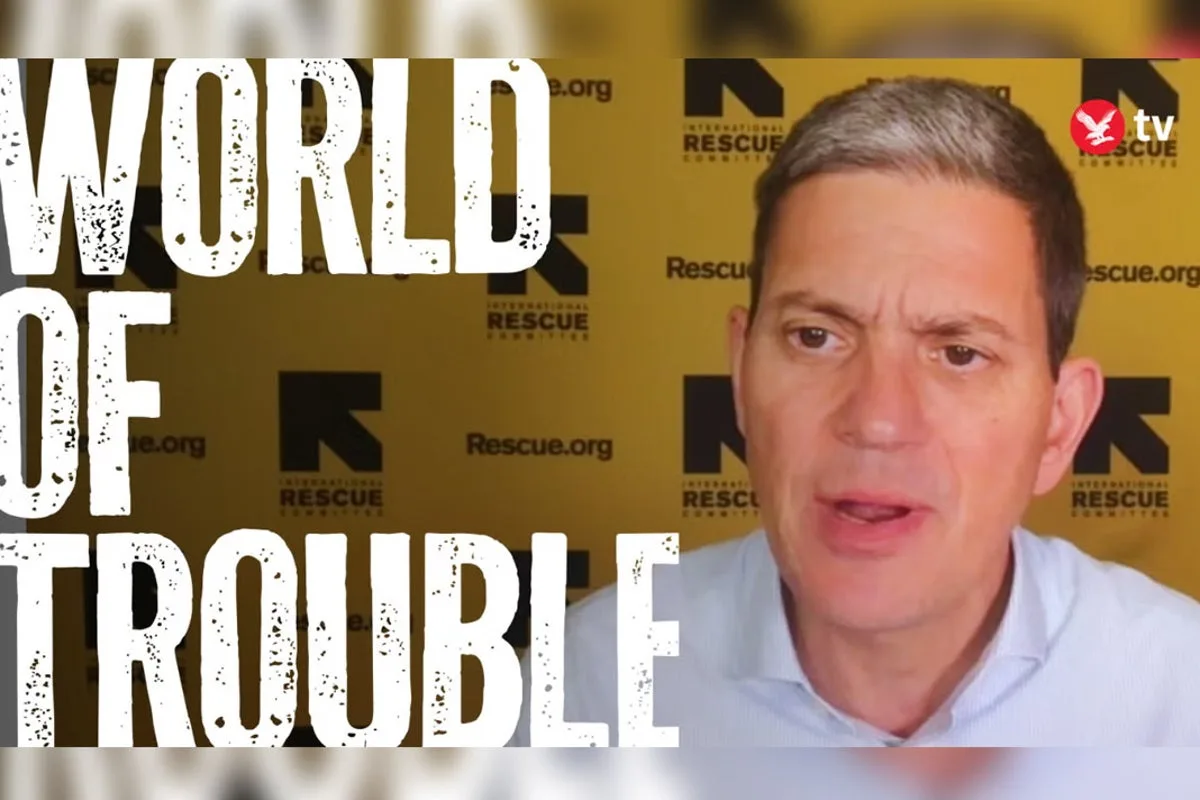
David Miliband, the former foreign secretary and current head of the International Rescue Committee (IRC), has warned that democracy is in retreat and impunity is on the march as the world faces at least 59 ongoing conflicts. Speaking on the World of Trouble podcast, he said the IRC now operates in 35 countries, serving 36 million people, including two million children.
Miliband described a chaotic world of fragmenting powers, where western aid cuts and a decline in the rule of international law have left little prospect for peace. “The governing guardrails that protected people against danger are in retreat,” he said, noting that norms and laws are being eroded, creating greater danger in conflict zones.
The former Labour politician, who has led the IRC for 12 years, pointed to the Democratic Republic of Congo, Sudan, Ukraine, and Myanmar as troubled areas. The IRC’s annual list of countries most likely to face worsening humanitarian crises in 2026 includes Sudan, Occupied Palestine territory, South Sudan, Ethiopia, and Haiti.
Miliband cited data from the University of Gothenburg showing that 91 countries are now considered autocratic, compared to 88 democratic. He attributed the democratic retreat to mistakes in the 2000s, including the US-led invasion of Iraq without a UN mandate, and the refusal of major nations like the US, Russia, India, and Indonesia to recognise the International Criminal Court.
The IRC has lost about a third of its $1.5bn funding since the US shut down USAID nearly a year ago. Miliband defended humanitarian principles of independence, neutrality, impartiality, and humanity, but declined to criticise nations where the IRC works or from which it receives funding. When asked about returning to UK politics, he said only that “democracy is precious” and defended the liberal order.