Exhibit Honors Japanese American WWII Soldiers Whose Families Were Interned
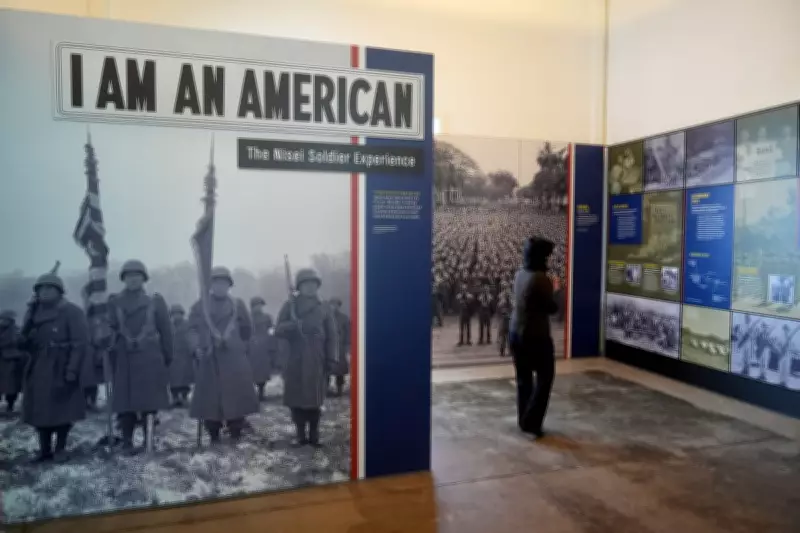
A powerful new traveling exhibition is telling the remarkable story of Japanese American soldiers who fought for the United States during World War II, even as their own families were incarcerated as enemy aliens in government-run internment camps. The exhibit, titled "I am an American: The Nisei Soldier Experience", launched in San Francisco and will tour multiple cities across the nation.
The Nisei Soldier Experience
Following the bombing of Pearl Harbor, second-generation Japanese Americans, known as Nisei, enlisted to serve their country despite the U.S. government declaring their families "alien enemies" and forcibly relocating approximately 120,000 people of Japanese ancestry to remote and desolate camps. Two-thirds of those incarcerated were American citizens, including elderly individuals and young children who had no understanding of treason.
Their homes and businesses were seized, and they were confined to overcrowded, wooden barracks in harsh, isolated locations. The United States did not issue a formal apology for this injustice until 1988.

Personal Artifacts and Stories of Bravery
The 1,500-square-foot exhibition features deeply personal items donated by relatives to preserve these narratives for future generations. Among the artifacts on display are:
- A travel bag belonging to Sgt. Gary Uchida, adorned with his drawings of Hawaii and other places he visited during his Army service.
- A U.S. Army identification card where Oregon-born George S. Hara firmly wrote "American" under nationality.
- A handmade note holder crafted by Rihachi Mayewaki from lumber scraps while he was imprisoned at the Jerome camp in Arkansas. It features an American bald eagle and a blue star banner with three stars, each representing a son serving in the military.
Christine Sato-Yamazaki, executive director of the National Veterans Network and co-curator, explained, "These soldiers wanted to prove they were loyal patriotic Americans, part of the greatest generation at that time and they were American — just like anybody else." Her grandfather's garrison cap, bearing the motto "Go for Broke" of the famed 442nd Regimental Combat Team, is also featured.
Sacrifice and Recognition
Approximately 33,000 Japanese Americans served in World War II, with many joining the highly decorated yet segregated 442nd Regimental Combat Team or the 100th Infantry Battalion. Others worked as linguists in the Military Intelligence Service. Tragically, around 800 Nisei soldiers lost their lives in combat.
One highlighted soldier is Staff Sgt. Robert Kuroda, who enlisted after facing employment discrimination in Hawaii due to his ancestry. He was killed at age 21 during the liberation of Bruyères, France, after destroying two enemy machine gun nests under heavy fire. He was posthumously awarded the Medal of Honor.
A particularly poignant artifact is Kuroda's high school class ring, which was lost until 2021 when a French metal detector enthusiast discovered it buried near Bruyères and returned it to the family. The ring and his Medal of Honor are now displayed in the exhibition.
Enduring Legacy and National Tour
The exhibition aims to ensure that the stories of these soldiers' bravery and endurance are not forgotten. Kevin Kuroda, a nephew of Robert Kuroda, stated, "The family just felt if we could, in our own ways, help others, the country, know the sacrifices of the previous generation and what they did for our lives, then, even better."
Organized by the National Veterans Network, the National Museum of the United States Army, and the Army Historical Foundation, the five-year tour will visit ten cities after its initial run in San Francisco's Presidio through August. Scheduled stops include Honolulu, Los Angeles, and Portland, Oregon, bringing this crucial chapter of American history to a wider audience.